

 2 hours ago
3
2 hours ago
3
ARTICLE AD BOX
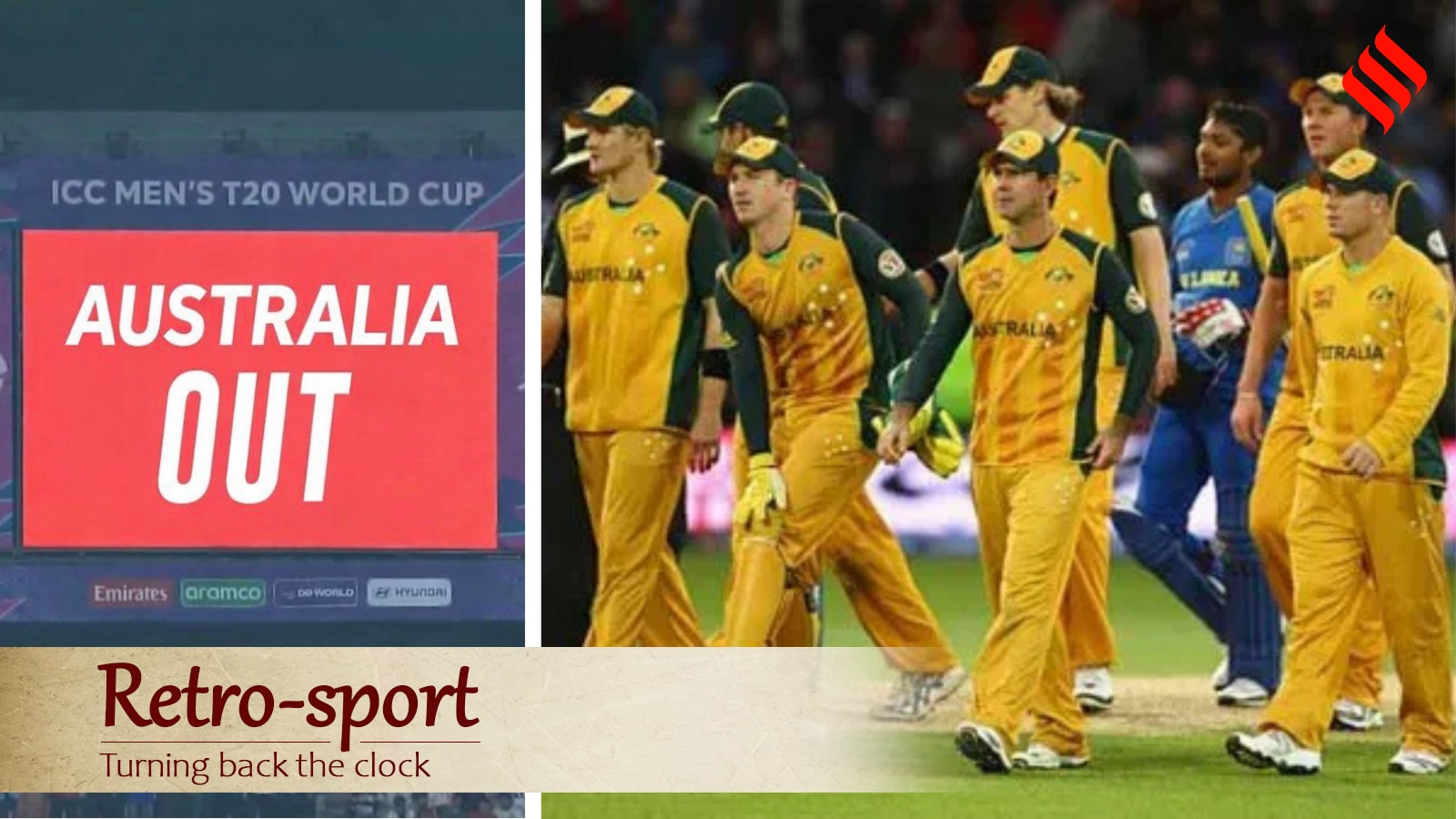
Around 2 am in Australia, the texts began. Bharat Sundaresan and Tom Morris were on air for Sen Radio, calling the T20 World Cup, when their phones lit up. Not a trickle. A flood. Australian fans, awake in the middle of the night, furious. About Cameron Green. About Steve Smith sitting in the stands. About a team that had flown halfway across the world and was losing to Zimbabwe and Sri Lanka.
The received wisdom has always been simple: Australians play T20, they just don’t feel it. The Big Bash is background noise. The T20 World Cup is something that happens. The real game, the real identity, lives in the baggy green, in five-day Tests, in the mythology of the Ashes. The ODI World Cup, at a push.
“Not if you saw some of the texts,” Sundaresan says. “I see it this way: had Australia won the games against Zimbabwe and Sri Lanka, the fans wouldn’t have not been so enthused about following the World Cup. They would have said, ‘yeah that was expected’. And continued focusing on the footy season now that Ashes is well past us. But since they are losing, and since it’s the World Cup, the anger is pouring.”
ALSO READ | Not just ‘one bad day’, Australia haven’t really warmed up to T20 cricket
The anger was specific, which is always the sign that it’s real. It wasn’t abstract disappointment. Cameron Green, 25, had become the face of everything the selectors had got wrong — the favourite who didn’t deserve his place, the name on the teamsheet that made no sense. And then there was Steve Smith, flown in as an SOS, sitting unused while Australia crashed out, which the texts called — “an insult”.
Ian Healy didn’t mince it. “This is an Australian cricket low point.” He’d seen enough. So had Mark Waugh. “Look at the selections,” Waugh said on Sen’s breakfast show. “Glenn Maxwell, Cooper Connolly, Green and Josh Inglis — these guys are all out of form. Maxwell and Connolly have not made a run for three months between them.”
Healy went further, the way only former players can when they’ve stopped being polite. “A selection misguidance was a year ago when they prioritised power over batsmanship and over-confidence over grit.” He listed what had gone wrong with the clinical efficiency of a man who’d kept wicket his whole career and learned to see the field clearly. Green at three. Tim David at four. Josh Inglis at five, getting bounced around. “The team it left us with,” Healy said, “are all finishers, no starters.”
Story continues below this ad
There’s a line in there that deserves to sit alone. All finishers, no starters. In a batting order, that is a technical problem. In a proud cricketing culture, it is a confession.
Part of this was misfortune. Josh Hazlewood — who had just helped RCB win their first IPL title — gone. Mitch Starc, gone. Pat Cummins, gone. Three world-class bowlers, two injured, one retired. What remained was Stoinis and Maxwell and Connolly sharing the bowling, which Healy called with a certain precision: “part-timers who can be handy.” It’s difficult to see Australia losing the game against Sri Lanka after putting that total. But it’s also difficult to see Australia collapsing, from 160 for 4 to 181 all out.
But misfortune only explains so much. Before the tournament, Australia had toured Pakistan and lost the T20 series there, fielding three debutants while resting their stars, and former Pakistan captain Moin Khan had said what everyone was thinking: “It is as if they are fulfilling a formality.” It was clear that this Australian team wasn’t going to cut it on spin-friendly tracks.
ALSO READ | T20 World Cup: Zimbabwe, world cricket’s much-liked giant-slayers, are back
Story continues below this ad
Mitchell Marsh had retired from Test cricket to focus entirely on this tournament. He was, by all accounts, genuinely excited. And then the campaign collapsed around him — injuries, form, selections that defied the evidence — and Australia were out.
Some of them don’t even play their own domestic T20 league. Travis Head skips the Big Bash, plays IPL, flies to the World Cup. He made runs against Sri Lanka but the lower half couldn’t finish what he started. Which is exactly when you’d want a Smith walking out to bat.
The non-selection of Smith was, in the end, what the whole thing came to mean. Not because Smith is necessarily the answer to Australia’s T20 problems. But because he had been in the BBL, and he had looked — Waugh’s words — “a class above everybody.” And the selectors had looked at that, and looked away.
“The most baffling non-selection I can remember for ages,” Waugh said. “You’ve got to be smart enough to see which players are in form and which players are out of form.”
Story continues below this ad
Around 2 am in Australia, the fans were paying attention. They were awake, and angry, and texting into the dark. Not because they don’t care about T20 cricket. Because they do.



 English (US) ·