

 1 hour ago
2
1 hour ago
2
ARTICLE AD BOX
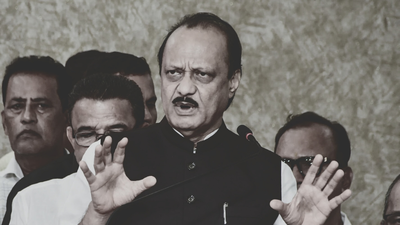
PUNE: Baramati, the Pawar family’s pocket borough, which shaped Ajit Pawar’s rise under the towering influence of his uncle Sharad Pawar, was also the town where the Maharashtra deputy chief minister breathed his last in a plane crash on Wednesday.
The irony was stark: the constituency that made Ajit Pawar a political force also became the site of his final chapter.For decades, Baramati had been synonymous with the Pawar name. Since 1967, the seat remained a family stronghold — first under Sharad Pawar, and from 1991 onwards, under Ajit Pawar, who initially entered electoral politics on a Congress ticket before moving to the NCP after the party was formed in 1999. Ajit Pawar’s grassroots work in the constituency became the cornerstone of his popularity, helping him build a loyal support base over the years.That loyalty was tested — and decisively reaffirmed — in November 2024. For the first time in Baramati’s storied political history, Sharad Pawar’s word was no longer the final authority. Voters handed Ajit Pawar a resounding victory over his grandnephew Yugendra Pawar, the NCP (SP) candidate, by a margin of 1,00,899 votes.
The verdict effectively settled the battle for Baramati amid the bitter NCP split of 2023, which saw Ajit Pawar leading one faction and Sharad Pawar heading the other.The campaign had been deeply personal. Sharad Pawar’s camp highlighted what it called betrayal in old age, while Ajit Pawar’s side countered with narratives of family alienation. After the win, Ajit Pawar’s wife and Rajya Sabha MP Sunetra Pawar credited Baramati’s voters for standing by him.
“Baramatikars have shown that they are Dada’s true family,” she said.It was not the first time family loyalties and political ambitions clashed in Baramati. In the Lok Sabha election, Ajit Pawar had fielded Sunetra Pawar against Sharad Pawar’s daughter Supriya Sule. Supriya won convincingly, prompting Ajit Pawar to say he would not contest from Baramati again. Yet he returned to the fray, changed his decision, and won — a victory his supporters attributed to the development work he had carried out in the constituency over nearly four decades.Born on July 22, 1959, in Deolali Pravara in Rahuri taluka of Ahmednagar district, Ajit Pawar came to be known as “Ajit Dada” for his tireless engagement with people and his ability to remain connected to the soil of Maharashtra. Beyond electoral politics, he played a key role in managing cooperative institutions, including milk unions, sugar factories and banks — sectors that shaped rural political power in the state.His formal leadership journey took a decisive turn in 1991, when he was elected to the Lok Sabha from Baramati, a seat he later vacated for his uncle Sharad Pawar.Ajit Pawar went on to be elected seven times to the Maharashtra Legislative Assembly from Baramati — first in a 1991 by-election and later in 1995, 1999, 2004, 2009 and 2014 — and held several key roles, including minister of state for important departments and deputy chief minister.Above all, Ajit Pawar won Baramati — not just electorally, but symbolically. By defeating his uncle’s candidate and his own nephew by more than one lakh votes, he asserted himself as the dominant political force in the constituency.On Wednesday, the town that shaped his rise also bore witness to his death. Baramati, where Ajit Pawar grew politically and forged his identity, became the place where his journey came full circle — a poignant end in the very landscape that defined his life in politics.


 English (US) ·