

 15 minutes ago
2
15 minutes ago
2
ARTICLE AD BOX
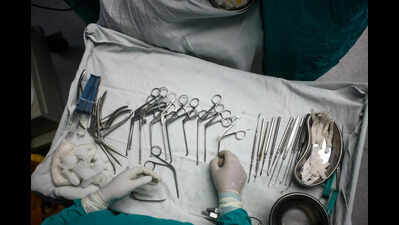
Avascular Necrosis (AVN), also known as osteonecrosis, is the death of bone tissue due to a lack of blood supply
For four years, a 54-year-old Malvani resident was a prisoner of his own bed, immobilised by a hip joint collapse. His doctors suspect the condition, avascular necrosis (AVN), was triggered by haphazard steroidal use during the peak of COVID-19, but the patient was unable to seek treatment due to pandemic restrictions and subsequent financial hardship.AVN, also known as osteonecrosis, is the death of bone tissue due to a lack of blood supply. The patient had a total hip replacement at JJ Hospital in late 2024. Following a year of physiotherapy, he was able to let go of his walker by late 2025. Last week, he returned to the hospital’s orthopaedic department on his two feet just to tell the doctors he was able to walk again.The patient, Mohammed Salim Tamboli, said by 2019 he had already spent a fortune on his wife’s cancer treatment.
She died that year. “We tried one or two govt hospitals, but my children didn’t feel confident enough to move ahead with the procedure,” he said.Till the time he could walk again, the oldest of the three children managed the household finances. Dr Nadir Shah, who operated on him at JJ Hospital, said it is difficult to pinpoint what led to AVN for Tamboli, but there is a noted correlation between the overuse of steroidal medicines and the disease.
“There is nothing wrong with steroidal use. The problem happens due to long-term use or excess use. During COVID-19, some cases required heavy use of steroids to save a life.
It is possible that since Tamboli’s disease began around the same time, he was one such patient.”Tamboli could not confirm if he was put on steroidal medication for COVID-19. Meanwhile, Dr Shah added the incidence of AVN went up post-COVID-19. A systematic review conducted by NHS doctors in the United Kingdom also found this association between COVID-19 infection and heavy corticosteroid use. The review, which took into account cases of nearly 800 patients, mostly men in their mid-40s, showed that those who had a high dose of steroids to treat COVID-19 had an eventual ‘bone death’ in the hip.
On average, patients received about 1,463 mg of steroids, with joint pain surfacing anywhere from two weeks to over a year after infection.








 English (US) ·