

 1 hour ago
3
1 hour ago
3
ARTICLE AD BOX
4 min readColomboUpdated: Feb 11, 2026 07:32 PM IST
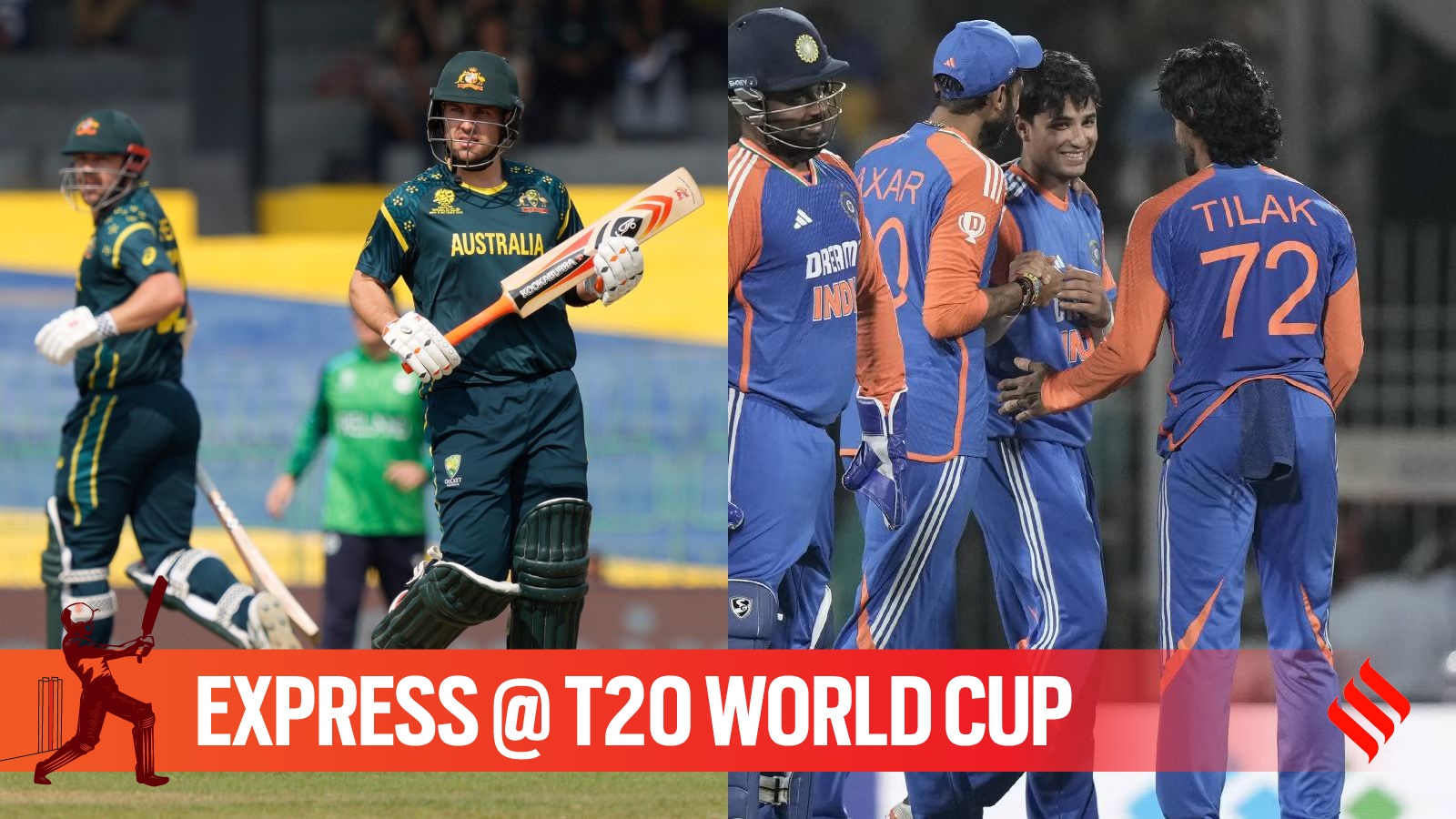 Australian team on the left side and Indian team on the right side. (AP photo/File photo)
Before the Indian team left for the Kotla ground for their net session, if they had tuned into watch Australia versus Ireland at the Premadasa stadium, the venue for their highly-anticipated match against Pakistan later this week, they would have got the blueprint to succeed in these slow conditions and the huge outfield. Of course, Ireland is no Pakistan, which has a strong arsenal of spinners, but the way the Australian batsmen batted without rushing into shots and waiting for the ball to come to them and taking ones and twos is worth keeping in mind for Team India.
On a day where they took the field with just 12 fit players available, with captain Mitchell Marsh ruled out moments before the toss on Wednesday because of a blow he suffered to his groin, Australia’s batting unit showed they were not only about big hits
Having been whitewashed by Pakistan last week in similar conditions in Lahore, there were question marks as to how this Australia team, which like India, prefers to deal with sixes and boundaries will adapt in Colombo.
Through the course of the afternoon, Australia showed their versatility. Opting to bat first, and losing stand-in captain Travis Head early, Josh Inglis and Cameron Green ensured the powerplay overs were not wasted. They made most of the new ball and field restrictions. Inglis and Green are contrasting batsmen. However, when they picked their spots for the big hits, the duo batted smartly using well-time bat swings. As long as they did that, runs flowed as they had no problem in dealing with the highly-rated left-arm spinner Matthew Hemphreys, who opened the bowling in Ireland’s second successive outing here.
Australia found seven boundaries and three sixes in the powerplay which also saw them lose Green who in a lapse of concentration rushed into a shot to medium pacer Mark Adair. However, when the real challenge came in the middle-overs, Australia did wobble a bit. Inglis, who was flawless during his stay of 35 off 17, tried to scoop the ball over Paul Sterling at cover, who jumped well to pull-off a crisp take.
Glenn Maxwell came and went, leaving Matt Renshaw and Marcus Stoinis in the middle.
It was the partnership (61 off 44) that Australia would reckon was more valuable than the one between Inglis and Green (49 off 23). Although the left-handed Renshaw played a knock that was reminiscent of Pakistan’s Babar Azam the other day – went 28 deliveries before getting his first boundary — Stoinis on the other hand showed remarkable adaptability like he has done through his career. A free-flowing batsman who is capable of hitting hard, he is an MvP in the franchise circuit. Capable of batting anywhere, he can win matches on his own. That he also delivers crucial overs, where he can mix his pace with his slower deliveries, makes him a vital cog in Australia’s wheel. In the absence of the senior pacers, the weight of responsibility on his shoulders has been only increasing.
Stoinis’s impact
He came up with an extraordinary innings. Though his innings of 45 off 29 had just two boundaries and a six, he did THE bulk of the scoring through singles and twos ensuring Australia had only 35 dot deliveries in the innings. The 78 runs that Australia tallied in the middle-overs was largely down to the duo, who showed the intent can be via singles and twos (there were 22 twos in Australia innings, a high number in T20s). After the powerplay, Australia hit only eight boundaries and six, but still went at over nine runs an over.
Story continues below this ad
The chase happened to be a non-starter for the Irish, who lost Sterling to an injury one ball into their innings. Off the second over Matthew Kuhnemann sent back Harry Tector – probably the only batsman who could have caused a threat if stayed long. Thereafter, seamer Nathan Ellis once again underlined his growing stature in the format. In his first two overs, his slow deliveries, including back-of-the-hand variation, fetched him three wickets as Ireland folded for 115, giving Australia a win that would give their confidence a world of good.





 English (US) ·