

 1 hour ago
3
1 hour ago
3
ARTICLE AD BOX
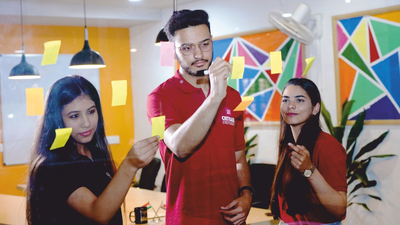
Open any app on your phone, and within seconds, you know whether it was built with you in mind. Something works, or it does not. You find what you need, or you give up. That gap between apps people love and apps they quietly uninstall is rarely a technology problem.
It is almost always a design problem. And the people who solve it belong to a field most students have never seriously considered, and that very few universities in India are yet equipped to teach well. Chitkara University in Chandigarh is among the ones that are.
What happens in the first few seconds
There is a rough rule in product design. If a user cannot figure out what to do within the first thirty seconds, they are gone. Not frustrated, not willing to give it another shot. Just gone.Research published in journals on human-computer interaction suggests people form a visual opinion about an interface in as little as fifty milliseconds, faster than a conscious thought. The layout, the spacing, the weight of a heading: all of it lands before a single word is processed. That first impression is the work of a UX/UI designer, and getting it wrong has consequences that no amount of good engineering can undo.
From food delivery apps to UPI, someone designed all of this
Think about the last time you ordered food on your go-to food delivery app. You found a restaurant, customised your order, paid, and tracked your delivery without once stopping to wonder what button to press next. That seamlessness is not accidental. It is the result of hundreds of deliberate decisions about flow, visual hierarchy, feedback, and friction.UPI handles over ten billion transactions a month across India.
Most of its users had never made a digital payment before it arrived. The reason it worked is not just that the technology was sound. It is that the experience was simple enough for a sixty-year-old shopkeeper in a tier-three town to trust on the first try.The people who made those decisions are UX/UI designers. And right now, there are not nearly enough of them.
Why tech companies are hiring designers as fast as engineers
For a long time, the assumption in the tech industry was that design was secondary.
Build it first, make it look good later. That assumption has quietly collapsed.What changed is not taste. What changed is the data. According to McKinsey's research on design value, companies that invest seriously in design outperform industry benchmarks on revenue growth by a significant margin.LinkedIn data tells a clear story: UX design has ranked among the top emerging jobs year after year, with hiring volumes growing dramatically over the past decade, making it one of the most in-demand skill sets in the modern workforce.
The demand cuts across fintech, healthtech, edtech, e-commerce, and government digital services. Every industry building a digital product needs people who understand how humans think, not just how systems work.
Design is not about making things look pretty
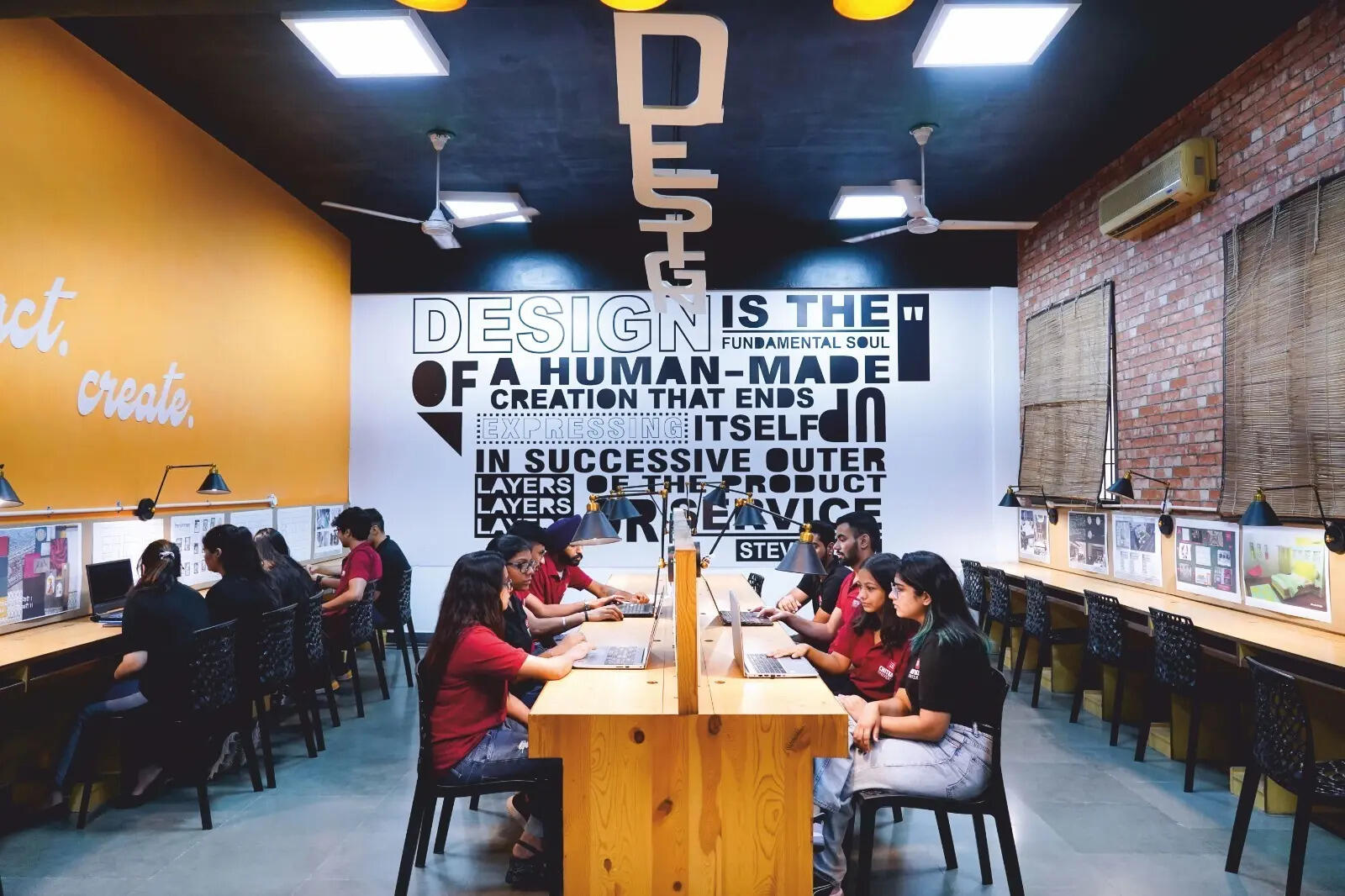
This is the misconception that costs students the most. UX/UI design is not graphic design. A UX designer is not the person who picks the colour palette. They are the person who figures out why users keep abandoning a checkout page at the last step and then fixes it.Before a single screen is designed, a trained UX designer has already spent time with real users: watching how they navigate, where they hesitate, and what they misread. They map journeys, build prototypes, test assumptions, and often throw out an entire approach because the evidence says it will not work. By the time a product goes live, hundreds of small decisions have already been made and remade on the user's behalf.It is part psychology, part problem-solving, part craft. The best designers are relentlessly curious about why people do what they do.
What a structured design education actually changes
The tools - Figma, Adobe XD, Maze, Hotjar - are learnable by anyone with a YouTube account. That is not the argument for a formal degree in UX/UI design. The argument is for what four years of structured exposure builds that a playlist of tutorials simply cannot.It builds the ability to defend a design decision under pressure.
To run a usability study and draw the right conclusions. To work inside a product team, understand constraints, and still advocate for the user. These are not skills that come from watching someone else do it. They come from doing it badly, being critiqued, and doing it better.The B.Des in Communication Design with Artificial Intelligence (AI) with specialisation in UX/UI at Chitkara University's School of Design is built around exactly this kind of learning.
The curriculum was developed in active conversation with industry practitioners, not derived from a standard template. Faculty bring direct product experience into the classroom. Students work on live briefs from real organisations, not simulated exercises.The difference between a student who has done that and one who has only watched tutorials becomes obvious the moment either walks into an interview.
The portfolio is what gets you in the room
Design hiring works differently from engineering hiring.
There is no algorithm test at the door. What a recruiter at a product company wants to see is a body of work that shows how you approach problems, how you think through constraints, and how your ideas hold up when they meet real users.A strong portfolio is built over time, not assembled the week before an interview. It requires access to real projects, feedback from experienced designers, and an environment that encourages experimentation.
This is why where a student studies matters as much in design as it does in engineering.
A note for parents who are still not sure this is serious
The concern is understandable. Design has historically not been taken as seriously as engineering or medicine when families sit down to discuss career paths. But the economics have shifted considerably.A UX designer’s salary in India at the senior level is today firmly in the high-earning bracket. At global product companies, UX leads and design directors are among the most sought-after and well-compensated people in the room. It is also a career that has only grown more relevant as AI has become part of everyday products. The designers who understand how to work with AI tools, use them to prototype faster, test smarter, and personalise experiences at scale, are already among the most valuable people in product teams. Knowing the technology is one thing. Knowing how to make it work for real people is another, and that is what trained UX designers bring to the table.
The honest bottom line
Every digital product you use today was shaped by someone's design decisions. The apps that stuck around did so because those decisions were good. The ones you deleted after a week did not make the cut.India is building more digital products than at any point in its history. The gap between the technology being produced and the design thinking being applied to it is real, and growing. Students who graduate with the instincts, the skills, and a portfolio to show for it will find no shortage of places willing to hire them.Chitkara University has made a deliberate choice to treat design education as a serious discipline, not a peripheral one. The B.Des in Communication Design with Artificial Intelligence (AI) with specialisation in UX/UI is built for students who want to shape how people experience technology, and who understand that behind every app someone loves, there is a designer who spent years learning exactly how to make that happen.Disclaimer - The above content is non-editorial, and TIL hereby disclaims any and all warranties, expressed or implied, relating to it, and does not guarantee, vouch for or necessarily endorse any of the content.








 English (US) ·