

 1 week ago
12
1 week ago
12
ARTICLE AD BOX
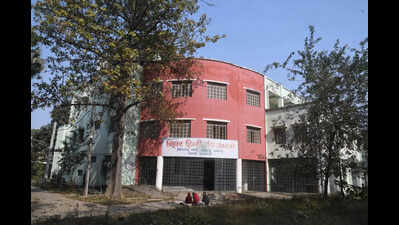
In a bold stride towards linguistic preservation, Bihar's cabinet has greenlit the formation of two fresh academies dedicated to Prakrit and Pali. This initiative seeks to revive these time-honored languages, despite the fact that current language academies have been somewhat sidelined.
Patna: Even as the existing language academies in Bihar continue to languish due to lack of proper care and maintenance, the state cabinet last month decided to set up two new vernacular academies — Prakrit and Pali — aimed at promoting and preserving ancient languages.Both academies will function under the administrative control of the newly created higher education department, according to a notification issued by the cabinet secretariat.Experts said Prakrit and Pali are ancient languages that evolved from Sanskrit, India’s classical language. Pali continues to be used as the canonical language of Buddhism in Sri Lanka and several countries of Southeast Asia, while Prakrit languages such as Sauraseni, Magadhi and Gandhari reflect various strands of Hindu and Buddhist traditions.Former head of the ancient Indian history and archaeology department at Patna University, Jayadeo Mishra, said Pali and Prakrit lie at the very roots of India’s culture. He said the govt’s decision to establish these academies would have a long-term impact on higher education in India, particularly because Bihar is the land that preserves the eternal legacy of Buddha and his teachings.Prakrit languages, also referred to as Middle Indo-Aryan languages, developed from classical Sanskrit before the emergence of modern derivative languages.
These vernaculars played a major role in the cultural and social life of ancient India.However, Mishra expressed scepticism about the effective implementation of the decision. He recalled that around two years ago, the govt had announced the setting up of two new academies to promote local dialects — Surjapuri and Bajjika — spoken in the politically influential Seemanchal and Bajjikanchal regions of the state.Surjapuri, a mix of Hindi, Maithili and Bangla, is spoken in the Seemanchal region, which includes Purnia, Katihar, Kishanganj and Araria districts. The dialect is largely spoken by Surjapuri Muslims, who constitute about 70% of the population in Kishanganj district. The dialect traces its origin to the Surjapur Paragana, which reportedly no longer exists.Bajjika, a language closely related to Maithili, is spoken by people living in north-west Bihar.
It is used mainly in Vaishali, Muzaffarpur and parts of Sitamarhi, Sheohar and Samastipur districts, and is considered a blend of Hindi and Maithili. Although Bajjika is one of the five recognised languages of Bihar, it has not attained the same level of prominence as Maithili and Bhojpuri.Retired Hindi teacher of Patliputra University Badri Narayan Singh observed that the primary objective behind setting up new academies is to promote vanishing dialects of the state, encourage deeper research in these languages and make them more popular among the wider public.At present, Bihar already has eight academies dedicated to Hindi, Bangla, Urdu, Bhojpuri, Maithili, Angika, Magahi and south Indian languages. While Maithili and Bhojpuri have secured a culturally rich position among the state’s languages, several others, including Surjapuri and Bajjika, continue to lag far behind.






 English (US) ·