

 3 hours ago
4
3 hours ago
4
ARTICLE AD BOX
3 min readRaipurFeb 21, 2026 07:17 AM IST
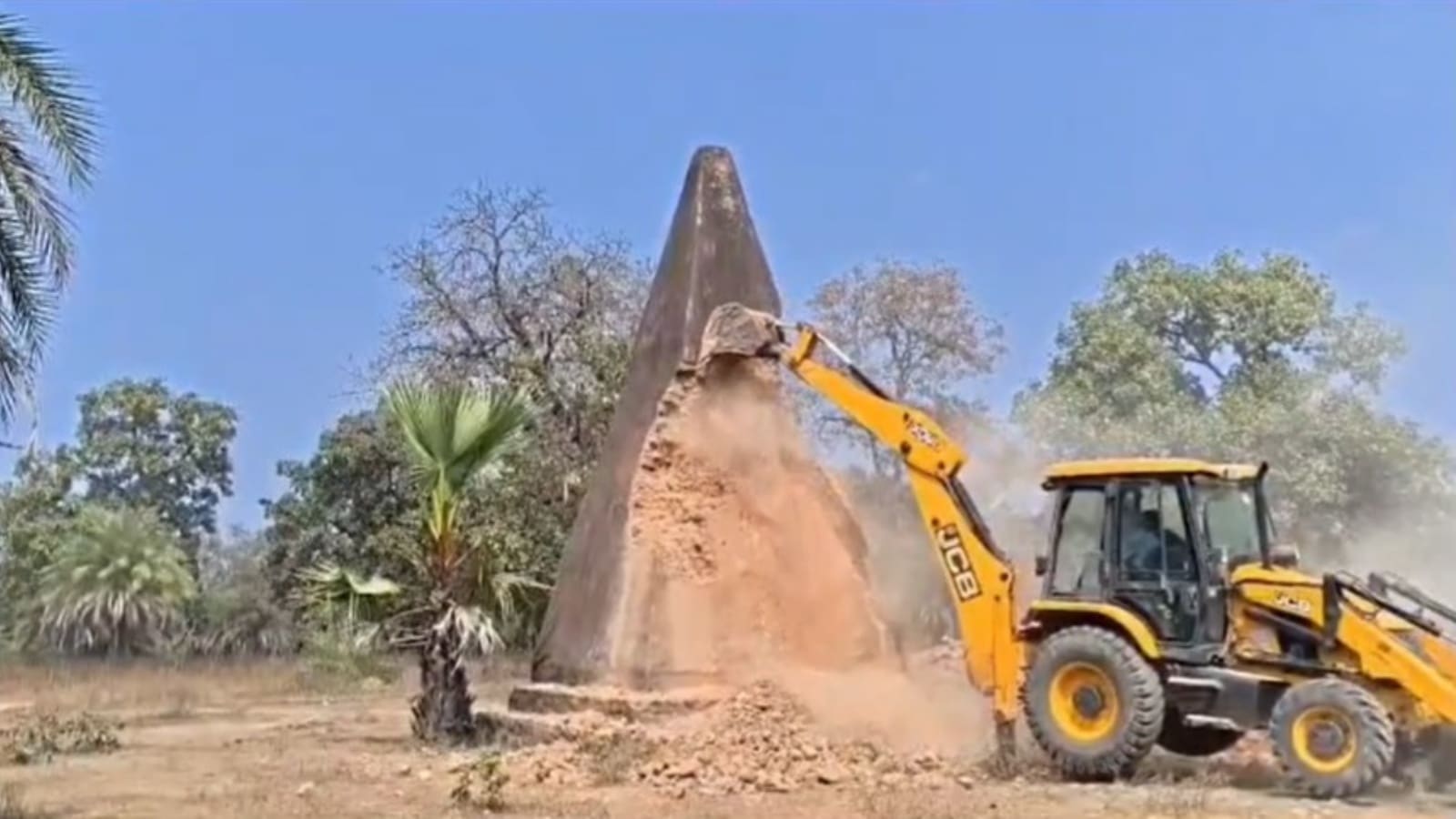 Among these structures, the tallest stood at 64 feet and had been erected at Komatpalli village, around 90 km from Bijapur district headquarters towards the Telangana border.
(X/@gpsinghips)
Among these structures, the tallest stood at 64 feet and had been erected at Komatpalli village, around 90 km from Bijapur district headquarters towards the Telangana border.
(X/@gpsinghips)
For over 40 years, Chhattisgarh’s Bastar region was a bastion for Maoists, who controlled large areas and built hundreds of memorials that became a symbol of their dominance in the region.
ARTICLE CONTINUES BELOW VIDEO
Over the last three years, however, things have changed. In a major push, security forces have killed over 520 Maoists, while several others surrendered. In this period, the forces also demolished over 100 Maoist memorials, which were built by the violent rebels in honour of their leaders and other members.
“Brick by brick, we would destroy the idea and its manifestation in each and every form,” G P Singh, Director General of the Central Reserve Police Force (CRPF), said in a social media post along with a video of one such memorial being destroyed by security forces with a JCB machine.
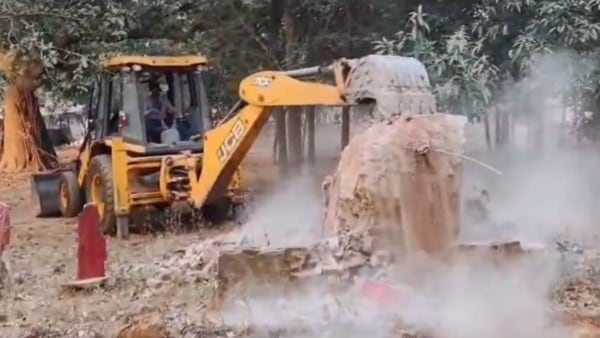 In six years, from 2018 to 2023, security forces had destroyed around 60 memorials, of which 24 were destroyed in 2021. (X/@gpsinghips)
In six years, from 2018 to 2023, security forces had destroyed around 60 memorials, of which 24 were destroyed in 2021. As the forces intensified their operations in 2023, the numbers increased — between 2023 and February 2026, as many as 113 memorials were destroyed.
Among these structures, the tallest stood at 64 feet and had been erected at Komatpalli village, around 90 km from Bijapur district headquarters towards the Telangana border.
In August 2022, Maoists gathered hundreds of villagers in Komatpalli to celebrate ‘Shahidi Saptah (Martyrs’ Week)’, which was attended by top Maoist leaders surrounded by members of the deadly Battalion 1 — considered the most dangerous battalion of the People’s Liberation Guerrilla Army, the armed wing of the Communist Party of India (Maoist). At the time, the village was out of the security forces’ reach. All that changed last year.
“We demolished that structure in January 2025,” recalled Bijapur SP Jitendra Kumar Yadav.
Story continues below this ad
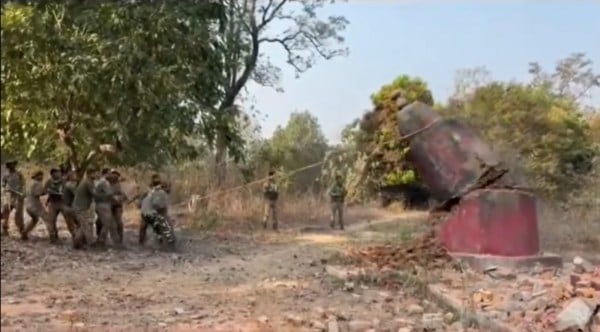 As the forces intensified their operations in 2023, the numbers increased — between 2023 and February 2026, as many as 113 memorials were destroyed. (X/@gpsinghips)
Inspector General of Police for Bastar range, Sundarraj P, said, “The removal of Maoist memorials and symbols is a conscious decision to end the ideological influence of Maoism and to strengthen the process of restoring normalcy in the region, reinforcing good governance, and integrating society into the mainstream. The demolition of memorials established by Maoists is a significant step toward eliminating their symbolic and psychological influence.”
“Earlier, such memorials were used by Maoists as instruments to maintain fear, dominance, and ideological control within local communities. Their removal sends a clear message that the legitimate authority of the state and the rule of law are being steadily reinforced in the region, and that Maoist influence is gradually weakening,” the IG said.

Jayprakash S Naidu is a Principal Correspondent for The Indian Express, currently serving as the state correspondent for Chhattisgarh. With an extensive career in frontline journalism, he reports on the political, security, and humanitarian landscape of Central India. Expertise and Experience Specialized Conflict Reporting: Jayprakash is a leading voice on the Maoist/Naxalite conflict in the Bastar region. His reporting provides a critical, ground-level view of: Internal Security: Tracking high-stakes encounters, surrender programs for senior Maoist leaders, and the establishment of security camps in formerly inaccessible "heartland" villages. Tribal Rights & Displacement: Investigative reporting on the identity and land struggles of thousands of displaced tribals fleeing conflict zones for neighboring states. Governance & Bureaucratic Analysis: He consistently monitors the evolution of Chhattisgarh as it marks 25 years of statehood, covering: Electoral Politics: Analyzing the shift in power between the BJP and Congress and the impact of regional tribal movements. Public Policy: Reporting on landmark infrastructure projects (e.g., mobile connectivity in remote zones) and judicial interventions, such as High Court rulings on civil and family law. Diverse Investigative Background: Prior to his current focus on Chhattisgarh, Jayprakash held reported from Maharashtra, where he specialized in: Crisis & Disaster Management: Notable for his extensive coverage of the Cyclone Tauktae barge tragedy (P-305) and the COVID-19 pandemic’s impact on frontline personnel. Legal & Human Rights: Investigative pieces for platforms like Article-14, focusing on police accountability and custodial deaths across India. Environmental & Social Justice: Authoritative reporting on the Hasdeo Aranya forest protests and the approval of major tiger reserves, highlighting the tension between industrial mining and environmental preservation. ... Read More
Stay updated with the latest - Click here to follow us on Instagram
© The Indian Express Pvt Ltd







 English (US) ·