

 4 hours ago
5
4 hours ago
5
ARTICLE AD BOX
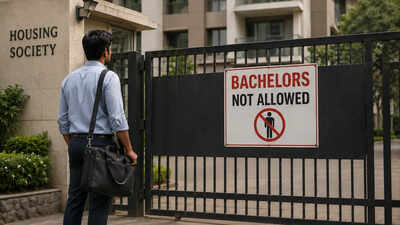
Finding accommodation in Indian cities can often become an uphill battle for bachelors, with many housing societies imposing informal restrictions, extra scrutiny and moral policing.
Students and young working professionals frequently face objections over guests, late-night entries and even their marital status, despite paying the same rent and maintenance charges as other residents.The issue is far from new. Incidents across cities over the years have repeatedly reignited debate over whether housing societies can legally restrict bachelors from renting homes. A few years ago in Noida, residents of Emerald Court society in Sector 93A issued notices asking bachelor tenants and students staying in paying guest accommodations to vacate following complaints from some residents.
Around the same time, reports from Bengaluru highlighted how many single tenants were subjected to stringent housing society rules, including restrictions on visitors and overnight guests.Even today, restrictions and additional scrutiny against bachelors continue in several housing societies across cities.While such practices are common across urban housing societies, no specific nationwide law bars individuals from renting homes based on marital status.
Legal challenges to such restrictions are generally argued through constitutional protections related to equality, liberty and privacy.Article 19(1)(e) of the Constitution guarantees every citizen the right to reside and settle in any part of India. Article 21, which protects the right to life and personal liberty, has also been interpreted to include dignity, privacy and personal autonomy, including the right to choose how and with whom one lives.
Article 14 guarantees equality before the law and prohibits arbitrary discrimination.Housing societies are governed by state-specific cooperative laws and bye-laws that generally allow them to frame rules related to tenant registration, security procedures and visitor protocols. However, these powers do not ordinarily extend to imposing blanket bans on bachelors or unmarried couples.In Maharashtra, for instance, cooperative housing societies function under the Maharashtra Co-operative Societies Act, 1960, related rules and approved bye-laws, meaning any restriction imposed by a society must be legally valid, reasonable and adopted through due procedure.







 English (US) ·