

 1 hour ago
6
1 hour ago
6
ARTICLE AD BOX

Most working professionals don’t exercise during the week. They just run out of time. Long commutes. Back-to-back meetings. Deadlines. By the time the day ends, the only thing that feels doable is dinner and bed.
So Monday to Friday becomes a blur of sitting. At a desk. In a car. On a couch. And then Saturday arrives, and suddenly there’s guilt. So we hit the gym hard. Or go for a long run. Or sign up for that intense boot camp class. Two sweaty days meant to fix five inactive ones.But can it really work like that?“A common question comes up in cardiology clinics: Is that enough? Can concentrated weekend exercise cancel out five largely inactive days when it comes to heart health?,” says Dr.
Ravindranath Reddy D R, HOD & Sr Consultant - Interventional Cardiology, Gleneagles BGS Hospital Kengeri Bengaluru.“The short answer is: it helps — but it doesn’t fully erase the effects of sitting still all week.”If weekdays are packed, think small. A 20 minute brisk walk after dinner. Taking the stairs. Standing during phone calls. Stretching between meetings. Even short bursts of movement break up long sitting hours and keep the body more active overall.
Then your weekend workout becomes a bonus, not a rescue mission.
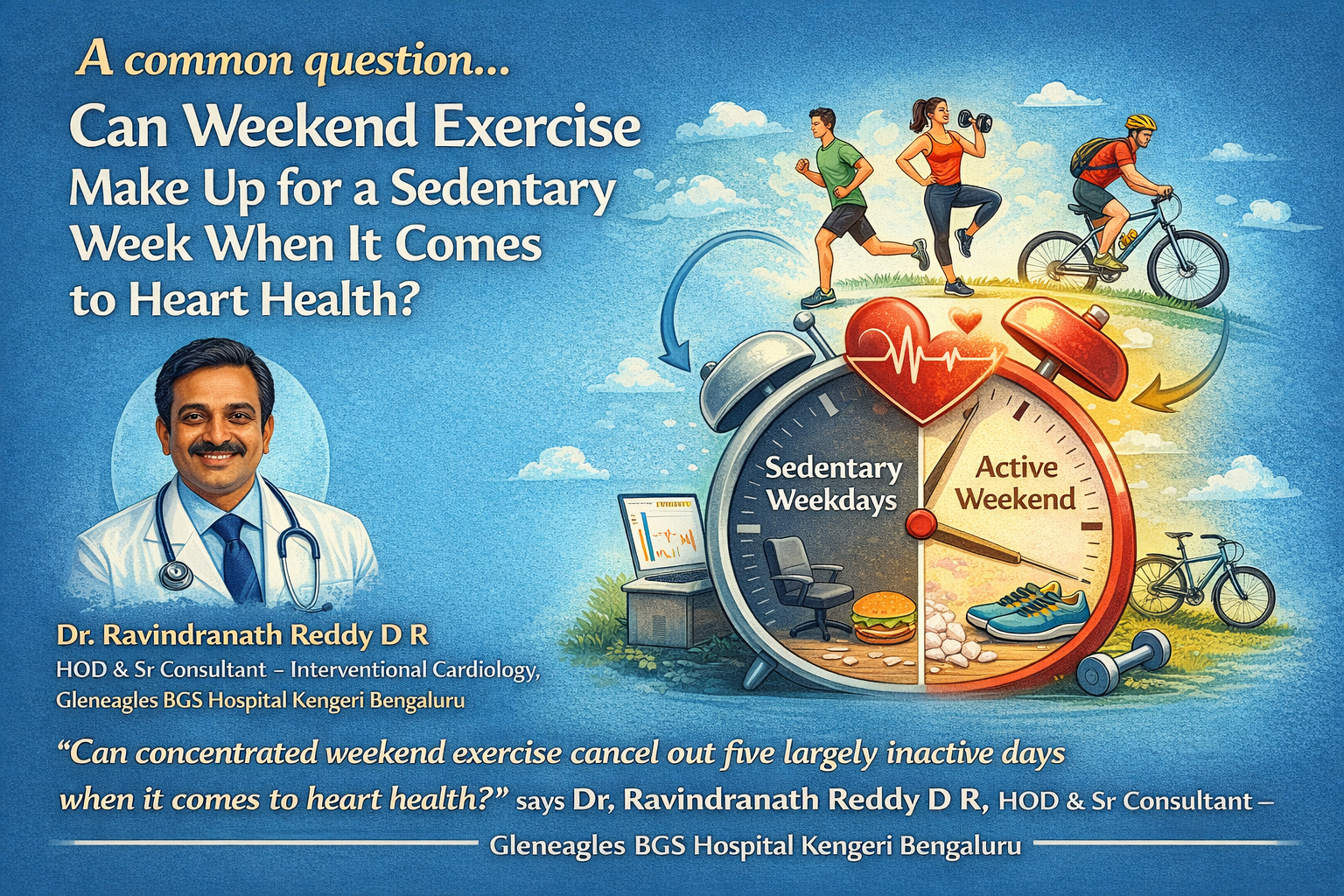
Image: AI
“From a cardiovascular standpoint, regular movement matters because the heart and blood vessels respond to frequent signals. Physical activity improves insulin sensitivity, lowers resting heart rate, enhances endothelial function (how well blood vessels dilate), and helps regulate blood pressure. When movement is confined to just one or two days, many of these benefits still occur, but they are less evenly distributed over time,” says the Bengaluru-based doctor.
Large population studies have shown that so-called “weekend warriors” — people who meet recommended exercise targets in one or two sessions per week — do have lower risks of heart disease and early mortality compared to those who remain inactive. That’s encouraging. It means concentrated exercise is far better than none.“However, prolonged sitting introduces its own cardiovascular stress. Hours of uninterrupted inactivity are associated with impaired blood sugar regulation, reduced lipid metabolism, and subtle changes in vascular tone.
Even among people who exercise regularly, extended sedentary time has been linked to higher cardiometabolic risk. In simple terms, the body doesn’t fully “forget” five days of stillness just because Sunday was intense,” he explains and talks about the pattern of the workout.“Many individuals push hard to compensate for the week — sudden long runs, heavy lifting, high-intensity classes without adequate conditioning.
For an unprepared heart, abrupt spikes in exertion can increase the risk of musculoskeletal injury, abnormal heart rhythms, or excessive fatigue. This is especially relevant for those with undiagnosed hypertension, sleep deprivation, or high stress levels,” he warns.
When someone barely moves all week and then suddenly pushes hard, muscles and joints aren’t always ready. That’s why so many “weekend warriors” end up with sprains, knee pain, or back issues.
It’s not that weekend workouts are bad. It’s that the jump from zero to hundred can be rough.
That doesn’t mean weekend workouts should be abandoned
Current cardiac guidelines emphasize total weekly activity, about 150 minutes of moderate exercise or 75 minutes of vigorous activity, but they also increasingly acknowledge the harm of prolonged sitting.Small shifts during the week make a meaningful difference: standing up every 30 to 60 minutes, short walks after meals, taking stairs when possible, brief stretching or mobility breaks between meetings.
These low-intensity movements improve glucose handling and circulation, easing the load on the heart even before formal exercise begins, says the doctor.For heart health, movement is cumulative. Weekend workouts contribute significantly, especially for busy schedules. But the strongest protection comes from giving the cardiovascular system regular reminders throughout the week that it was designed to move, the doctor urges.Medical experts consultedThis article includes expert inputs shared with TOI Health by: Dr. Ravindranath Reddy D R, HOD & Sr Consultant - Interventional Cardiology, Gleneagles BGS Hospital Kengeri BengaluruInputs were used to explain why physical activity is important, how weekend workouts should be done without resulting in any sort of cardiovascular stress.








 English (US) ·