

 11 hours ago
7
11 hours ago
7
ARTICLE AD BOX
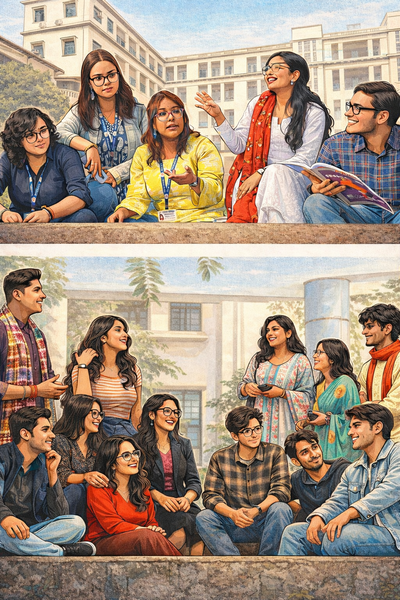
Young Kolkatans are actively living the Constitution, redefining freedom beyond textbooks. They navigate online spaces with caution, valuing authenticity and responsibility. Campuses offer a sanctuary for open discourse, contrasting with societal expectations. Personal choices in attire, food, and careers embody everyday liberty, while the generation grapples with the gap between constitutional ideals and lived realities of equality and equity.
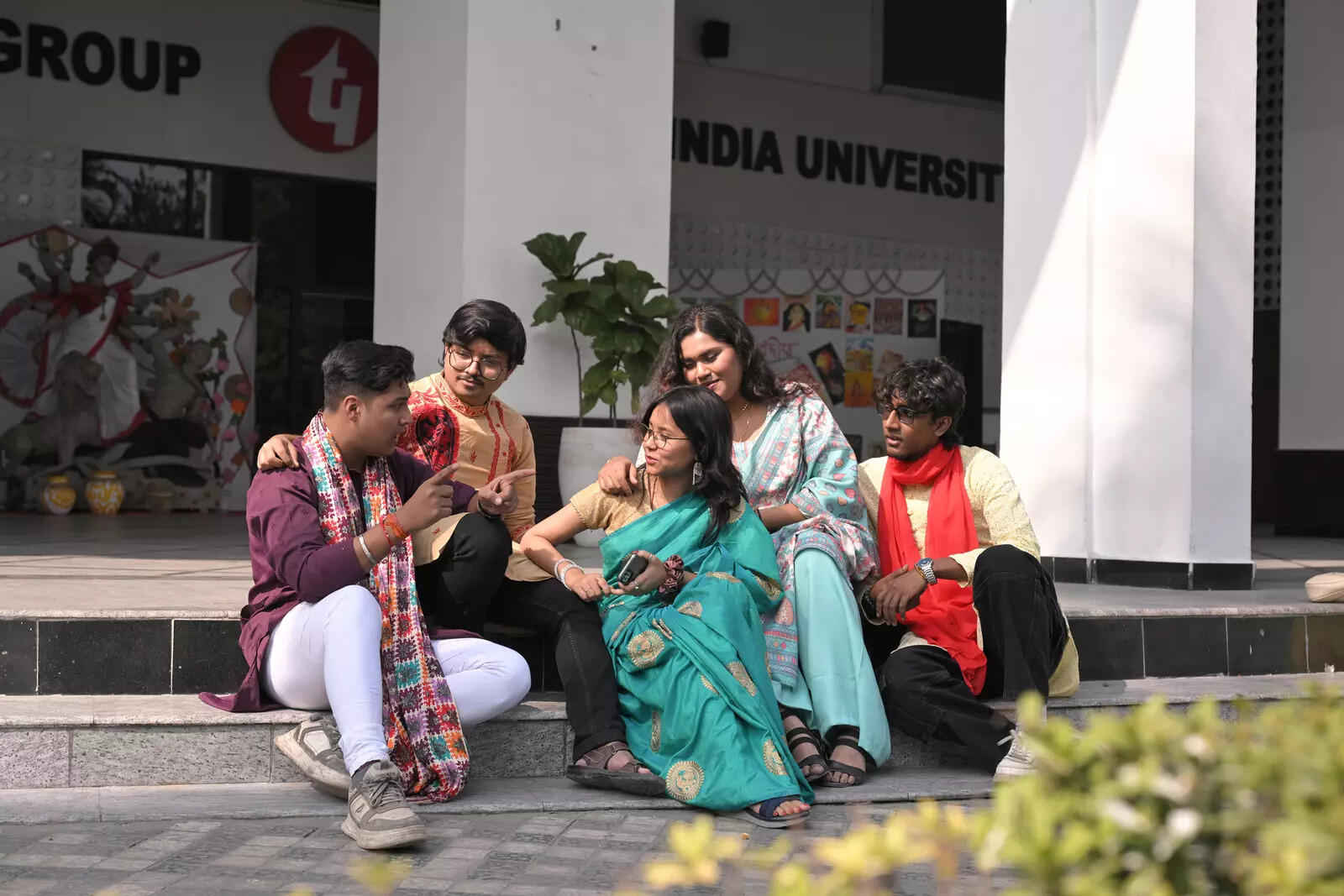
(From left) Chirag Kalyani, Sagnik Ghosh, Sharanya Sinha, Nilanjana Malakar & Swapnil Roy from Techno India University
This Republic Day, we turned the mic toward a generation that’s living the Constitution, not just studying it. From Article 19’s promise of free speech to Article 21’s assurance of personal liberty, young voices across Kolkata describe freedom, equality and choice in a world of hashtags, moral policing and constant opinion.
Here’s what they told us...For the college students we spoke to, liberty isn’t trapped in textbooks. It shows up in what they wear, post, eat – and what they dream of becoming. Between the right to dissent and the right to just be, these students are redefining what constitutional freedom looks like in 2026 – thoughtful, outspoken, and unapologetically their own.
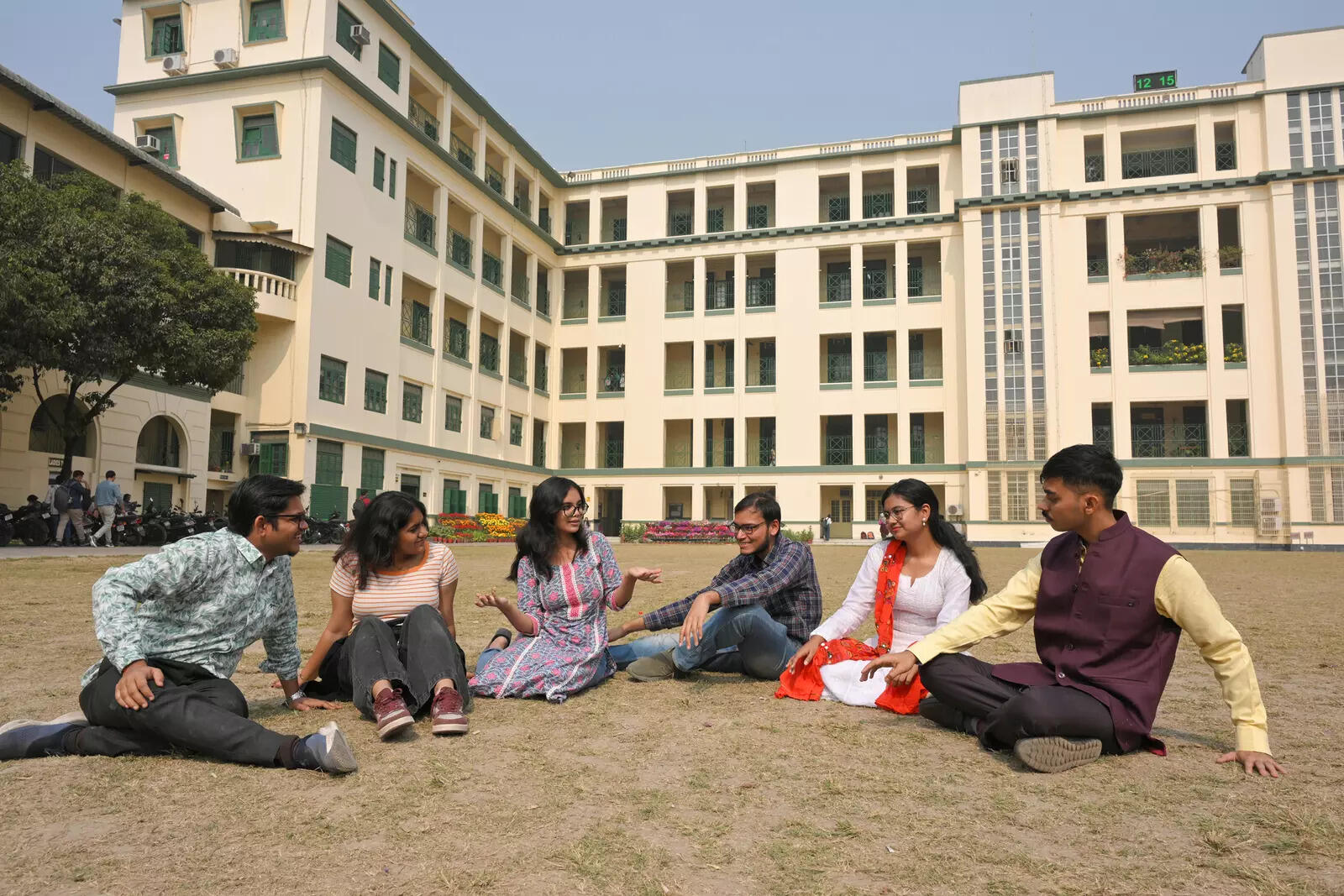
The new free speech: “It depends on where I say it”In a hyper-connected world, students don’t speak about free speech as a simple right.
They speak about context, consequence and control – especially online.Chirag Kalyani, a second-year BCom student at Techno India University, puts it plainly: “Freedom of speech means the ability to express my thoughts, ideas, and plans without the fear of being punished or socially excluded.” Among friends, he feels secure. On social media, he admits he “often find myself holding back out of fear of the consequences.”
At Loreto College, Soumiki Ganguly calls free speech “empowering and tricky.” She says it’s easier with friends, but on social media she “definitely think twice,” not because she’s afraid, but because “one post can be taken out of context or judged harshly.”At Jadavpur University, Neel Mitra zooms out to what thisdoes to public life: In a world that’s “increasingly polarised,” “the slightest disagreements can lead to reputational damage… and in extreme cases, ostracization,” making people “increasingly careful in sharing what they truly think,” something he calls “damaging (to) the social fabric.”
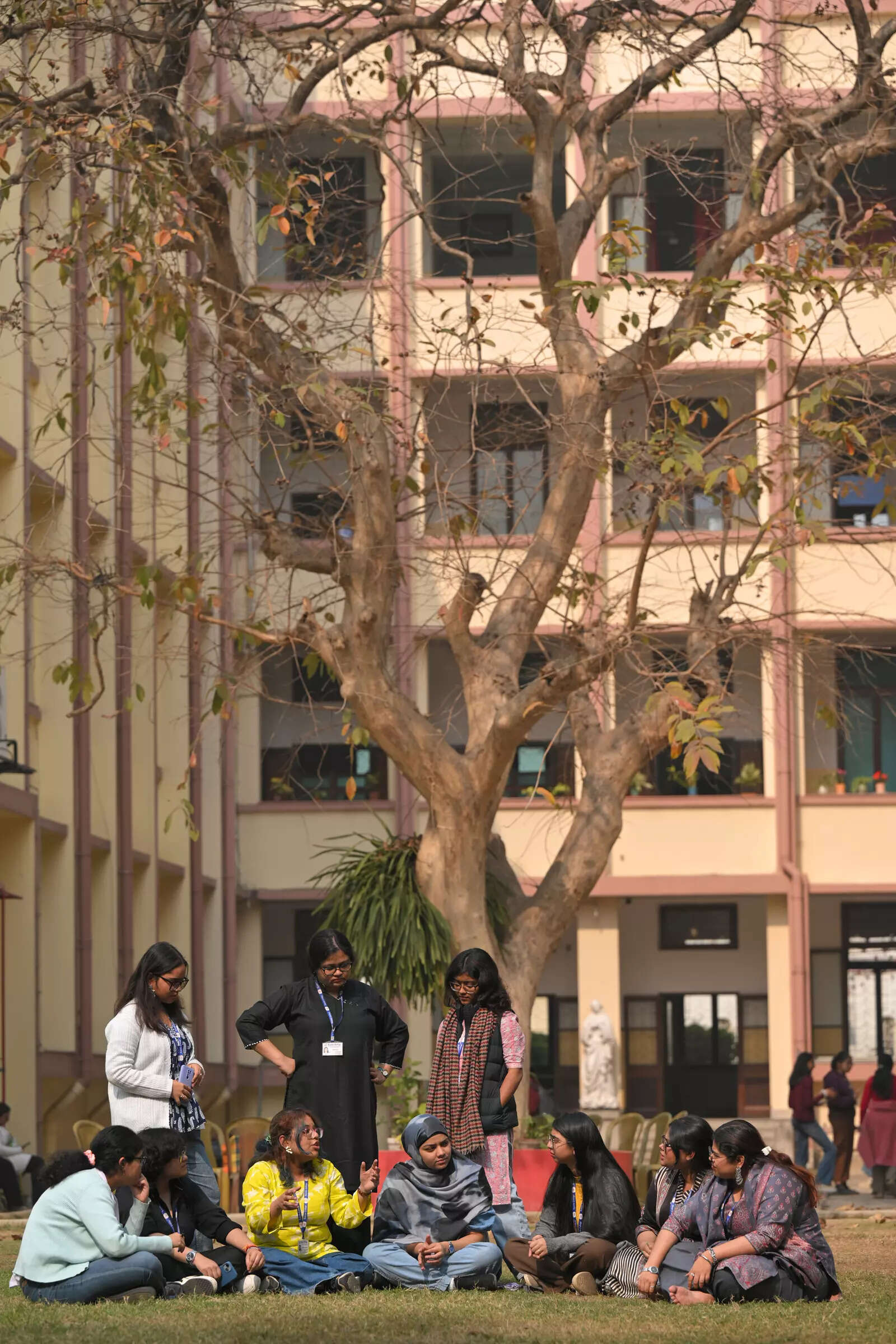
(From left standing) Oishee Dasgupta, Mehuli Rudra & Urjaswi Dam; (sitting from left) Rajoshi Ray, Ruchika Majumdar, Aankita Roy Chowdhury, Hifza Shahnawaz, Yasra Ahmed, Soumiki Ganguly, Uma Khanna from Loreto College
Others frame caution as responsibility rather than silence. Tirtharaj Bardhan says freedom of speech is “the courage to be authentic while remaining responsible.” Online, he thinks twice “not out of fear,” but to ensure his words contribute “value rather than noise.” And at St Xavier’s College, Saranya Chattopadhyay echoes the same ethic: “On social media, I pause, not because I’m silenced, but because every sentence carries consequences.
”Campus vs city: where freedom feels “real,not conditional”Across colleges, a striking pattern emerges – students repeatedly describe campus as a place where questioning is expected – and the city as a place where invisible boundaries return.Sharanya Sinha, a final-year legal science student at Techno India University, calls campus a space “where questioning is encouraged and disagreement is respected.” For her, this matters because “constitutional democracy thrives on debate and dissent.”
She points to the Supreme Court verdict in the S Rangarajan vs P Jagjivan Ram case, emphasising that open discussion is essential to a healthy democracy. The contrast, she says, is that in the city and neighbourhood, freedom often operates “within invisible social boundaries shaped by public opinion and moral expectations.
” The campus, in her words, offers “confidence.”Loreto’s Mehuli Rudra feels most free on campus because she doesn’t have to “explain or defend my choices”; she can “voice my opinions, experiment with my style, and have open conversations without being judged.”
Freedom feels “real, not conditional.” Outside the gates, “the city comes with unspoken rules and expectations.”
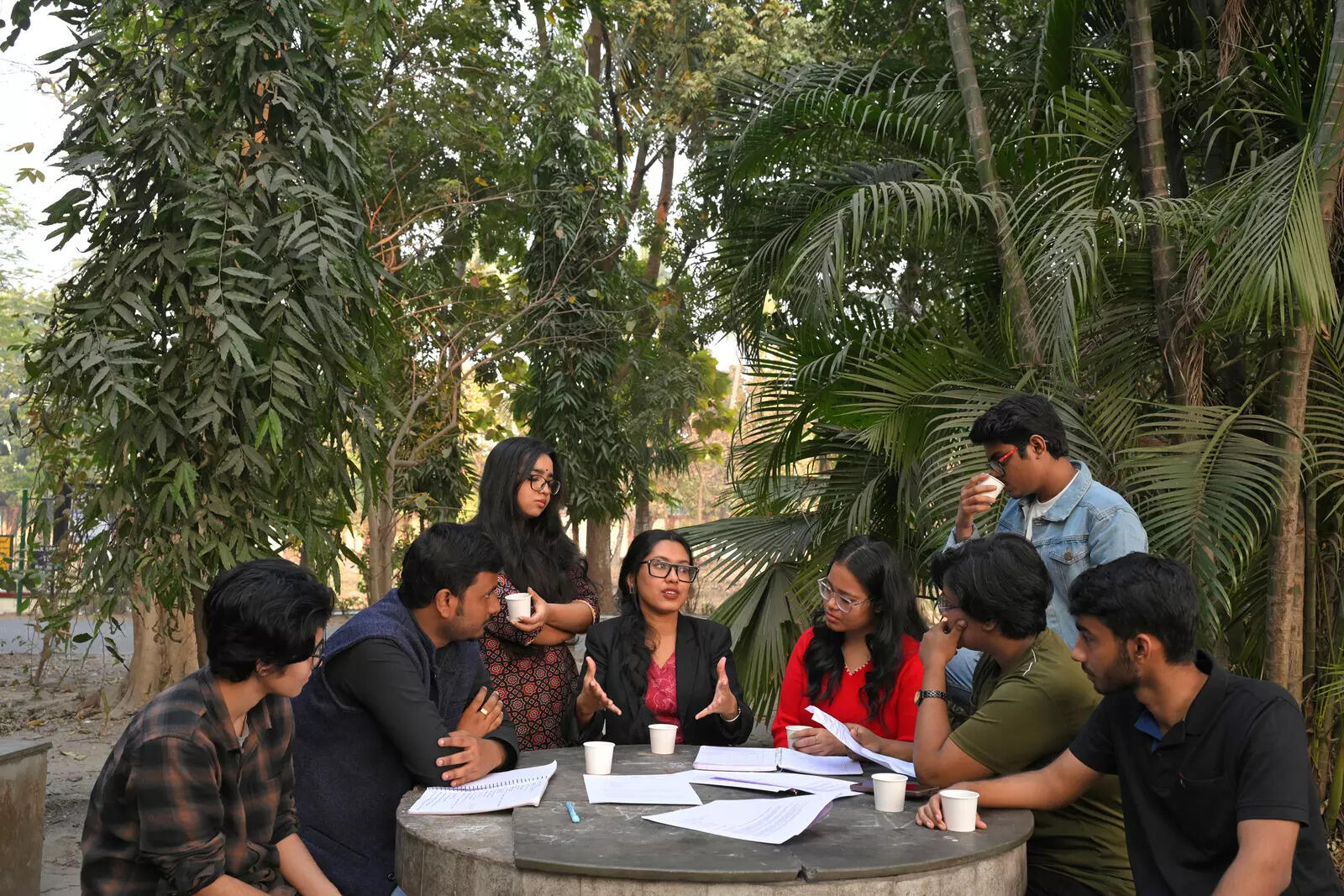
(From left) Nandini Mukherjee, Tirtharaj Bardhan, Koushani Chakraborty, Anwesha Pal, Kangkana Roy, Anurag Baidya, Devasmita Dutta & Neel Mitra from Jadavpur University
At Jadavpur University, Devasmita Dutta describes campus as “a free space of reasoned exchange,” where “ideas circle freely like birds in Tagore’s fearless sky.” Tirtharaj calls it a structured “brave space,” designed for “intellectual exploration and dissent,” unlike the “judgmental… gaze” outside.But the idea of safety is not uniform. Anwesha Pal says she doesn’t associate freedom with “a geographical location… but with the people around me.” In a city where safety is a “rising concern,” she defines freedom as having her “boundaries – physical and emotional – truly honored.” Adrija Saha, at St Xavier’s, puts it in daily terms: Campus feels safe; the city “becomes a completely safe space” only when she can return home at night without herparents anxious. Choice as everyday liberty: Clothes, food, careersWhen students speak about constitutional freedom, many return to the personal – the small choices that reveal how free you are allowed to be.Swapnil Roy, a second-year BTech student, calls choice “breathing room” – “the space to be myself without someone constantly editing my decisions.” “Yes, we live in a country that gives us rights,” he adds, “but what matters more is whether people let you live them.”
He chooses clothes “to match my mood, not a rulebook,” eats what makes him happy, and is learning to choose “passion over pressure – because success means little if it doesn’t make you proud.
”Sagnik Ghosh, in his third year, describes freedom as “being the editor of my own rulebook.” Culturally, it’s the joy of expression – “dance in the rain” or “paint my thoughts in bright chaos.” Financially, it’s “earning my own money” and deciding how to spend it – “a quiet kind of confidence no allowance can buy.”
Socially, it’s speaking up without being “boxed in or branded.”At Loreto, Hifza Shahnawaz frames cultural freedom as the ability to “choose two different cultures and traditions and become a person of my own.” Socially, she wants to be valued for “my potential and not for what I look like.” Financially, she connects career to responsibility: work that benefits her, and also lets her “give back.”Equality vs equity: the “blueprint” and the lived gapStudents repeatedly underline a hard truth: equal rights on paper are not equal rights in practice.
Nilanjana Malakar calls the Constitution’s promise “empowering and challenging.” On paper it offers dignity and freedom, but “equality is not just about what’s written; it’s about how we practice it in classrooms, streets, and homes.” For her, the Constitution is a “blueprint,” and “it’s up to our generation to build a society that actually lives by it.
” Aankita Roy Chowdhury takes it further: “Equality on paper doesn’t always translate to equality in practice.”
Because social and economic realities differ, “treating everyone the same doesn’t always mean treating them fairly.” Equity, she argues, is creating systems that give everyone “a real chance to enjoy the rights they already have.” At St Xavier’s, Shruti Bose stresses that “structural inequalities… and uneven access to resources” shape how rights are experienced; the Constitution becomes “transformative,” demanding “continuous interpretation, enforcement and democratic engagement.”
Ramaditya Ganguly sums up the Republic Day test in one line: “The real work begins where the text ends.”I hold back on social media out of fear nof the consequences – Chirag Kalyani, Techno India UniversityThe real work begins where the Constitution’s text ends. Equal rights are not just written down, but lived out by everyone – Ramaditya Ganguly, St Xavier’s CollegeOur democratic constitutional rights are yet to be actualised; queer people live with fear of persecution – Nandini Mukherjee, Jadavpur UniversityFreedom is to be present at a table where I am valued for my potential and not for my looks or attire – Hifza Shahnawaz, Loreto CollegeThe Constitution promises that questioning is the foundation of a thinking republic – Saranya Chattopadhyay, St Xavier’s CollegeFreedom is ability to choose passion over pressure – Swapnil Roy, Techno India UniversityDr Ambedkar called the Constitution a ‘vehicle of life’; its spirit lives when citizens uphold these values – Devasmita Dutta, Jadavpur University It’s only on campus and among friends, I can speak my mind without fear – Mehuli Rudra, Loreto CollegePix: Anindya Saha


 English (US) ·