

 1 week ago
10
1 week ago
10
ARTICLE AD BOX
Last Updated:April 15, 2026, 10:48 IST
From grassroots workers to ministers and armed forces personnel, women from across sectors have been invited to Delhi as special guests for the three-day proceedings.


Prime Minister Narendra Modi is expected to address the Lok Sabha and present a roadmap for the Bill. (Sansad TV via PTI Photo)
As Parliament prepares to begin a three-day special sitting from Thursday to take up the Women’s Reservation Bill, the Centre has drawn up a large outreach plan to bring women from across the country to witness the proceedings in Delhi.
The move is aimed at marking the discussions as a landmark moment, with representation from diverse sections of society, from grassroots workers to elected representatives and prominent public figures.
The Telugu Desam Party (TDP) is bringing women legislators, corporation chairpersons and women ministers to be present in the national capital during the debate on the Bill.
The Shiv Sena, meanwhile, is inviting women from varied socio-economic backgrounds, including sanitation workers, labourers, members of self-help groups and beneficiaries of the Ladki Bahin Yojana. Many of them are travelling to Delhi for the first time, with some set to board a flight for the first time.
In parallel, the Centre has also sent out invitations to prominent citizens, celebrities and women from the armed forces, as part of efforts to make the session a broad-based and inclusive exercise.
What Will Happen During The Special Session?
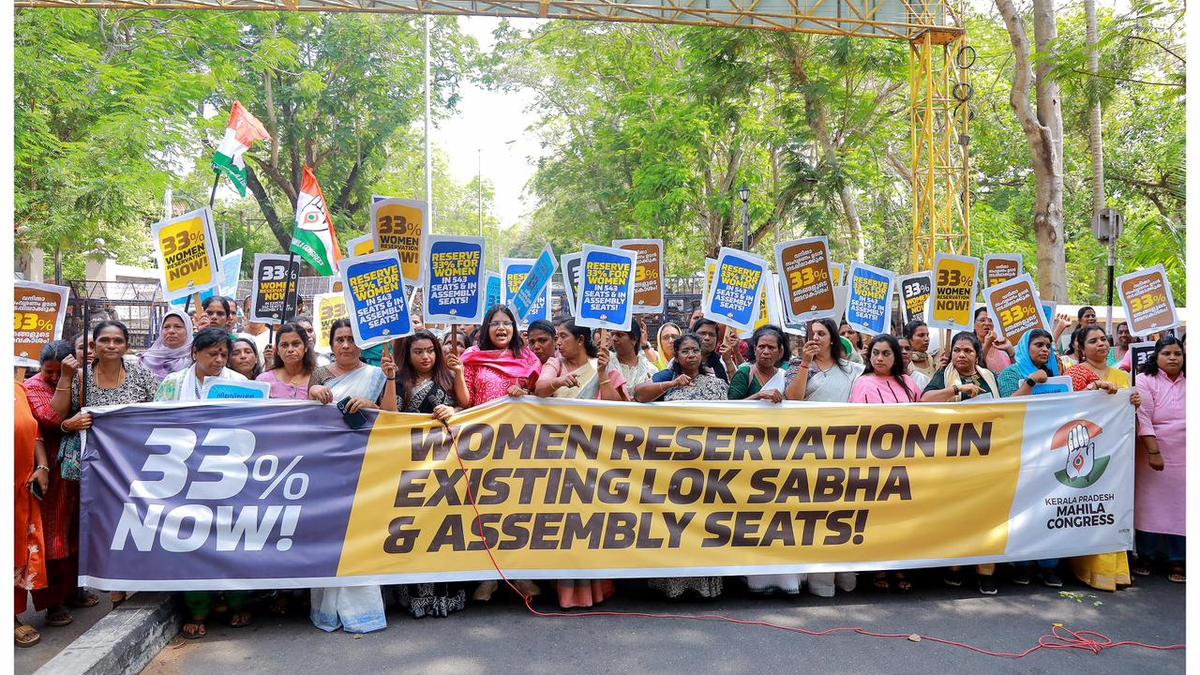
The special sitting, convened to discuss amendments to the Nari Shakti Vandan Adhiniyam passed in 2023, is expected to focus on enabling the implementation of 33 per cent reservation for women in the Lok Sabha and state assemblies ahead of the earlier timeline linked to post-2027 Census delimitation.
Prime Minister Narendra Modi is expected to address the Lok Sabha and present a roadmap for the Bill. The discussion is likely to run for 18 hours in the Lok Sabha and 10 hours in the Rajya Sabha, with voting scheduled for Saturday. Union Home Minister Amit Shah is expected to reply to the debate.
The Bill sets an upper limit of 850 members in the Lok Sabha, with “not more than 815" from states and “not more than 35" from Union Territories, with the final seat allocation to be determined by a delimitation commission.
The Prime Minister has described the move as reflecting the “sentiment of the nation" and the voice of “Nari Shakti", with the upcoming debate expected to shape the future of women’s political representation in India.
The government has also reached out to the Opposition, with PM Modi speaking to Congress president Mallikarjun Kharge, urging support for the Bill.
Why Is The Government Pushing Changes Now?
The proposed changes are aimed at overcoming legal and procedural hurdles that had delayed the implementation of the law passed in 2023.
A key move under consideration is to delink the reservation from the requirement of a fresh Census and subsequent delimitation. The original framework would have made implementation contingent on the next Census, now expected in 2027, potentially pushing the rollout to 2034.
The government instead plans to rely on 2011 Census data, allowing the reservation to be implemented in time for the 2029 general elections.
Another major element is the proposed expansion of Lok Sabha seats. The total strength could increase beyond the current 543, with around 273 seats earmarked for women. This approach ensures that the quota can be introduced without reducing the number of existing seats held by current members.
The expansion is also expected to raise reserved seats for Scheduled Castes and Scheduled Tribes. Seats for Scheduled Castes could increase from 84 to around 126–136, while those for Scheduled Tribes may rise from 47 to about 70, according to reports.
What Role Will Delimitation Play?
The government is also planning to introduce a Delimitation Bill, 2026, to redraw constituency boundaries based on 2011 Census data instead of waiting for updated population figures.
This is aimed at addressing concerns from southern states such as Kerala and Tamil Nadu, which have argued that using newer population data could penalise them for successful population control by reducing their relative representation.
Under the proposed approach, seats are expected to increase on a pro-rata basis, maintaining the political weight of states while enabling the implementation of reservation.
What Happens Next?
The legislative pathway will require two major constitutional amendments, each needing a two-thirds majority in both Houses of Parliament.
Handpicked stories, in your inbox
A newsletter with the best of our journalism
First Published:
April 15, 2026, 10:48 IST
News india Centre’s Big Outreach Plan: Women From All Sections Invited To Parliament For Reservation Bill
Disclaimer: Comments reflect users’ views, not News18’s. Please keep discussions respectful and constructive. Abusive, defamatory, or illegal comments will be removed. News18 may disable any comment at its discretion. By posting, you agree to our Terms of Use and Privacy Policy.
Read More




 English (US) ·