

 4 days ago
14
4 days ago
14
ARTICLE AD BOX
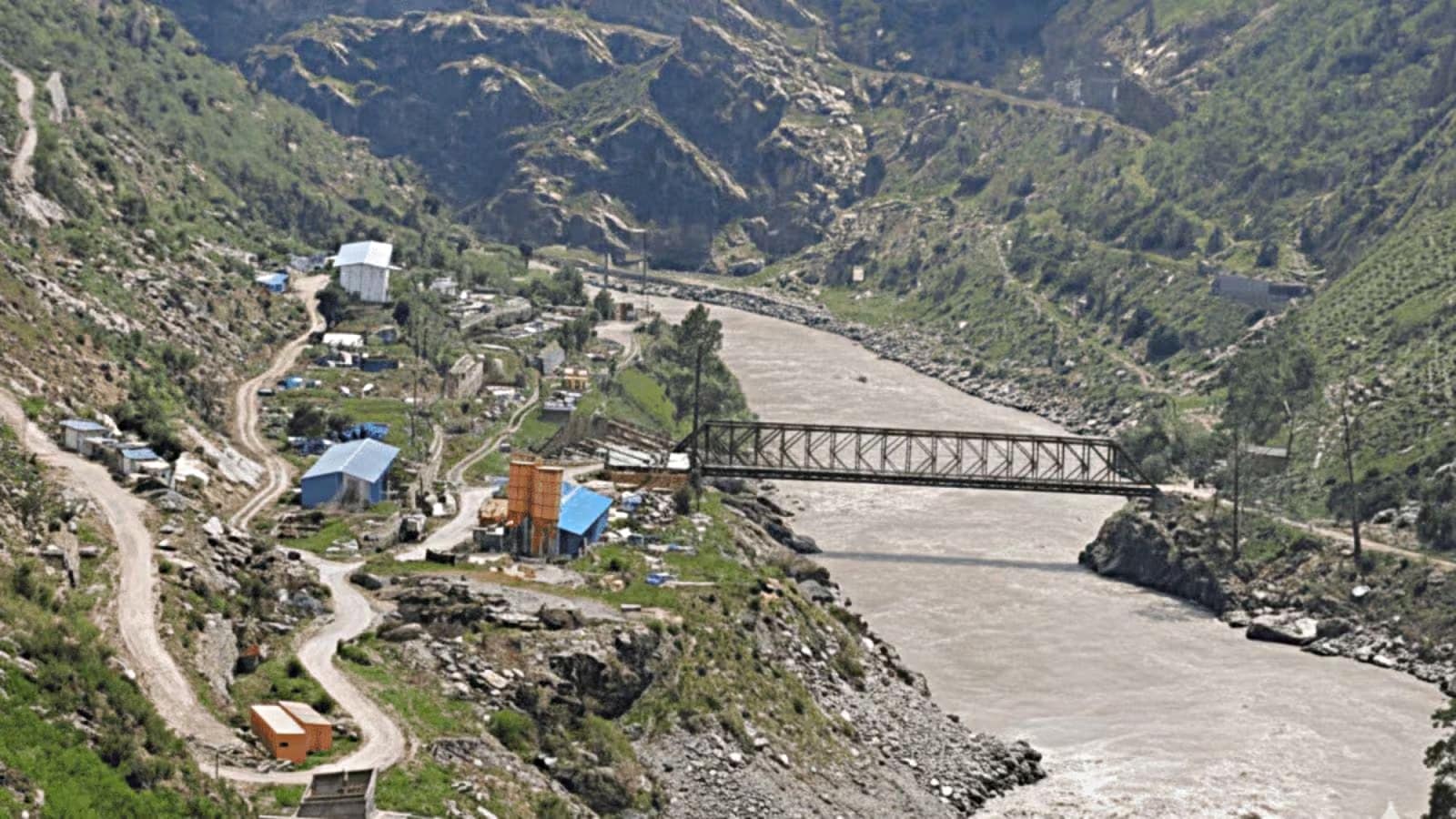 RHPCL is a joint venture of the National Hydroelectric Power Corporation and Jammu and Kashmir State Power Development Corporation Ltd. (Source: File)
The environmental clearance of the 850 MW Ratle hydroelectric project on the Chenab River in the Indus basin will be valid till December 2030, an expert panel of the environment ministry has held, accepting the Ratle Hydroelectric Power Corporation Ltd’s (RHPCL) submissions to extend the clearance validity.
The Union Environment Ministry’s expert appraisal committee (EAC) on river valley and hydroelectric projects appraised RHPCL’s proposal at its January 9 meeting, as per the minutes. It accepted the company’s requests, upholding the extension of clearance validity on the grounds that it had lost time between July 2014 and July 2021 to litigation and COVID-19.
RHPCL is a joint venture of the National Hydroelectric Power Corporation and Jammu and Kashmir State Power Development Corporation Ltd.
Noting the submissions made by RHPCL, the EAC noted that the company had provided “necessary documentary evidence” to justify that the project had been halted for four years. “…the EAC opined that 4 years shall be considered as zero period in calculation of validity of EC. Accordingly, the EC granted to Ratle hydroelectric project (850 MW) on 12.12.2012 is valid till 11.12.2030 and further extendable up to maximum of two years,” it said.
The EAC noted that, as of now, the crucial project has achieved 26.02 per cent physical progress and is slated for commissioning by November 2028, subject to delays.
In the years before India put the Indus Water Treaty in abeyance, Pakistan had challenged the project’s technical design features, alleging that it violated the 1960 treaty.
Following the treaty’s suspension, the ministries of power, home affairs, and Jal Shakti, and affiliated agencies have expedited projects on the Indus River such as Ratle, Sawalkote, and Dulhasti Stage–II.
RHPCL’s submissions
Story continues below this ad
In its submissions prior to the January 9 meeting, RHPCL had invoked past notifications and office memorandums issued by the Union Environment Ministry to seek extension of clearance validity. It said that even though the project was granted initial clearance in 2012, valid for 10 years, much of the time till 2021 was lost in litigation.
The ministry grants relaxations to hydroelectric projects due to their high-gestation period, and hence, with this, the clearance was valid till December 11, 2025, with a further extension of up to two years permissible.
Citing an October 2025 office memorandum, which allows project developers to rationalise time lost due to court proceedings and stay orders, the company claimed that the litigation period of four years should be considered as “zero period”. In addition, it also claimed relaxation for the COVID-19 period, citing another ministry notification.
Several hurdles before project
The Ratle project was mired in delays and continues to face issues. It was initially awarded to GVK Group, but the company withdrew from the project in 2014. This set off litigation proceedings between GVK and the Jammu and Kashmir government, delaying construction work and implementation of the clearance. In 2017, the contract termination by the J-K government was upheld, and it was in 2019 that RHPCL was formed as a JV between NHPC and J&K State Power Development Corporation Ltd.
Story continues below this ad
The JV awarded the construction work to Megha Engineering and Infrastructure Ltd in January 2022. The project was also caught in a row between Megha Engineering and the state BJP unit. The company’s officials had alleged interference by BJP legislator Shagun Parihar in the recruitment process for the project. The Indian Express had also reported that the J-K Police had alleged that 29 people with alleged militant links were engaged in the project’s work.
The high-profile project is also subject to litigation in the National Green Tribunal (NGT), as residents of Thathri village filed a plea alleging muck dumping by Megha Engineering in the Chenab during project work. The NGT has reserved judgment in the matter.

An award-winning journalist with 14 years of experience, Nikhil Ghanekar is an Assistant Editor with the National Bureau [Government] of The Indian Express in New Delhi. He primarily covers environmental policy matters which involve tracking key decisions and inner workings of the Ministry of Environment, Forest and Climate Change. He also covers the functioning of the National Green Tribunal and writes on the impact of environmental policies on wildlife conservation, forestry issues and climate change. Nikhil joined The Indian Express in 2024. Originally from Mumbai, he has worked in publications such as Tehelka, Hindustan Times, DNA Newspaper, News18 and Indiaspend. In the past 14 years, he has written on a range of subjects such as sports, current affairs, civic issues, city centric environment news, central government policies and politics. ... Read More
Stay updated with the latest - Click here to follow us on Instagram
© The Indian Express Pvt Ltd


 English (US) ·