

 1 week ago
8
1 week ago
8
ARTICLE AD BOX

Recurring chest infections often signal deeper issues beyond seasonal illness. Experts reveal underlying respiratory conditions like asthma, COPD, weakened immunity due to malnutrition or diabetes, and environmental factors like pollution are common culprits. Instead of repeated antibiotics, identifying and treating the root cause is crucial for lasting recovery and preventing future infections.
A chest infection feels like a temporary illness. A few days of coughing, fever, and fatigue, followed by medication, and life returns to normal. But for many people, the problem does not disappear.
The cough returns. The phlegm lingers. Another infection appears within months.Recurring chest infections are not always random. In many cases, they signal something deeper happening inside the lungs or the immune system. Doctors increasingly say that repeated infections are often a message from the body rather than just another seasonal illness.Dr Nikhil Modi, Senior Consultant in Respiratory, Critical Care and Sleep Medicine at Indraprastha Apollo Hospitals, explains, “In many instances, recurrent chest infections are more likely to be an indicator that some underlying respiratory condition is not being addressed.
Many patients tend to believe that recurrent coughing, the presence of phlegm, and recurrent bronchitis are seasonal problems; however, they may also be related to underlying conditions such as asthma, bronchiectasis, COPD, and even chronic inflammation.
Environmental factors also contribute to recurrent chest infections. Recurring exposure to pollution, cigarette smoke, and other substances weakens the body’s natural defence mechanisms, thereby increasing the risk for recurrent chest infections.”
Here’s everything you need to know about why these infections return can change how they are treated. Instead of simply suppressing symptoms, doctors look for the root cause.
When the lungs are already under stress
The lungs work quietly every second. They filter air, exchange oxygen, and clear tiny particles that enter with each breath. But certain conditions weaken this natural defence system.Asthma, bronchiectasis, and chronic obstructive pulmonary disease (COPD) can make the airways inflamed and narrow.
When this happens, mucus does not clear easily. Bacteria and viruses then find a place to grow.Research from the Lancet shows that chronic respiratory diseases are among the leading causes of illness in India, especially in cities with high air pollution.When infections keep coming back, doctors often look beyond the infection itself and investigate whether the lungs are already damaged or inflamed.
Pollution and smoke weaken the lungs
Air quality has become one of the biggest drivers of respiratory illness across the world.
Long-term exposure to polluted air irritates the lining of the lungs. Over time, this irritation reduces the lungs’ ability to fight infections.Research under the Ministry of Health and Family Welfare’s National Health highlights that air pollution increases the risk of respiratory infections, asthma attacks, and chronic lung disease.In many urban areas, people breathe polluted air every day. Add cigarette smoke, construction dust, and indoor pollutants, and the lungs remain under constant stress.
This repeated irritation creates the perfect environment for infections to return.

Doctors stress that repeated antibiotic treatment alone cannot solve the issue.
The hidden role of weak immunity
A healthy immune system usually clears most respiratory infections before they become serious. But immunity does not function the same for everyone.Dr Modi explains another important factor, “Another significant factor that is often responsible for recurrent chest infections is decreased immunity. This is often caused by factors such as malnutrition, diabetes, and certain medications that weaken the body’s immunity.
In other instances, allergies and acid reflux may also contribute to chronic inflammation of the lungs, thereby increasing the risk for recurrent chest infections.
”Conditions such as diabetes, nutritional deficiencies, and long-term steroid medications can weaken the body’s defence mechanisms. Even sleep deprivation and chronic stress can reduce immune response.In such situations, the lungs struggle to clear infections completely, allowing them to return again and again.
Surprising triggers many people overlook
Not all triggers for chest infections start in the lungs. Some begin in unexpected places.Acid reflux, for example, can allow stomach acid to travel upward during sleep. Tiny droplets may enter the airways, irritating lung tissue. Over time, this irritation can lead to persistent coughing and infections.Allergies can also inflame the airways and increase mucus production. Dust mites, pollen, and mould spores inside homes often act as hidden triggers.These factors rarely appear obvious during a routine infection, which is why recurrent cases often require deeper medical evaluation.
Why repeated antibiotics are not the real solution
Many people treat chest infections the same way each time. They take antibiotics, feel better temporarily, and then repeat the cycle months later.But treating the infection without identifying its cause often leads to recurrence.Dr Modi emphasises a different approach, “To effectively prevent repeated chest infections, patients should instead look for proper assessment rather than repeated antibiotic therapy.
Identifying and treating the underlying cause, receiving immunizations against respiratory viruses such as influenza and pneumococcal infections, avoiding exposure to poor air quality, and engaging in healthy lifestyles are measures that can help prevent repeated infections and maintain stronger lungs.
”Vaccinations, lung function tests, and allergy evaluations can sometimes reveal problems that routine treatment misses.
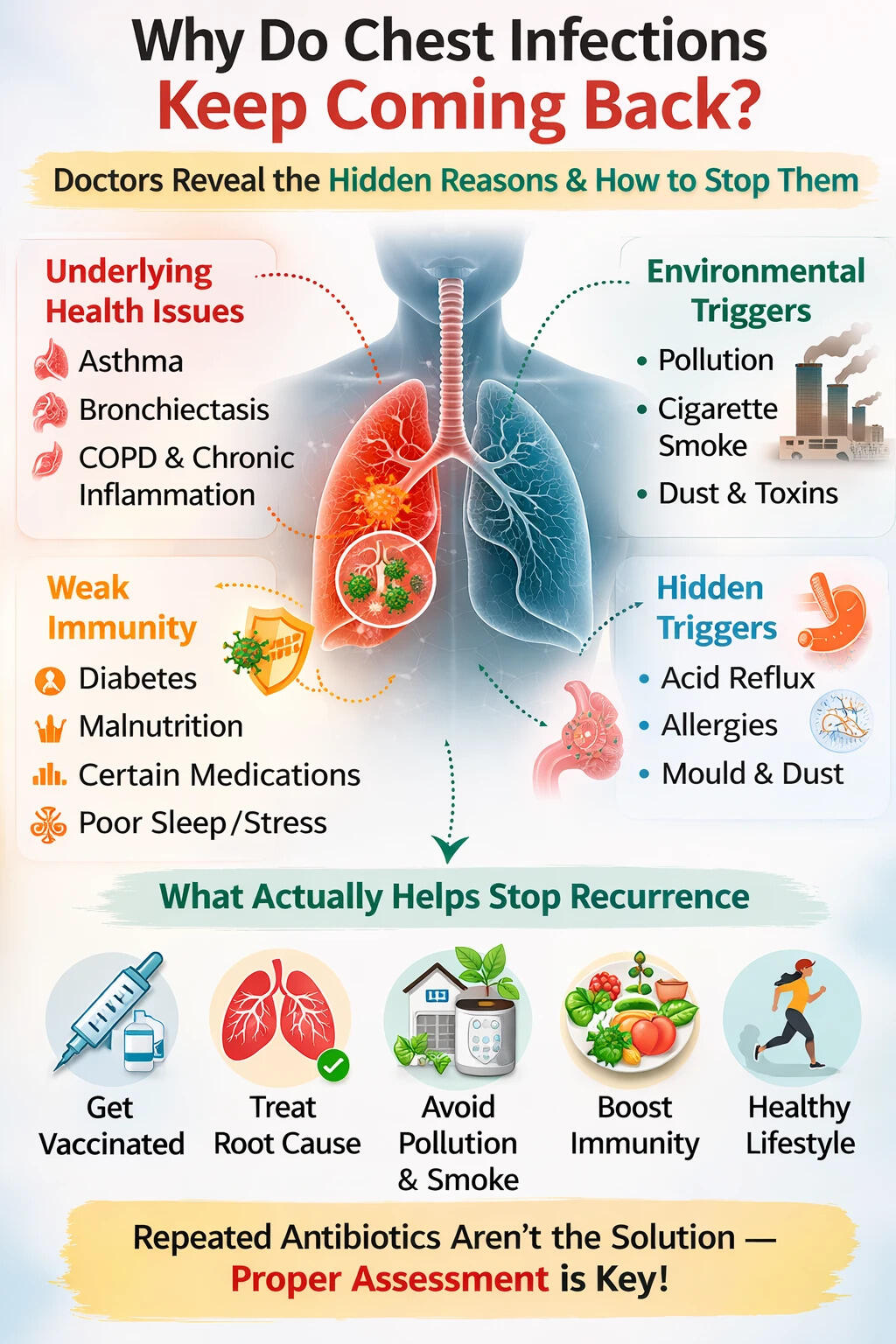
Identifying underlying causes, improving air quality, strengthening immunity, and taking recommended vaccinations can help break the cycle and protect lung health.
What actually helps break the cycle
Stopping recurring chest infections usually requires small but consistent changes.Doctors often recommend improving air quality at home, avoiding smoking, and managing conditions such as diabetes or asthma more carefully. Balanced nutrition also strengthens immune responses, especially diets rich in protein, vitamins, and antioxidants.Regular vaccinations against influenza and pneumococcal infections also play a major role in preventing severe respiratory illness.The lungs are resilient organs. When their environment improves and underlying conditions are treated, they often recover their ability to fight infections naturally.Medical experts consulted This article includes expert inputs shared with TOI Health by: Dr Nikhil Modi, Senior Consultant in Respiratory, Critical Care and Sleep Medicine at Indraprastha Apollo Hospitals.Inputs were used to explain why repeated chest infections may persist, highlighting hidden causes and why consulting a doctor is essential to identify the right treatment and prevent complications.









 English (US) ·