

 1 hour ago
4
1 hour ago
4
ARTICLE AD BOX
General NS Raja Subramani has been nominated as the next Chief of Defence Staff, with charge from May 31. He will inherit the task of implementing India's integrated theatre commands and shaping military readiness for future warfare.
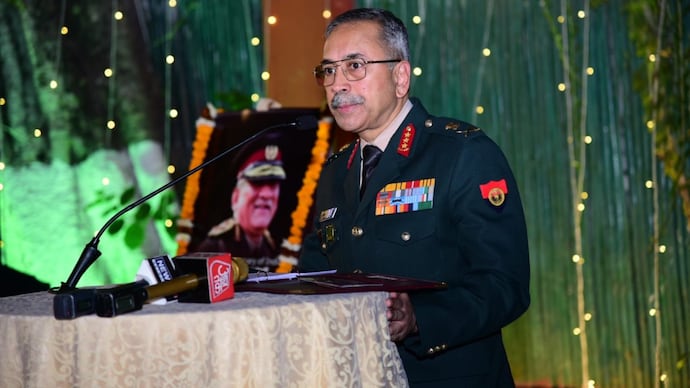
General NS Raja Subramani
New Delhi,UPDATED: May 14, 2026 05:20 IST
With General NS Raja Subramani nominated as the next Chief of Defence Staff (CDS), focus has shifted to the unfinished task of restructuring India’s military into integrated theatre commands — a reform initiated by his predecessor, General Anil Chauhan.
Gen Subramani, currently serving as Military Advisor in the National Security Council Secretariat, will take charge as CDS on May 31. His appointment comes at a critical juncture, with the blueprint for theatre commands already prepared and awaiting final clearance from the government.
According to top defence sources, the biggest challenge before General Subramani will be to “erect the structure whose foundation was laid by General Anil Chauhan.”
Current CDS General Anil Chauhan, along with the Chiefs of the Army, Navy and Air Force, has finalised the draft framework for integrated theatre commands. The draft outlines the creation of three theatre commands — Northern, Western and Maritime — to tackle specific geographical threats and ensure joint war-fighting capability.
The proposal has been under discussion for more than two years and involved extensive deliberations to address concerns raised by the three services. With the draft now complete, it awaits final approval from the Cabinet Committee on Security. Once cleared, implementation will become the primary responsibility of the incoming CDS.
Top government sources told India Today that General Subramani’s tenure will focus on three core areas.
TRI-SERVICE SYNERGY IN MODERN WARFARE
With conflicts becoming shorter, technology-driven and multi-domain in nature, the new CDS is expected to prioritise stronger operational coordination between the Army, Navy and Air Force.
This will include joint planning, common communication networks and integrated logistics to enable seamless operations across land, air, sea, space and cyber domains.
PUSH FOR ATMANIRBHARTA
Promoting self-reliance in preparation for future battles will be another major priority.
General Subramani is expected to accelerate the indigenisation of critical weapons, drones, AI-enabled systems and electronic warfare tools. The CDS will work closely with DRDO, defence PSUs and private industry to reduce import dependence and build a robust domestic defence ecosystem.
PREPARING FOR FUTURE WARFARE
Rapidly evolving warfare technologies — ranging from drone swarms and loitering munitions to hypersonic weapons and space-based assets — require a major doctrinal shift.
The new CDS will be tasked with preparing a comprehensive strategy for future warfare, including cyber, space and information warfare capabilities.
THEATRE COMMANDS AND THE CHINA-PAKISTAN CHALLENGE
Theatre commands are considered India’s most significant military reform since Independence. The plan aims to replace the existing 17 single-service commands with unified commands functioning under a single operational commander.
The move is expected to optimise resources, avoid duplication and ensure quicker, coordinated responses to threats from China and Pakistan.
However, several complex issues remain, including building consensus on asset distribution, creating joint staffing structures and training officers for tri-service roles.
General NS Raja Subramani, known for his operational experience in both the Northern and Eastern theatres, is considered well-positioned to navigate these challenges.
During his tenure as Army Chief, he emphasised jointmanship in exercises such as Bharat Shakti and Tarang Shakti, where Army, Navy and Air Force assets operated under unified command scenarios.
- Ends
Published By:
Nitish Singh
Published On:
May 14, 2026 05:20 IST




 English (US) ·