

 9 hours ago
3
9 hours ago
3
ARTICLE AD BOX
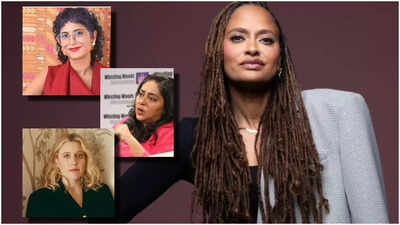
For decades, the cameras were held only by men, shaping how we saw the world. But women filmmakers broke that monopoly. They didn’t just step behind the camera; they totally reimagined the frame.
Cinema shaped by women often feels more observant and deeply emotional. They focus on people, inner conflicts, and the reality of society. From Indian streets to Hollywood battlefields, women have used cinema to question power, identity, love, and belonging. Here are a few of those visionaries who changed the landscape of cinema forever.
Mira Nair
Mira Nair brought Indian street life to the world with honesty. Her first film, ‘Salaam Bombay!’ (1988), earned an Academy Award nomination.
It also won the Camera d'Or at Cannes. She bridges Hollywood and Indian cinema with her films like ‘Monsoon Wedding’ (2001) and ‘The Namesake’ (2006). Her movies are usually vibrant, chaotic, and deeply human. She does not water down the Indian experience for Western audiences.
Her camera remains fearless and deeply grounded.
Gauri Shinde
Gauri Shinde’s films feel like a calm breath, honest and deeply human. After working in advertising, she debuted with ‘English Vinglish’ (2012).
This film tells a gentle story about realising one’s self-worth. She continued this sensitivity in her movie ‘Dear Zindagi’ (2016), focusing on emotional and mental health. The movie showed therapy as a conversation, not a sign of weakness. Shinde maintained the strength with her female characters, allowing their growth to unfold softly and truthfully.
Her films are quiet, slice-of-life dramas that strongly connect with women and their emotions.
Meghna Gulzar
Meghna Gulzar has quietly created one of the most emotionally rooted careers in modern Indian cinema. She started as a writer and documentary filmmaker. And later moved into feature films. Her storytelling focuses on empathy and realism. Films like 'Talvar,' 'Chhapaak,' and 'Sam Bahadur' demonstrate her versatility. They range from investigative dramas to spy thrillers and biopics. She often highlights moral complexity instead of spectacle.
Women in her films are strong without being loud. Men, meanwhile, are vulnerable without being weak.
Kiran Rao
Kiran Rao excels at quiet storytelling. She believes that cinema can inspire reflection without needing flash. Her debut movie, ‘Dhobi Ghat’ (2011), provided a raw and personal look at the hidden sides of Mumbai. It examined class and loneliness through the linked lives of its characters. She came back to directing with ‘Laapataa Ladies’ (2024), a touching satire about rural patriarchy.
As a producer, she supports stories from the margins.
She shows that empathy and simplicity can create a strong impact.
Zoya Akhtar
Zoya Akhtar redefined the look of commercial Hindi cinema. She shifted from melodrama to focus on complex urban relationships. Her first film, ‘Luck By Chance’ (2009), made fun of Bollywood. Meanwhile, ‘Zindagi Na Milegi Dobara’ (2011) became a cult classic about male friendship. Her movie ‘Gully Boy’ (2019) captured the raw energy of Mumbai’s underground rap scene.
She also co-created the hit series ‘Made in Heaven.
’ It exposes the dark side of elite weddings. Her characters are flawed, relatable, and modern.
Greta Gerwig
Greta Gerwig moved from being a beloved indie actress to one of Hollywood’s most important directors. Her journey started with writing realistic, dialogue-driven scripts like 'Frances Ha.' Her first solo directing effort, 'Lady Bird' (2017), captured the challenges of growing up.
She then created a modern version of 'Little Women' (2019) and the billion-dollar hit 'Barbie' (2023). Her films explore female ambition and girlhood with deep respect.
She has a special talent for making personal stories feel universal.
Kathryn Bigelow
Kathryn Bigelow refuses to be labelled just a "female director." She dominates the action and war genres better than most men. Her cult classic ‘Point Break’ (1991) transformed the action thriller.
Later, her movie, ‘The Hurt Locker’ (2008), made her the first woman to win the Academy Award for Best Director. She continued with ‘Zero Dark Thirty’ (2012), which centered on the hunt for Osama bin Laden. She focuses on high-pressure situations and the psychology of violence.
Her camera pulls viewers into danger.
Sofia Coppola
Sofia Coppola is a filmmaker recognized for her subtle and reflective style. Her films explore themes of loneliness, privilege, and inner emptiness.
More particularly from female viewpoints. She gained recognition with her movie ‘The Virgin Suicides’ in 1999. She also won an Oscar for the screenplay of ‘Lost in Translation’ in 2003. Films like ‘Marie Antoinette’ (2006) and ‘Priscilla’ (2023) reflect isolation beyond the frame.
She lets the mood and stillness of the movie speak louder than the dialogue.
Ava DuVernay
Ava DuVernay uses her camera as a tool to promote social justice.
She was the first African American woman nominated for a Best Picture Oscar with ‘Selma’ in 2014. Her limited series ‘When They See Us' was released in 2019. It sparked a global conversation about racial profiling. She easily shifts between big-budget films like ‘A Wrinkle in Time’ (2018) and smaller dramas like ‘Origin’ (2023). She works hard for inclusion through her distribution group, ARRAY, which helps other women and people of color gain a platform.
Jane Campion
Jane Campion is a pioneer of cinematic poetry. She was the first woman to win the Palme d'Or at Cannes for ‘The Piano’ in 1993. After a long break, she returned to take over awards season with ‘The Power of the Dog’ in 2021, winning the Best Director Oscar. She also created the critically praised TV series ‘Top of the Lake’. Her films often explore complex, hidden desires and the harshness of patriarchal settings. She uses nature as a mirror to reflect human emotion.





 English (US) ·