

 1 hour ago
5
1 hour ago
5
ARTICLE AD BOX
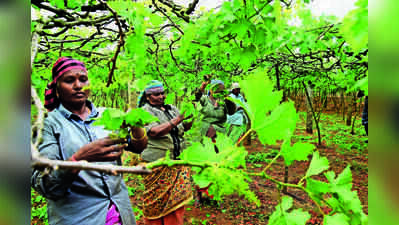
About 20% of former vineyard land has been turned over to real estate companies for development
From 1,700 acres to 27 acres. From 200 grape growers to seven. Coimbatore’s grape cultivation, which flourished for more than 50 years, has reduced to a fraction of what it once was.
Farmers say rising costs, shortage of labour and recurring pest attacks are pushing farmers to turn to other crops for survival.“I cultivated grapes for 40 years,” says N Manickam, technical adviser to the Coimbatore District Grape Growers’ Association. “And then I stopped. I had no choice.”The 82-year-old says the decline of grape cultivation began with the drought of 2003–2004. “Groundwater levels fell and sodium content in water increased.
About 700 acres of grape farms were lost during that period. Another spell of water shortage in 2011–2012 wiped out 400 acres. By 2013, cultivated area had fallen to 400 acres.” In the 13 years since, it has dwindled to 25 acres.For the past 20 years, no fresh grape crop has been cultivated in the district, he says, and production continues from old pandals (trellis systems).“Muscat or panneer grapes were introduced in Coimbatore in the 1970s.
There was demand then. It was easier to get loans from nationalised banks. The water situation was better. In 1990, grape cultivation increased from 200 acres to nearly 1,000 acres. By 2000, we had 1,700 acres in the region under cultivation. Things are so bad now, I won’t be surprised if we don’t see paneer grapes by the next decade.”Grape cultivation, once seen in Madukkarai, Periyanaickenpalayam and Thondamuthur blocks, is now more or less confined to Thondamuthur.“I quit grape farming a decade ago,” says S Sivaraj of Theethipalayam. “Grapes are harvested in 100 to 110 days. But pest attacks are a problem. Once a crop is affected, it takes two years to recover.”“Grapes suit semi-arid regions, but Thondamuthur’s high humidity for eight months a year, caused by rain and drizzle, makes the crop vulnerable to pests. Coupled with rising costs, farmers found it difficult to continue,” says S Suresh, assistant director of horticulture, Thondamuthur block.
Suresh says farmers are shifting to tomato, okra, banana and arecanut, which are more suited to local conditions. “Arecanut has seen growth over the past 20 years due to demand as a natural dye and food colourant.
”Suresh says the horticulture department trains farmers who want to stick to grape cultivation. “We also offer subsidies for drip irrigation and polyhouse technology, which can increase yield four times. But we also have plans to form export clusters for crops such as areca nut, shallots and leaf banana grown in the region.” About 20% of former vineyard land has also been turned over to real estate companies for development.
Compounding the crisis, no new vineyards have been established in the past two decades, leaving only ageing, less productive vines to bear fruit.









 English (US) ·