

 4 days ago
8
4 days ago
8
ARTICLE AD BOX
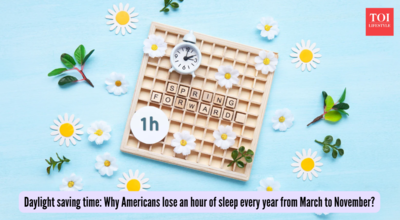
America's clocks sprang forward this past Sunday, March 8th, marking the start of Daylight Saving Time 2026. This annual shift, designed to extend evening daylight, began in 1918 during WWI to conserve fuel. Most of the US observes this change, with exceptions like Hawaii and Arizona. The practice will conclude on November 1st.
Imagine waking up to your alarm blaring a full hour earlier than it felt like yesterday, all because the clock decided to play a sneaky trick!That has become a weird yet quirky reality for millions of Americans as daylight saving time kicks in.This time change isn't just about clocks; it's a slice of history, policy, and science coming up with an idea to save some sun time!
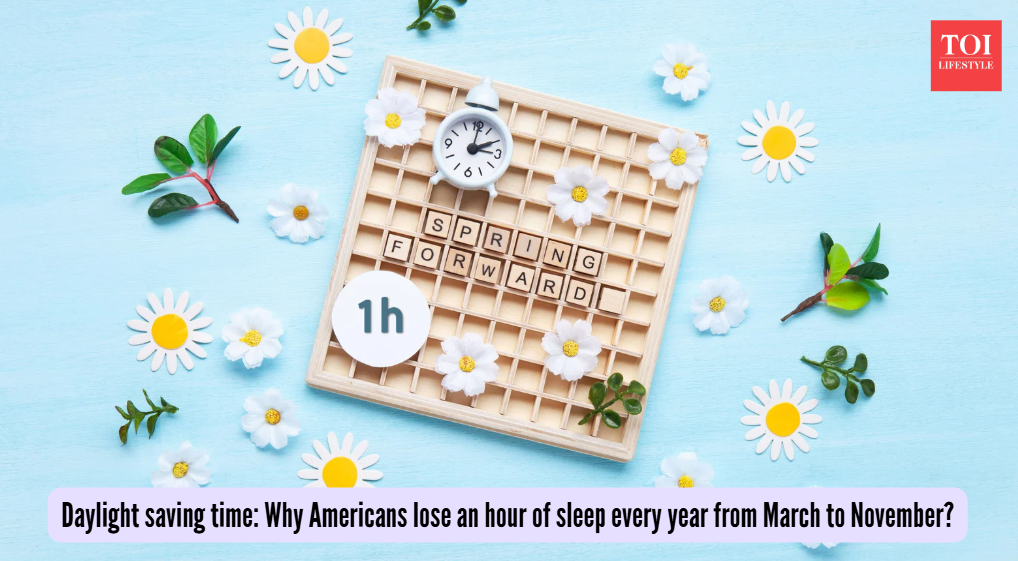
Daylight saving time: Why Americans lose an hour of sleep every year from March to November?
But what exactly is Daylight Saving?
Daylight Saving Time (DST) is the practice of setting clocks forward by one hour in spring to extend evening daylight during warmer months. This "spring forward" change moves an hour of morning light to the evening, helping people enjoy more sunlight after work or school. Clocks then "fall back" in autumn to standard time.
Daylight saving 2026 - When did it begin?
Daylight saving time (DST) for 2026 began early Sunday, March 8, at 2 a.m. local time, when most Americans set their clocks forward an hour to 3 a.m., effectively losing 60 minutes of sleep. This "spring forward" ritual happens on the second Sunday of March, shifting an hour of morning daylight to the evening for brighter after-work hours. According to the US Naval Observatory, the official timekeeper for the Defense Department, this date has been standard since 2007.
For context, in Boston, sunrise shifted from 6:09 a.m. and sunset from 5:41 p.m. on Saturday to 7:08 a.m. and 6:42 p.m. on Sunday, per the National Weather Service. DST will last 238 days until it ends on the first Sunday of November, November 1 this year at 2 a.m., when clocks "fall back," according to the National Institute of Standards and Technology, as reported in CBS News.
Representative Image
When did Daylight Saving Time begin?
DST was first adopted in the US in 1918 to save fuel during World War I, as noted by the Congressional Research Service.
It returned in World War II for similar reasons, including national security, per the Defense Department.Before 2007, it started on the first Sunday of April. The Uniform Time Act of 1966 pinned it to the last Sunday of April. In the 1970s energy crisis, there was even a year-round trial starting January 1974, but it reverted by October, resuming in February 1975 before settling back to April, according to the CBS News report.
Which US states do not follow the switch?
Hawaii and most of Arizona, except the Navajo Nation, opt out, as do US territories like American Samoa, Guam, Northern Mariana Islands, Puerto Rico, and the US Virgin Islands.Most smartphones also auto-update via Apple, Google, or Android settings.







 English (US) ·