

 59 minutes ago
5
59 minutes ago
5
ARTICLE AD BOX
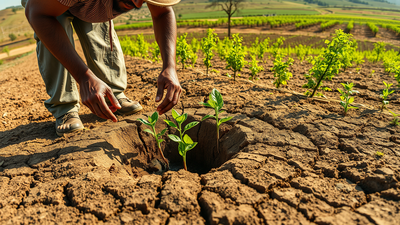
In the early 1980s, as a severe drought gripped the Sahel region of West Africa, a farmer in northern Burkina Faso named Yacouba Sawadogo began quietly reviving an old, largely abandoned farming technique on land near his village that many considered too degraded to ever grow anything again.
The technique, known locally as zai, involves digging small pits into hardened, barren soil and filling them with manure and organic matter to trap what little rainfall the region receives, concentrating both water and nutrients exactly where a seed or sapling needs them most. Over the following four decades, Sawadogo expanded and refined this method until it transformed a stretch of previously barren land near Ouahigouya into an actual forest, earning him the nickname the man who stopped the desert before his death in December 2023.
Why the Sahel's soil needed more than just rain to recover
Northern Burkina Faso sits within the Sahel, the semi arid belt stretching across Africa just south of the Sahara, where recurring drought and years of intensive farming had left large stretches of land compacted and stripped of any meaningful topsoil by the time Sawadogo began his work. According to a research paper published by the International Food Policy Research Institute, zai pits emerged specifically in this context of recurrent droughts and frequent harvest failures during the early 1980s, a period of genuine despair among local farmers that ultimately triggered exactly this kind of grassroots experimentation and innovation.
Simply waiting for rain to return was not enough on its own, since even when rain did fall, it tended to run straight off the hardened surface rather than soaking into ground that crops or trees could actually use.
How Sawadogo adapted an old technique into something more effective
Zai itself was not a new invention, farmers in the region had used basic versions of these planting pits for generations, but Sawadogo is widely credited with experimenting on his own land to make the technique noticeably more effective. According to the Right Livelihood Foundation, which awarded Sawadogo its prize in 2018, his approach built on experimenting with traditional planting pits for soil, water and biomass retention, and he continued innovating the technique over the years, steadily increasing crop yields and successfully establishing trees on land that had previously supported very little vegetation at all.
From an abandoned family plot to a forty hectare forest
Sawadogo began this work on land near his home village in Yatenga province, and according to the Right Livelihood Foundation, he successfully created an almost forty hectare forest on formerly barren and abandoned land, which today supports more than sixty species of trees and bushes, making it one of the most diverse forests planted and managed by a single farmer anywhere in the Sahel. His success did not come without early resistance, according to the UN Environment Programme, which honoured Sawadogo with its Champions of the Earth award in 2020, describing how his modified zai technique, allowing crops to grow in pits that trap rainfall even during water shortages, had gone on to be used by farmers across a roughly 6,000 kilometre stretch of Africa in the decades since he first began developing it.
Why sharing the knowledge mattered as much as the technique itself
What set Sawadogo apart from other individual conservation efforts was his consistent willingness to teach the method to others rather than keep it to himself. According to the Right Livelihood Foundation, he was always eager to share his knowledge, training thousands of visitors who travelled from the surrounding region and beyond, and helping empower other farmers to regenerate degraded land on their own plots using the same basic principles.
As a direct result of this open teaching approach, tens of thousands of hectares of severely degraded land across Burkina Faso and neighbouring Niger have reportedly been restored to productive use, extending Sawadogo's impact well beyond the boundaries of his own family's land.
What the broader research says about Zai's effectiveness
Beyond individual accounts of Sawadogo's own success, wider academic research has since examined how effective soil and water conservation techniques like zai actually are across the region more broadly. According to a peer reviewed study published in the journal Sustainability, researchers analysing two decades of satellite vegetation data across Burkina Faso found a measurable increase in vegetation cover in provinces including Yatenga, the same province where Sawadogo did much of his own pioneering work, in areas with a high prevalence of soil and water conservation practices.
The same body of research has also documented that these zai pits and related techniques have measurably improved food security, groundwater levels and biodiversity across the areas where they have been widely adopted.
A legacy that continues to shape land restoration in the Sahel
Sawadogo passed away in December 2023, but the forest he built and the technique he refined continue to influence conservation efforts well beyond Burkina Faso's borders. His work has been recognised internationally, including as one of the United Nations Convention to Combat Desertification's first Global Dryland Champions, and his story has since served as a reference point for farmer-led land restoration projects across other drought-affected parts of the Sahel.
For a region where large scale government reforestation programmes have often struggled to keep pace with ongoing land degradation, Sawadogo's decades of patient, low cost experimentation with a centuries old planting pit offers a genuinely different kind of blueprint, one built not around expensive machinery or large scale intervention, but around a single farmer's willingness to keep trying a technique long enough for barren ground to finally begin producing again.








 English (US) ·