

 1 hour ago
5
1 hour ago
5
ARTICLE AD BOX
3 min readNew DelhiJul 4, 2026 06:18 PM IST
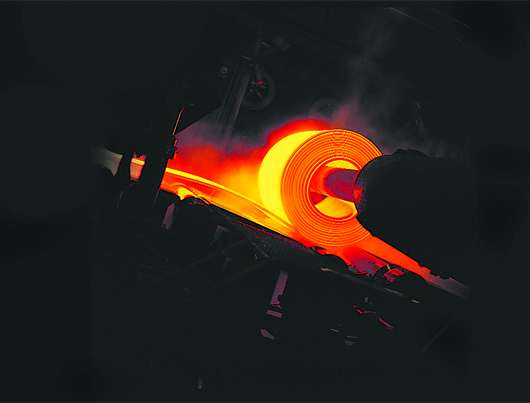 In March this year, India revised its nationally determined contribution commitments on climate action under the United Nations Framework Convention on Climate Change and Paris Agreement. (File Photo)
The Centre has again issued a draft notification to set greenhouse gas emission intensity (GEI) targets for the intensive iron and steel sector and to align them under India’s carbon credit trading system (CCTS).
The Ministry of Environment, Forest and Climate Change (MoEFCC), which issued the draft on June 26 and made it public on July 2, has set emission reduction targets for 255 industrial units, including the sector’s giants such as JSW Steel, Tata, Steel Authority of India, and Arcelor Mittal, among others.
Draft targets for the iron and steel sector were already issued on June 23, 2025, along with aluminium (second aluminium), petroleum refinery, petrochemical, and textile sectors. While final targets for other sectors were notified in January 2026, MoEFCC has issued a revised draft for the iron and steel sector with marginal changes to the targets, but without any explanation for the fresh draft.
The draft notification lists baseline product output and baseline emission intensity for 2023-24, and compliance-year targets for individual steel plants, sponge iron units, and ferro-alloy manufacturers. A 60-day window has been given to submit objections and suggestions on the draft. The draft has set GEI targets only for the 2026-27 period, while the 2025-26 column has been left blank.
GEI is the amount of greenhouse gas (GHG) emitted per unit of product output, such as the quantum of gases released while producing cement. The CCTS was launched in 2023 to create a framework that incentivizes emission reduction through a market-based mechanism, and to help achieve India’s climate action goals.
The Centre has already finalised emission reduction targets for eight sectors – aluminium, cement, chlor-alkali, pulp and paper, secondary aluminium, petroleum refinery, petrochemical, and textile.
In March this year, India revised its nationally determined contribution commitments on climate action under the United Nations Framework Convention on Climate Change and Paris Agreement. This included reducing the emissions intensity of its gross domestic product – the amount of energy used per unit of GDP – by 47 per cent by 2030 compared to 2005 levels as part of its domestic commitments under the agreement.
Story continues below this ad
Under the CCTS, which was notified in 2023, an overarching framework was created for the Indian Carbon Market. The objective is to slash or avoid GHG emissions from sectors whose processes emit more pollutants and whose operations are hard to decarbonize.
Each obligated industry is assigned a GEI target based on emissions per unit of output. Those industries that meet or outperform their target earn carbon credit certificates, which can be sold to those industries falling short. Industries that do not comply must pay an environmental compensation which is equal to twice the average carbon credit traded price.









 English (US) ·