

 40 minutes ago
2
40 minutes ago
2
ARTICLE AD BOX
Last Updated:May 27, 2026, 19:41 IST
The softest and less-discussed cornerstone of the Yogi Model is inclusive welfare and a very targeted direct benefit delivery


Uttar Pradesh Chief Minister Yogi Adityanath. (PTI)
In the heat and dust of his election campaign, new West Bengal CM Suvendu Adhikari had done a ‘dandavat pranam’ of UP CM Yogi Adityanath. Within hours of being sworn in, bulldozer action started on encroachers, a total crackdown on illegal immigrants, and a ban on street prayers and open slaughter during Bakri-Eid…all Yogi-style.
Bulldozers are now a norm in most Bharatiya Janata Party-ruled states such as Gujarat, Maharashtra, Madhya Pradesh, Uttarakhand, and Assam. Assertive Hindutva has given way to competitive Hindutva. Alongside runs competitive development.
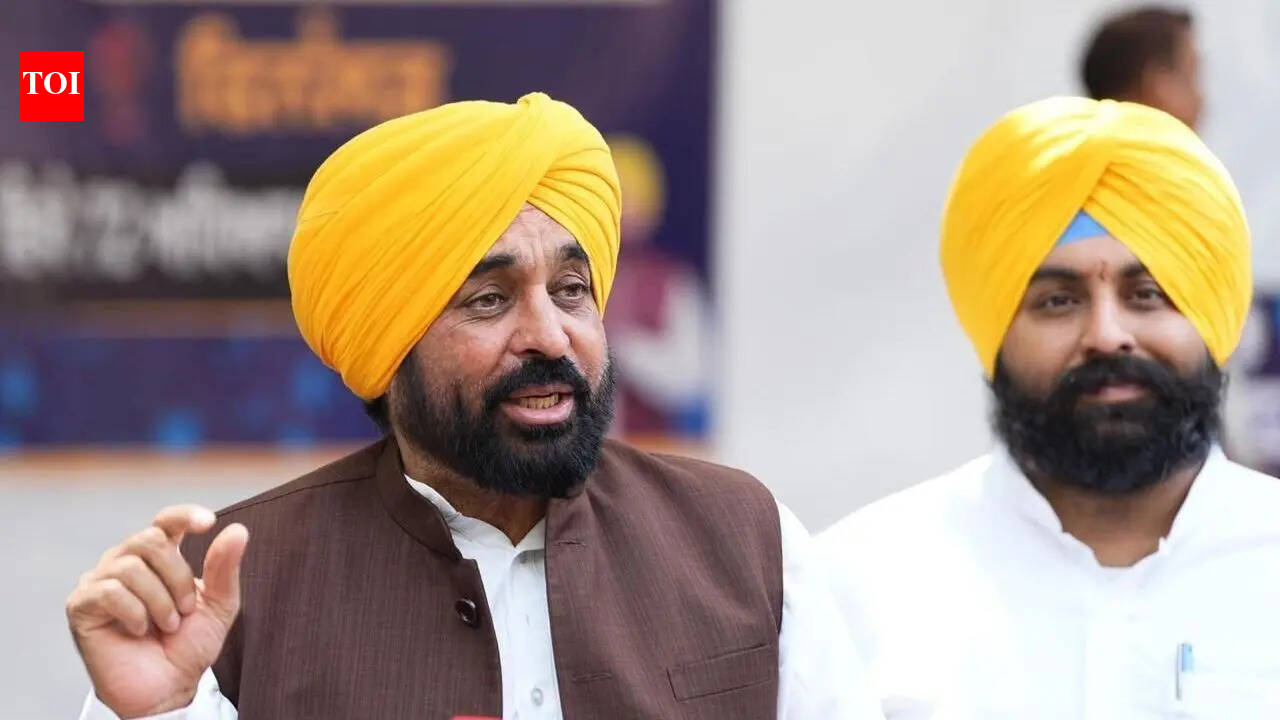
Even non-BJP states seem to have quietly copied Yogi’s bulldozer action. In 2024-2025, Punjab CM Bhagwant Mann’s Aam Aadmi Party (AAP) government demolished properties linked to the drug mafia in Amritsar, Ferozepur, and Mohali. In 2025, Karnataka’s Congress government razed 200-300 houses of illegal occupants (mostly Muslims) in the slums of Kogilu near Bengaluru.
Since the turn of the millennium, the nation stormed into a new era with (then CM) Narendra Modi’s distinctive Gujarat Model. The Yogi Model is the newest software upgrade by the immensely successful Hindutva movement and its ever-evolving governance template.
So, what is the Yogi Model? What are its cornerstones?
Since Yogi Adityanath took over as Uttar Pradesh CM in March 2017, he took several leaves out of Modi’s Gujarat Model focused on economic vibrancy and infrastructure. But to that, Yogi added his own brand of strict law and order enforcement and a more unabashed Hindutva.
India’s most populous and politically crucial state started rapidly transforming under the Yogi Model, with its four cornerstones: uncompromising Hindutva, iron-fisted law and order, efficient welfare delivery, and aggressive economic and infrastructural growth.
Yogi does not need to proclaim himself as a Hindutva icon from rooftops. His flowing saffron robes, his credentials as the former head monk of the Gorakhpur Mutt, and his day-to-day actions place him leagues ahead of most other politicians in that respect.
His cultural and civilisational assertiveness, emphasis on Hindu identity, temple revival, and assault on appeasement politics make him a darling of the core BJP voter.
His involvement in rebuilding the Ram Temple movement, creating the Kashi corridor and Ram and Krishna circuits, and framing anti-conversion laws further strengthens his place as ‘the conqueror of Hindu hearts’.
Even if one does not relate to Yogi’s emphatic Hinduness, his zero tolerance on crime attracts a much wider and sometimes unexpected fan base — urban English-speaking Gen Z and Muslim women among them.
His crackdowns on rioters, illegal encroachers, and organised criminal syndicates through encounters, bulldozing illegal property, and strict policing has created a fear-free environment for not just citizens but also investors.
And that brings us to the third, extremely important cornerstone of the Yogi Model: Investment- and infrastructure-driven economic transformation.
His aggressive push for industrial investment through global investor summits, single-window clearance, land banks, and a speedily changing landscape of new expressways, airports, industrial corridors has put UP on the path to becoming a $1 trillion economy.
Defence corridors, electronics, semiconductors, and renewable energy hubs, and logistics highways are fast emerging. One District One Product (ODOP) remains critical for the state’s grassroots economic growth.
But the softest and less-discussed cornerstone of the Yogi Model is inclusive welfare and a very targeted direct benefit delivery. There has been a massive expansion of welfare schemes like free ration, housing, toilets, skill development, and women’s schemes like Kanya Sumangala and Laxmibai Mahila Samman.
Heavy technology is deployed in direct benefit transfers and digitisation to plug leakages. Widely and publicly available statistics show that welfare in UP under Yogi reaches the poorest without caste or religious bias.
Hindutva icon + strongman administrator + development champion + welfare monk: that is the Yogi Model for you.
As a political opponent, it is hard to beat that.
As a voter, it is hard to resist.
As his party peer in other states, it is hard not to imitate or borrow from him.
And this is why the Yogi Model is fast becoming the source code of BJP’s governance, at least in the foreseeable future.
Handpicked stories, in your inbox
A newsletter with the best of our journalism
News india Explained: What Is The Yogi Model And Why Is It Being Adopted Across States?
Disclaimer: Comments reflect users’ views, not News18’s. Please keep discussions respectful and constructive. Abusive, defamatory, or illegal comments will be removed. News18 may disable any comment at its discretion. By posting, you agree to our Terms of Use and Privacy Policy.
Read More



 English (US) ·