

 1 hour ago
3
1 hour ago
3
ARTICLE AD BOX
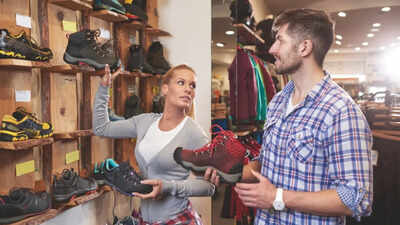
The ‘3-Pair Rule’: Fashion Experts Say Most People Only Need These 3 Shoes for Daily Life
As Spring decluttering gets underway, many are taking stock of overstuffed wardrobes. Shoes often present the biggest challenge and the accumulation of footwear has prompted industry experts to introduce the “3-Pair Rule”, a straightforward framework for building a functional shoe wardrobe without excess.A 2025 study in Appetite & Consumer Psychology, widely cited in 2026 lifestyle research, claimed, “Reducing wardrobe size can decrease decision fatigue and improve daily efficiency by limiting repetitive low-stakes choices.” It reinforces why a simplified shoe wardrobe makes getting dressed easier and supports the psychological benefit of frameworks like the 3-Pair Rule.In an interview with the Times of India, Leanna Spektor, Co-Founder and Style Expert at Brand House Direct, who has spent over two decades analysing footwear trends and consumer behaviour, shared, “When you look at how people actually dress day to day, patterns emerge quickly.
Most of us have a favourite pair of trainers, work shoes we rely on and maybe one seasonal or activity-specific pair. The rest sit in the back of the wardrobe untouched.
”

Fashion expert introduces the ‘3-Pair Rule’, a minimalist approach showing most people only need three core shoe styles for their entire daily routine.
According to a recent 2026 study in Journal of Cleaner Production, “A significant proportion of fashion items are underutilised, with many garments and footwear worn infrequently despite high ownership volumes.” It validates that most people only wear a small portion of their wardrobe and supports the idea behind the 3-Pair Rule as a reflection of real usage patterns.
Read on as we break down the three shoe types that genuinely earn their place in a wardrobe and reveal some practical advice for paring back without regret.
The three shoes that cover most daily needs
The foundation of the 3-Pair Rule rests on versatility. Rather than owning multiple shoes that serve similar purposes, the approach focuses on three distinct categories that address different aspects of daily life. Here are three essential types:
- Everyday Casual Shoe: This is the workhorse of any wardrobe, typically trainers, clean white sneakers or comfortable slip-ons that pair easily with jeans, casual trousers or relaxed weekend wear. “Your everyday casual shoe should be something you can throw on without thinking,” Spektor explained. “It needs to handle walking, errands, casual meet-ups, and weekend activities. Quality matters here because this pair will see the most use.” Look for neutral colours that work across your existing wardrobe. White, black, navy or grey trainers tend to offer the most styling flexibility.
- Smart or Work-Appropriate Shoe: Whether it is loafers, oxford shoes, ankle boots, or classic pumps, this category covers professional settings, dinners out and occasions that call for a polished appearance. “The smart shoe bridges the gap between casual and formal,” said Spektor. “For many people, this might be a leather loafer or a low-heeled boot that works for the office but doesn't feel out of place at a restaurant.” The key is choosing something comfortable enough for a full day's wear. A beautiful shoe that causes pain after two hours defeats the purpose.
- Activity or Lifestyle-Specific Shoe: The third slot is personal and depends entirely on individual lifestyle. For some, it's running shoes or gym trainers. For others, it might be hiking boots, beach sandals, or formal heels for special events. “This is where you get specific,” Spektor noted. “If you run three times a week, proper running shoes earn their place. If you never exercise but attend formal events regularly, invest in quality dress shoes instead. It should reflect how you actually spend your time, not aspirational activities you never do.”
Why versatility matters more than quantity
“The fashion industry has long promoted the idea that you need different shoes for every outfit and occasion,” Spektor observed.
“But when you track what you actually reach for week to week, most people find they favour the same few pairs. The 3-Pair Rule simply acknowledges that reality.”This approach does not mean owning only three pairs. Rather, it provides a framework for identifying which shoes genuinely serve a purpose versus which accumulate out of habit or impulse.

Style expert reveals that despite owning many pairs of shoes, most people can rotate between just three styles regularly.
“Once you've identified your core three, anything beyond that should have a clear, regular use case,” she added.
“Speciality shoes for specific hobbies or climates make sense. Five pairs of black ankle boots that all serve the same function don't.”A 2026 study published in the journal Sustainability found, “Products designed and selected for versatility are used more frequently, extending their lifespan and reducing overall consumption.” It backs the emphasis on versatility as the foundation of the 3-Pair Rule and supports the sustainability angle as fewer, better-used shoes reduce waste.
How to declutter shoes without regret
Once you have identified your core three pairs, the next step is addressing the rest of your collection. Here are some practical strategies for paring back thoughtfully -
- Conduct a Wear-Frequency Audit: Pull every pair of shoes out and assess when you last wore them. If it's been over six months and there's no seasonal reason (like winter boots in summer), it's likely time to let them go. “Be honest about ‘special occasion’ shoes,” Spektor advised. “If you've kept heels for formal events but haven't attended one in two years, they're taking up valuable space.”
- Reassess Comfort and Support: Discomfort is the main reason shoes go unworn. If a pair hurts, causes blisters, or leaves your feet aching, keeping them serves no purpose. “I see people hold onto uncomfortable shoes because they were expensive or they love the look,” said Spektor. “But shoes you won't wear have zero value, regardless of what you paid.”
- Review Your Storage and Rotation: If shoes are shoved in boxes or stacked where you cannot see them, you won't wear them. The 3-Pair Rule naturally solves this by reducing clutter and making your daily options visible and accessible.
- Donate or Resell Thoughtfully: Shoes in good condition can find new homes through charity shops, resale platforms or community groups. Worn-out pairs should be recycled where possible rather than sent to landfill.
Decluttering is about being realistic. Passing shoes to someone who'll actually wear them is far better than keeping them boxed up out of guilt.By focusing on function over volume, the 3-Pair Rule helps create a shoe wardrobe that is both practical and sustainable, without sacrificing personal style.


!['Dhurandhar 2' box office collection day 19 [LIVE]: Ranveer Singh film chases Rs 1,050 crore milestone](https://static.toiimg.com/thumb/msid-130054387,width-1280,height-720,imgsize-81718,resizemode-6,overlay-toi_sw,pt-32,y_pad-600/photo.jpg)





 English (US) ·