

 4 days ago
6
4 days ago
6
ARTICLE AD BOX
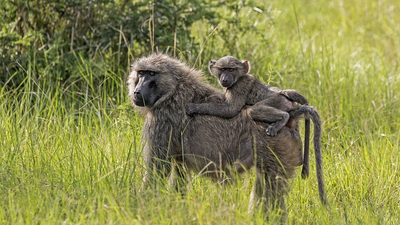
Female baboons who maintain strong family bonds with mothers, sisters, and daughters enjoy significantly longer lifespans, new research reveals. Decades of observation in Africa show these close social connections offer survival advantages, helping them cope with stress and reducing the negative impacts of prolonged hormonal responses. This highlights how kinship and cooperation are not just social comforts but vital for biological longevity in these primates.
For female baboons, spending time near their mothers, sisters, and daughters might not only serve the purpose of companionship but may also lead to increased longevity.According to a new analysis by evolutionary anthropologist Joan Silk, based on more than four decades of observations from long-term baboon studies in the Amboseli Basin along the Kenya-Tanzania border and Botswana's Moremi Reserve, female baboons with strong and stable family social connections tend to have significant survival advantages compared with females that are more socially isolated, as reported by Phys.org.It further strengthens the increasing number of studies indicating that social connections are not mere by-products of group living but actually play an important role in survival and health.Kinship starts from birthWhile male baboons usually leave their natal troop upon sexual maturation, females remain with their maternal kin throughout their whole life. This means that baboon communities are formed by generations of mothers, daughters, sisters, and grandmothers living in one community.As Joan Silk, a professor at Arizona State University, notes, such kin relationships play a crucial role at many stages of females’ life cycles. Mothers take care of infants, breastfeed them, and even provide assistance after weaning. Young daughters frequently stay close to their mothers and use them as a support and protector when in conflict.When daughters grow up, these relationships stay very stable. Adult females dedicate much more time to grooming and interacting with their mothers, daughters, and sisters rather than with any other individuals of their troop.
Grooming is not only about affectionFrom a casual point of view, grooming seems to be no more than a form of showing affection. However, in fact, it is an important way of cooperation.Female baboons carefully remove parasites and other debris from one another’s fur, helping prevent irritation and infection. The grooming activity takes time, which could be devoted to something else, like relaxing or finding some food. Grooming itself is costly to the one who provides the service.This kind of behaviour makes sense from an evolutionary perspective because close relatives share many genes. Thus, helping someone who shares genes increases the evolutionary success of the helper, which is called kin selection.Strong attachments may aid females in coping with stressThese associations are also thought to assist females with coping with life’s stresses.Glucocorticoid stress hormones, including cortisol in humans, help the body cope with sudden danger.
However, if an animal experiences stress over extended periods of time, its health will be impacted negatively.The stress hormones of baboons living in the wild are measured by researchers in faeces collected from identified baboons. Multiple studies have indicated that females with strong social connections tend to react better to stressors than those who lose key social connections.This is perhaps one of the reasons why social connections have such a major impact on longevity.
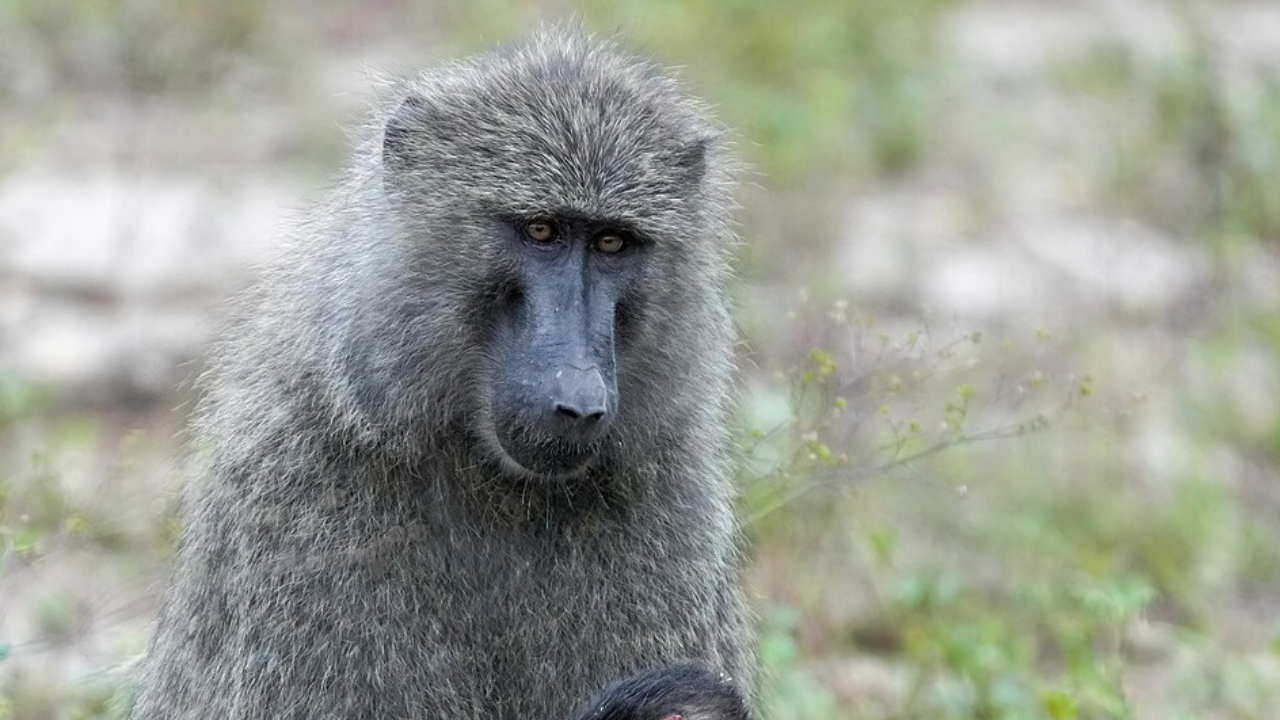
Image of a mother baboon. Image Credit: Wikimedia Commons
Decades of research point to longer livesOne of the most compelling results of this research comes from ongoing fieldwork conducted in the Amboseli Basin region along the border of Kenya and Tanzania and the Moremi Reserve in Botswana's Okavango Delta.Based on decades of collected data, females in the baboon population who have good and constant social relationships tend to live much longer than those females who are less socially connected.
This research follows peer-reviewed work published in Current Biology that found a correlation between strong, consistent social relationships and longevity in female baboons. Additionally, previous research conducted by Joan Silk et al.
shows that maternal relationships play an important role in the survival of offspring, showing that there are benefits from social relations for many generations.More recently, research published in Proceedings of the Royal Society B found out that showed that females with good and constant relationships with their father in early life also have a tendency to live longer.What baboons might be able to tell us about ourselvesDespite having separated from each other millions of years ago, baboons are still some of our closest living relatives. Their social behaviour can provide scientists with valuable insights into the ways that cooperation and kinship ties could have developed.Scientists still don’t understand why some females always form better ties than others, and why such social ties might affect their biological ageing process. Still, based on decades of observations, there is one conclusion that can already be drawn. Family ties of baboon females are more than just emotionally rewarding; they are crucial for survival.As researchers continue to follow these groups year after year, the lesson becomes clearer. For baboons, being part of a family isn’t only about the social aspect of life; it’s about the biology of longevity.









 English (US) ·