

 4 days ago
14
4 days ago
14
ARTICLE AD BOX
6 min readMexicoJun 11, 2026 07:36 AM IST
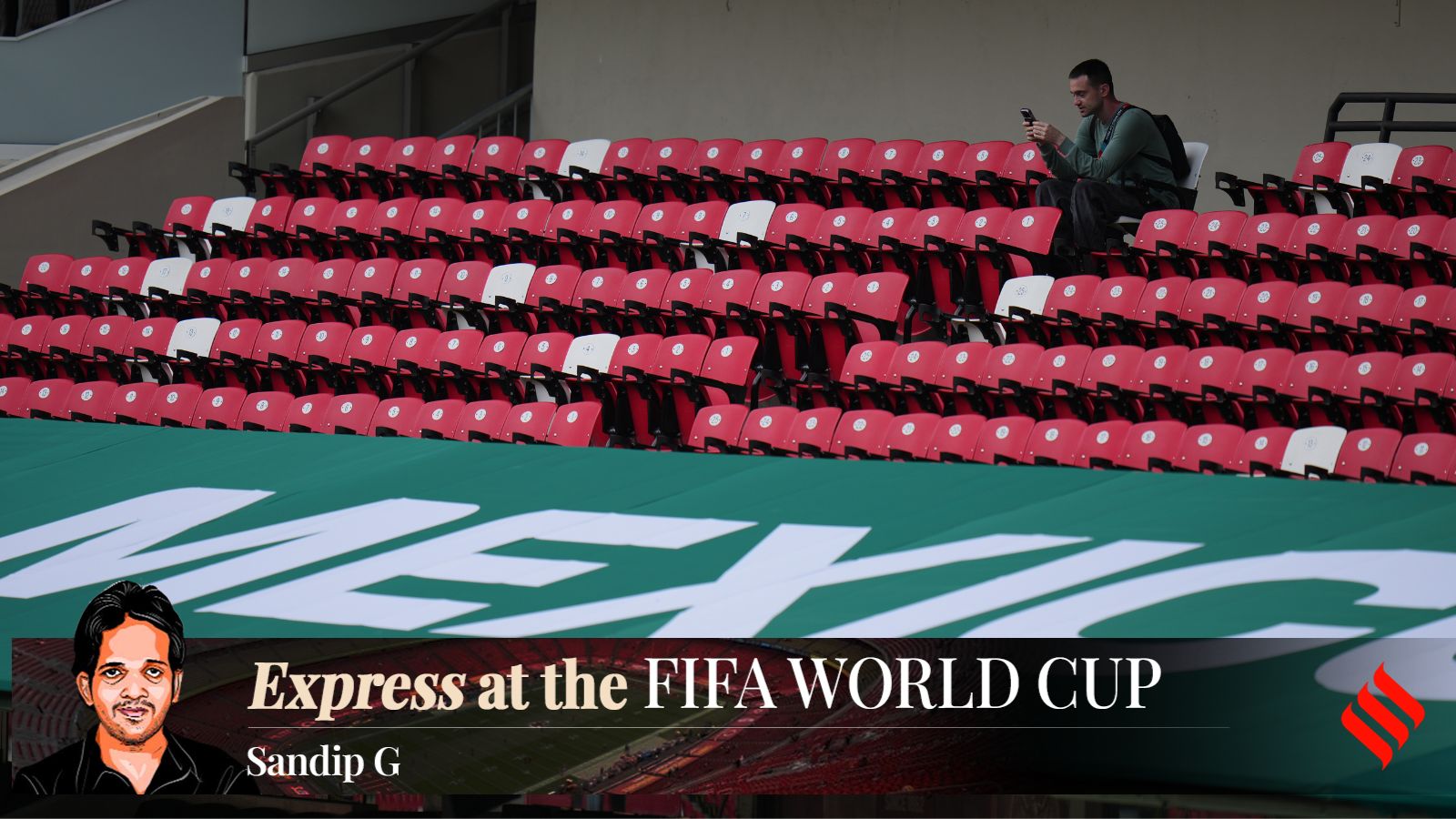 A man sits on the stands of the the stadium in Mexico City, Wednesday, June 10, 2026, a day before the opening FIFA World Cup match between Mexico and South Africa. (AP Photo/Eduardo Verdugo)
A remixed version of the centuries-old folk song Cielito Lindo whistles out from car stereos and restaurant radios. “Ay, ay, ay, ay…Canta y no llores…” Sing and don’t cry, the lines roll on, in soulful voices, from Trini Lopez to Luciano Pavarotti. The national football team’s feverish fans have long embraced it as their patron song, rendered passionately in the stands, whether lose, draw or win. It is a song of both joy and lament — best accompanied, the locals insist, by pulque, not its more commercialised variant tequila — and it is how Mexicans perceive the World Cup.
The fans are sad that ticket prices are unbearably expensive; proud that the mundial is kicking off in Mexico City. They grouse that they are hosting only nine games of 104, with the US apportioning 78; yet take comfort that El Tri could play all their group games on home soil. There is unalloyed optimism that they will go beyond the cursed quinto partido — the fifth game, the wall Mexico has never climbed — but anguish that the finest footballers on the planet are unlikely to step into Mexico City, Monterrey and Guadalajara.
A radio programme spent an hour on why Lionel Messi’s career is incomplete without a World Cup at the Azteca — the stadium where Pelé lifted the trophy in 1970, where Maradona scored the Hand of God in 1986, and which becomes the first venue in history to host three World Cup opening matches. The question was not rhetorical. Another declared Mexico had beaten the USA and Canada before a ball was kicked, counting the city’s passion as the margin. Even tabloids dedicated entirely to crime, like La Prensa and Nota Roja, have committed more pages to football than to the shootout that killed gangster El Mencho in Guadalajara last week.
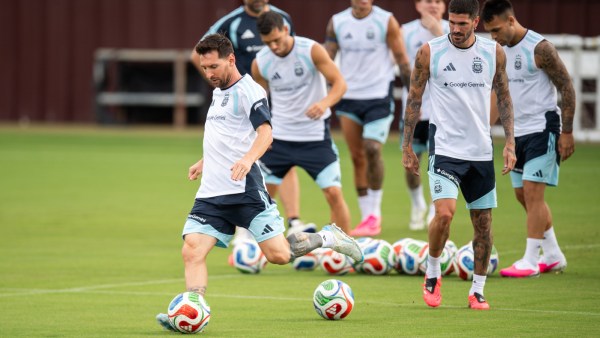 Lionel Messi trains alongside his Argentina teammates at Ellis Field College Station, Texas ahead of the tournament. (AP)
Two of the all-time greats would probably bid farewell to the grand stage. At 38 and 41, it is improbable that Messi and Cristiano Ronaldo have another World Cup in them. Messi could defend the title; Ronaldo could kiss his first. It would be the last dance of Luka Modric; the first act of Lamine Yamal’s symphony; the stage for Kylian Mbappe to reclaim his lost standing. No team is a runaway favourite, but several could wrestle the sceptre from Argentina. Carlo Ancelotti’s Brazil have regained their attacking zest; Luis de la Fuente’s Spain, the reigning European champions, carry dynamism and youth; Thomas Tuchel’s England are unsung but resourceful. Lionel Scaloni has a wondrous array of forwards to defend with.
The tactics could be intriguing. The heavy pressing style that has defined European football could melt in the draining heat and humidity of the Americas. Nights are chillier, mornings pleasant, but most games are scheduled before 5pm local time. A possession-based game would be the winners’ theme; counterattacking football could find resurrection. Some teams, like Norway, have been playing in 12 degrees Celsius and are sweating to adapt.
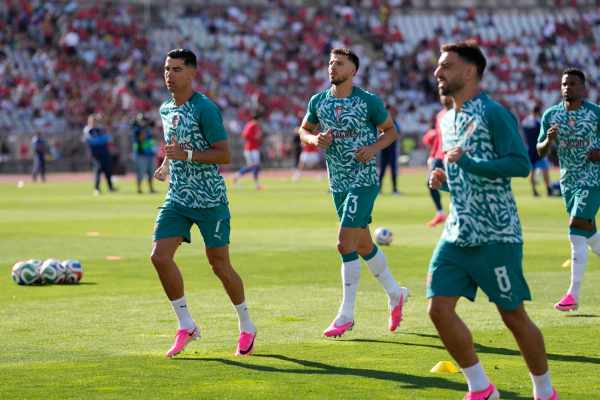 Portugal’s Cristiano Ronaldo, left, and Portugal’s Bruno Fernandes, foreground right, Portugal’s Ruben Dias,background center, and Portugal’s Nelson Semedo warm up for an international friendly soccer match between Portugal and Chile in Oeiras, outside Lisbon, Saturday, June 6, 2026. (AP Photo/Armando Franca)
For most non-American teams, this will be a discovery of the continent the Old Testament calls the End of the World. Two of the three co-hosts share no border. The distance between Mexico City and Toronto is nearly 4,000 kilometres. Bosnia could clock 3,100 miles in the group stage alone, burdened to travel from Toronto at the northern edge of the continent to Los Angeles on the west coast and then Seattle in the Pacific Northwest — an itinerary that would break a touring cricket team, let alone a football squad preparing for knockout football. Bosnia measures roughly 19,767 square miles. The state of New York is nearly three times its size.
The immensity intimidates. American movies and novels have romanticised the road trip through its vast tracts of land. For World Cup teams and fans, the scale is something else.
Story continues below this ad
Even the word for the sport differs. Soccer in the USA and Canada. Futbol in Mexico. The ambitions of the three nations differ too. Mexico, the most seasoned of hosts, dreams of sporting immortality even if theirs is not the strongest team in the tournament. The US strives to demonstrate financial muscle; its team reaching the latter stages is a fever dream. Canada wants to prove it can host spectacles, that it can become the next serious footballing destination on the continent. It’s a journey through distinct cultures, cuisines and music. Quesabirrias — beef folded into a tortilla with melted cheese — is Azteca’s favourite; wild Pacific salmon is Vancouver’s signature meal; the shrimp tostadas of California are famous for a reason.
Futbol was always an imperishable cultural institution in Mexico. Soccer was a countercultural movement in the US, a sport that arrived against the grain. Canada embraced it because the rest of the continent did.
It could be the most politicised World Cup ever — the visa restrictions, the ICE shadow, the truck drivers’ strikes humming in the background — but it could be the most fascinating one too. Like Mexico’s song of joy and lament, Cielito Lindo.





 English (US) ·