

 2 weeks ago
4
2 weeks ago
4
ARTICLE AD BOX
Last Updated:May 07, 2026, 17:54 IST
Tamil Nadu Governor Rajendra Arlekar has twice declined Vijay-led TVK's offer to form a government backed by Congress, citing a lack of an 'absolute majority'


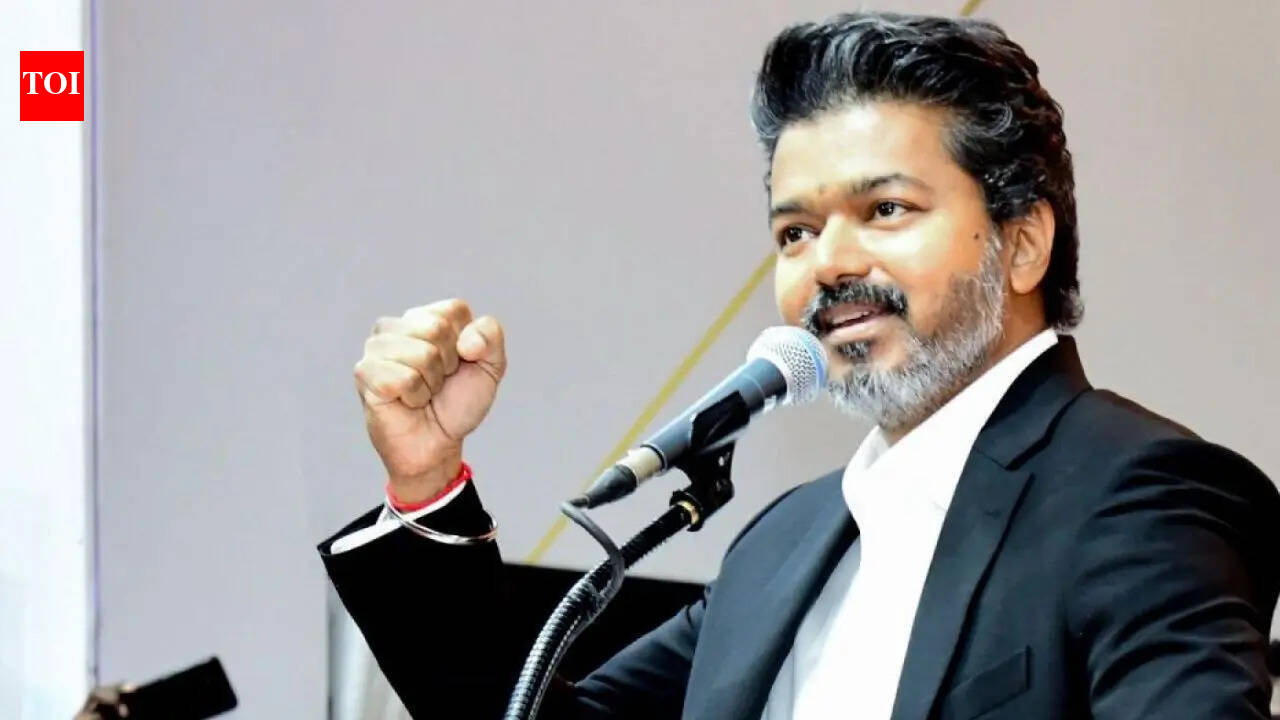
Tamil Nadu Governor Rajendra Arlekar with Tamilaga Vettri Kazhagam (TVK) chief Vijay during a meeting, at Lok Bhavan, in Chennai. Image/PTI
The deadlock between Tamil Nadu Governor Rajendra Arlekar and the Tamilaga Vettri Kazhagam (TVK) leader, Vijay, has plunged the state into a constitutional debate over the discretionary powers of the Raj Bhavan. Despite the TVK emerging as the single largest party with 108 seats in assembly elections and securing letters of support from the Congress, Governor Arlekar has twice declined the invitation to form a government, citing a lack of an “absolute majority".
This impasse, observers say, raises critical questions about the legal hierarchy of a Governor’s choices: is the single largest party (SLP) entitled to a chance, or does a post-poll coalition take precedence?
What are the established guidelines for a Governor in a hung assembly?
The Sarkaria Commission (1988) provided a clear order of preference for Governors facing a fractured mandate. It suggests that the Governor should first invite a pre-poll alliance. If no such alliance exists, the SLP should be invited, provided it has the “backing of others". Following this, the Governor should look to a post-poll coalition where all partners join the government.
The primary objective, as reiterated in the SR Bommai v Union of India (1994) judgment, is that the floor of the House—not the Governor’s chambers—is the only place to test a majority. While the Governor has discretion, the Supreme Court has often held that this power must be used to facilitate a stable government rather than to block a credible claimant.
How did the 2017 Goa and Manipur cases set a precedent?
In 2017, the Congress emerged as the SLP in both Goa and Manipur. However, the respective Governors invited the BJP to form the government because the latter had stitched together post-poll alliances that crossed the majority mark.
When the Congress challenged this in the Supreme Court, the bench led by the Chief Justice refused to stay the swearing-in of the BJP-led coalitions. The court’s rationale was that if a group of parties can demonstrate a majority through letters of support, their claim is “constitutionally superior" to an SLP that stands alone. This precedent suggests that Governor Arlekar’s caution may be rooted in ensuring that the TVK-Congress combine truly possesses the numbers to survive a floor test.
What happened in Karnataka in 2018 regarding the ‘Single Largest Party’ rule?
The 2018 Karnataka elections provided a mirror-image scenario. The BJP emerged as the SLP with 104 seats, while the Congress and JD(S) formed a post-poll alliance with 116 seats (well above the majority mark). Governor Vajubhai Vala initially invited the BJP (the SLP) and gave it 15 days to prove a majority.
The Supreme Court intervened in a midnight hearing, drastically reducing that time to 24 hours. The court noted that inviting the SLP is a valid convention, but it cannot be used to facilitate “horse-trading" if a larger coalition already exists. In Tamil Nadu’s current context, the Governor’s rejection suggests he is scrutinising the “Congress support" to ensure it is unconditional and legally binding.
Can a Governor indefinitely reject a claim to form government?
While a Governor has the right to be “satisfied" of a party’s majority, the Rameshwar Prasad v Union of India (2006) case serves as a warning against gubernatorial overreach. The court ruled that a Governor cannot reject a claim based on “subjective assessment" or a desire to avoid a specific political alignment.
If Vijay and the Congress have submitted formal letters of support that cross the magic number, constitutional morality dictates that they be allowed to prove their strength in a floor test. Refusing twice without a clear, objective reason for doubting the numbers risks judicial intervention, as the courts have increasingly viewed the Governor as a “facilitator of democracy" rather than an autocratic arbiter.
Handpicked stories, in your inbox
A newsletter with the best of our journalism
News india Floor Test Or Governor’s Call? How Past Cases From Goa To Karnataka Frame Tamil Nadu Impasse
Disclaimer: Comments reflect users’ views, not News18’s. Please keep discussions respectful and constructive. Abusive, defamatory, or illegal comments will be removed. News18 may disable any comment at its discretion. By posting, you agree to our Terms of Use and Privacy Policy.
Read More






 English (US) ·