

 1 hour ago
6
1 hour ago
6
ARTICLE AD BOX
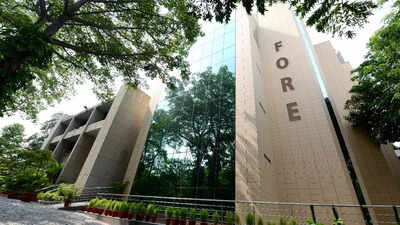
In a landscape increasingly shaped by rapid advances in artificial intelligence and persistent global economic uncertainty, FORE School of Management (FSM) has distinguished itself as one of India’s leading institutions for management education.
Established in 1981, FORE brings more than 4 decades of academic credibility and institutional maturity, steadily emerging as a preferred destination for aspirants seeking to become future-ready business leaders. Over the years, the institution has cultivated a strong intellectual and cultural footprint, with associations spanning business management, consulting, finance and banking, entrepreneurship, law, public policy, sports, media, and the arts.The FORE Alumni Network (FAN) includes several distinguished personalities such as Neha Kant, Founder of Clovia; Nalin Kohli, Senior Advocate at the Supreme Court of India; Soumya Tandon, actor and media professional; Parvesh Verma, Cabinet Minister in the Government of NCT of Delhi; Anjum Chopra, former Indian cricketer and sports presenter; and Rabbi Shergill, acclaimed musician and cultural commentator.
These associations reflect FSM’s multidisciplinary influence and national standing, reinforcing its commitment to nurturing leaders who combine managerial competence with societal awareness and creative thought.
Industry-aligned PGDM programmes
FSM offers multiple AICTE-approved Post Graduate Diploma in Management (PGDM) programmes, including:1. PGDM (General Management) - For integrated functional and strategic mastery.2. PGDM-IB (International Business) - For global business operations and analytical decision roles.3. PGDM-FM (Financial Management) - For advanced financial and regulatory proficiency.4. PGDM-BDA (Big Data Analytics) - For full-stack data ecosystem expertise.These programmes are further supported by four Center of Excellence, such as Center for Sustainable Development(CSD), Center for Research and the Innovation in Frugal Technology Management (CRIFT), Center for Digital, Social & Human Transformation (CDSHT), Center for Human Capital Development(CHCD), which connect academic inquiry with applied business transformation models.National recognition and ranking performanceFSM’s institutional impact is further validated through leading national assessment frameworks and private ranking bodies, where it has consistently outperformed several IIMs and prominent private business schools across the country. In the Cfore School of Management Rankings 2025, FSM is ranked #13 in the Management category, while the BW Businessworld Rankings 2025 place the School at #3 among Top Private B-Schools in North India and #18 overall nationwide.
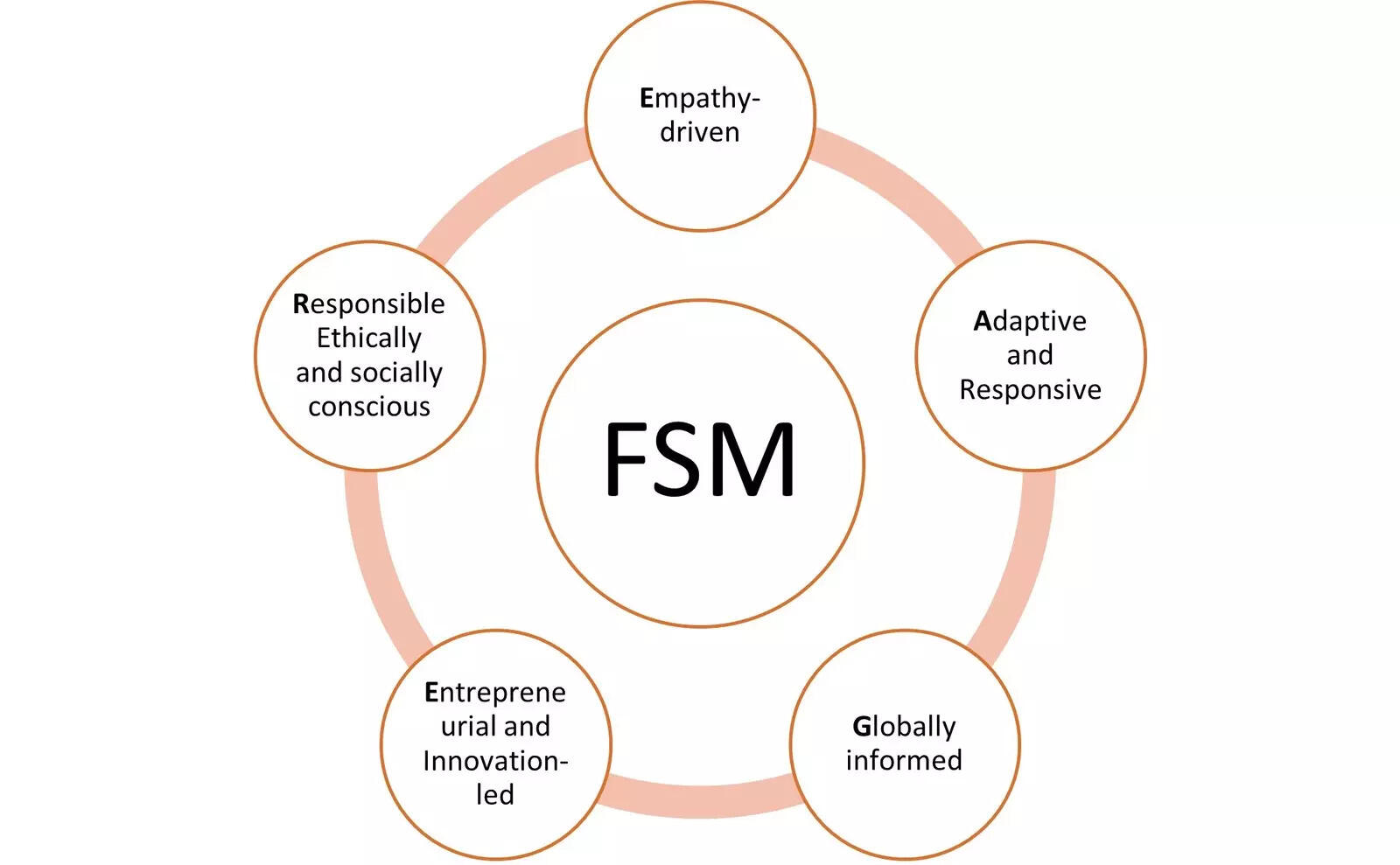
FSM’s academic standing is further strengthened by accreditations from the National Board of Accreditation (NBA) and the SAQS, along with active participation in the AACSB global education network. Complementing these credentials is a robust alumni ecosystem of over 8,000 professionals, with nearly one-fourth occupying CEO and CXO roles across global organisations, highlightingFSM’s long-term leadership impact.Development beyond placements: The "EAGER" philosophyFSM’s leadership emphasises that management institutions must operate as development ecosystems, not placement factories. Under the guidance of Director Prof. Subir Verma, FSM follows the EAGER model, shaping graduates who are:
Campus advantage and specialised data-driven academic moduleFSM maintains academic centers in New Delhi (Qutub Institutional Area) and Gurugram, offering direct access to India’s most influential corporate clusters. The Gurugram campus, positioned within a high-density business district, enables ongoing industry mentoring, corporate shadowing, and real-time market exposure, especially for Big Data Analytics Program (BDA).1. Specialised Academic Modules in Big DataAmong its Academic Programme offerings, the AICTE-approved two-year PGDM in Big Data Analytics (PGDM-BDA) delivers comprehensive training across the modern data infrastructure spectrum. The programme includes data mining, predictive analytics, machine learning techniques, deep learning models, stream processing systems (Hadoop, Kafka), event-driven architecture, NoSQL databases, and core analytical languages such as Python, R, SQL.
Instruction is delivered through an immersive blend of lectures, business case analysis, discussion forums, role-based simulations, peer debates, and industry-focused workshops. The curriculum explicitly prioritises case-based learning like Harvard Business Case Study Model and data-supported storytelling, using live datasets, software sandboxes, and real-time business scenarios to enable students to extract insights relevant to marketing, finance, operations, and strategic decision intelligence.2. AI and Machine Learning academic pathwaysFSM also offers progressive training in artificial intelligence and machine learning through programs like PGDM-BDA and certification tracks including Deep Learning & Generative AI, Applied Machine Learning and AI, and other short-term specialisation modules. These courses cover core areas such as statistical model design, neural networks, deep learning, generative AI systems, and data discovery techniques.
Learning outcomes are strengthened through applied internships, industry mentorship programmes, intensive skill boot camps, and collaborative innovation projects, ensuring students gain direct exposure to real-world organisational problem-solving.3. Case-led learning in practice: Applied analyticsAt FSM, business cases are used to simulate real decision environments, enabling learners to experiment with predictive modelling challenges like customer attrition forecasting and demand prediction, often executed within Artificial Intelligence supported simulation engines and live projects managed through the institute’s Data Experience Lab, Bloomberg Finance Lab.
Students are trained on business intelligence and visualization platforms, enhancing their readiness for careers in data science, intelligence engineering, and algorithm driven strategic roles.A strategic commitment to innovation and responsible leadershipFSM’s Institutional Philosophy centers on producing ethically grounded leaders who demonstrate both global awareness and social accountability. To align with the demands of an Artificial Intelligence-driven economy, FSM has embedded emerging technology competencies into its academic framework.
The institute delivers structured learning units in Data Science, Artificial Intelligence, Analytics, and Governance, reinforced through industry-aligned partnerships, applied research projects, capstone assessments, experiential labs such as Bloomberg Finance Lab, and simulation-based learning environments.
This design ensures students develop analytical reasoning supported by evidence-based insights rather than theoretical exposure alone.Governance education and the FCPLG modelFSM’s governance orientation is supported through institutional leadership bodies including its Board of Directors and Academic Advisory Council. Additionally, the FORE Centre for Political Leadership and Governance (FCPLG) extends the institute’s educational scope into public policy and democratic leadership development. The centre applies experiential learning approaches such as policy case evaluations, leadership simulations, crisis leadership drills, ethics workshops, structured internships, and strategic governance immersion modules, focusing on fair, transparent, inclusive, and resilient public administration models.
These governance learning units are integrated into mainstream PGDM programmes to help students understand policy formulation, institutional accountability, and democratic leadership mechanics.Integrated pedagogy and global benchmarkingFSM delivers learning through a composite experiential framework combining faculty-led discussions, digital learning platforms, industry residencies, strategy games, and interactive business simulations.
Curriculum design is periodically reviewed with industry experts to ensure global relevance, applied rigour, and employability-focused learning outcomes. Institutional foundations guiding learning
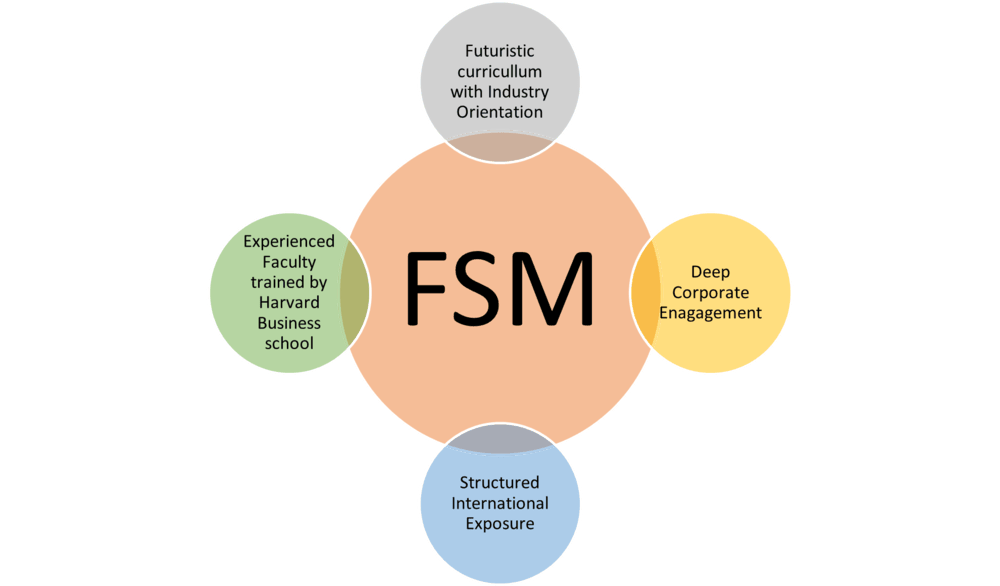
The FSM academic model is anchored in four core principles:1. Curriculum designed for future industry demands, balancing classical business fundamentals with emerging digital fluencies.2. High-intensity learning delivery, supported by faculty trained in case-led instruction models.3. Deep corporate engagement, through advisory boards, applied industry projects, and specialised Certifications.4. Structured international exposure, including compulsory global immersion modules at global prestigious institutions such as RMI-NUS, Singapore, ESSEC France, SDA Bocconi School of Management, Milan, Italy, Frankfurt School of Finance and Management, Frankfurt (Germany), Nanyang Technological University (NTU), Singapore, Rochester Institute of Technology, Dubai (UAE), United Nations Institute for Training and Research (UNITAR), Northampton University United Kingdom, Anglia Ruskin University United Kingdom, ESCE International Business School, Paris, France, Vietnam National University -HCM- University of Law and Economics, Vietnam, Kathmandu University School of Management, Kathmandu, Nepal, STI University, Yangon, Myanmar, University of Economics, Ho Chi Minh City, Vietnam, School of Business and Economics, Linnaeus University, Sweden, European Institute for Asian Studies, Luxemburg, University of California, Riverside (IEP), USA, National Research University, Higher School of Economics, Moscow, Russia, Ureka Education Group, UK.As India accelerates its global role in artificial intelligence and sustainable economic systems, FORE School of Management continues to expand its academic architecture, ensuring learners graduate as strategic growth designers, capable of leading organisations with analytical clarity, ethical depth, and global readiness.Disclaimer - The above content is non-editorial, and TIL hereby disclaims any and all warranties, expressed or implied, relating to it, and does not guarantee, vouch for or necessarily endorse any of the content.







 English (US) ·