

 1 hour ago
6
1 hour ago
6
ARTICLE AD BOX
Last Updated:July 03, 2026, 13:49 IST
From the original 13-star design in 1777 to today's iconic 50-star Stars and Stripes, here's how the nation's most recognisable symbol evolved over the centuries.
As the United States celebrates its 250th Independence anniversary in 2026, the American flag stands as a powerful reminder of the nation’s journey – from 13 colonies to 50 states, and from a young republic to a global power.

As the United States celebrates its 250th Independence anniversary in 2026, the American flag stands as a powerful reminder of the nation's journey - from 13 colonies to 50 states, and from a young republic to a global power.
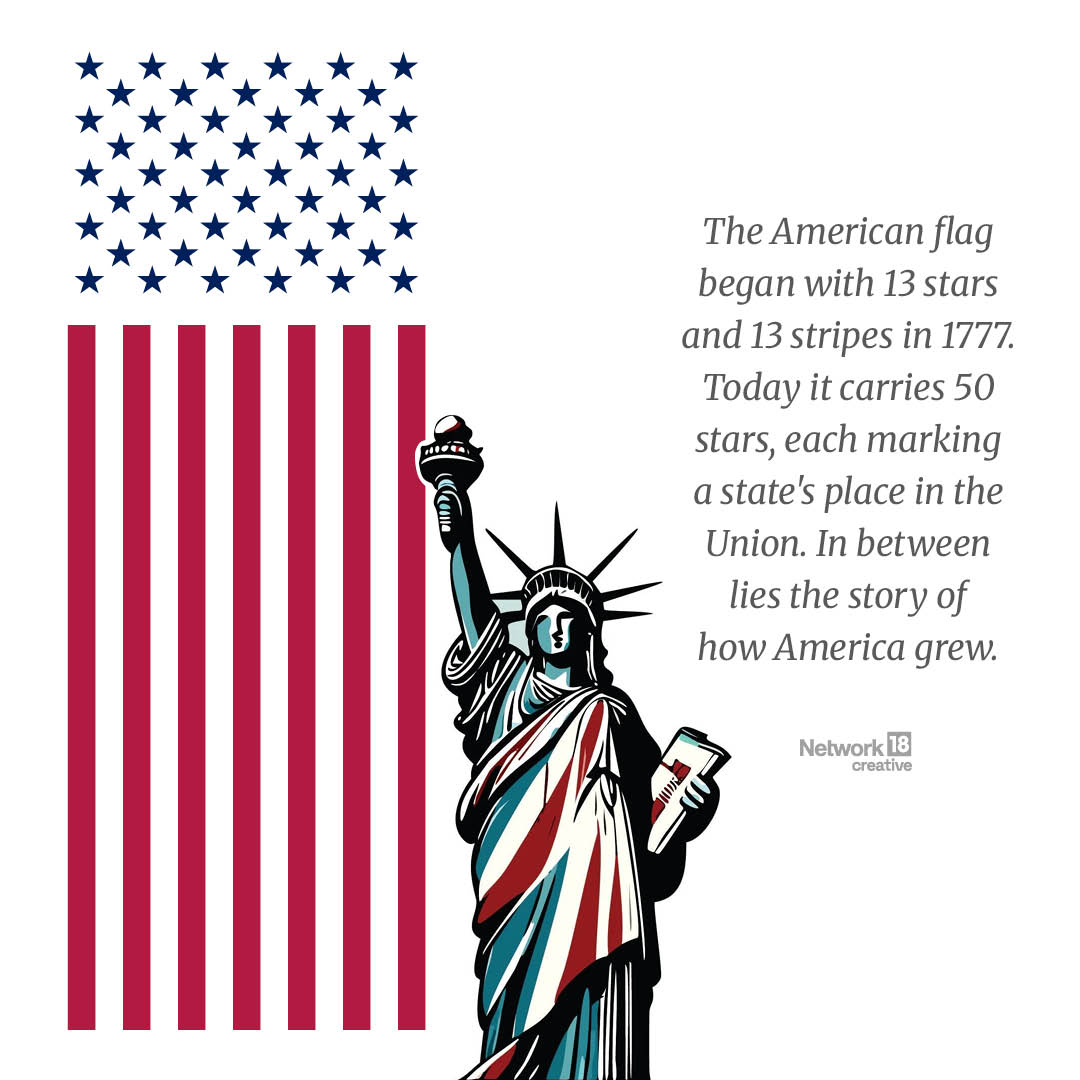
From 13 stars to 50, here's the fascinating story behind the Stars and Stripes.
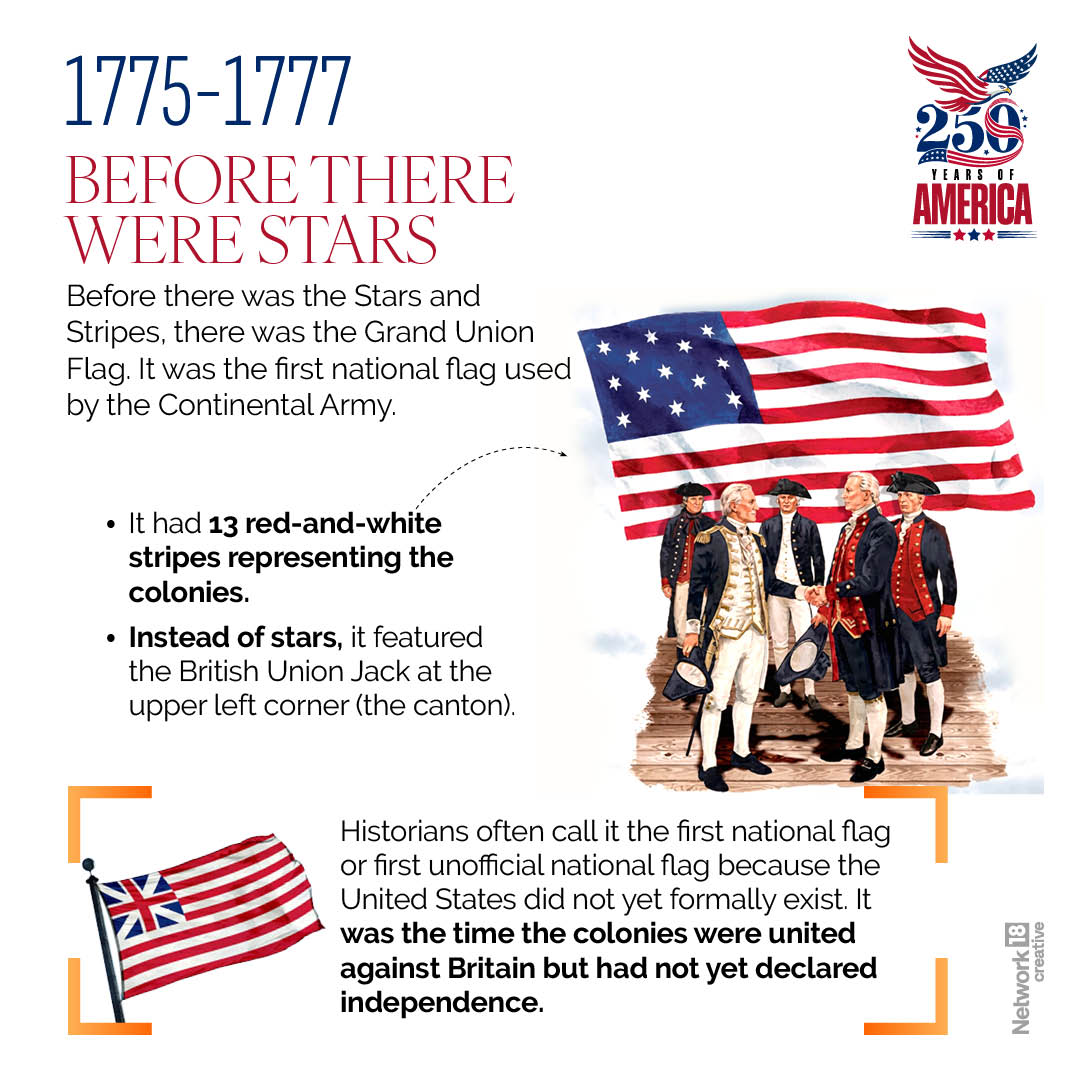
Before the Stars and Stripes became America's official flag, the Continental Army fought under the Grand Union Flag. It featured 13 red-and-white stripes but also included Britain's Union Jack, reflecting the colonies' evolving relationship with the British Crown.
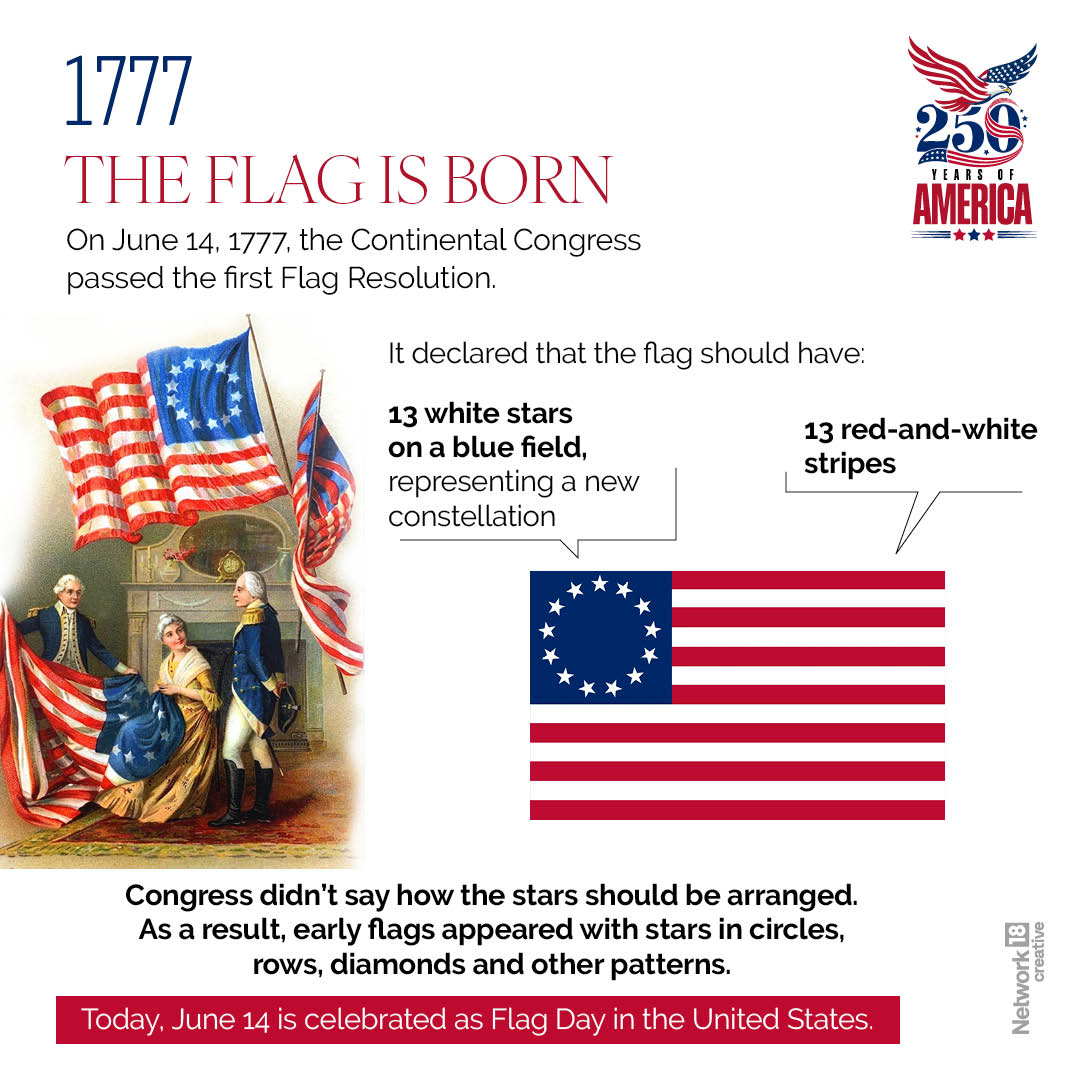
On June 14, 1777, the Continental Congress approved the first official U.S. flag. It featured 13 stars and 13 stripes, representing the original colonies. However, lawmakers did not specify how the stars should be arranged, leading to several early designs.
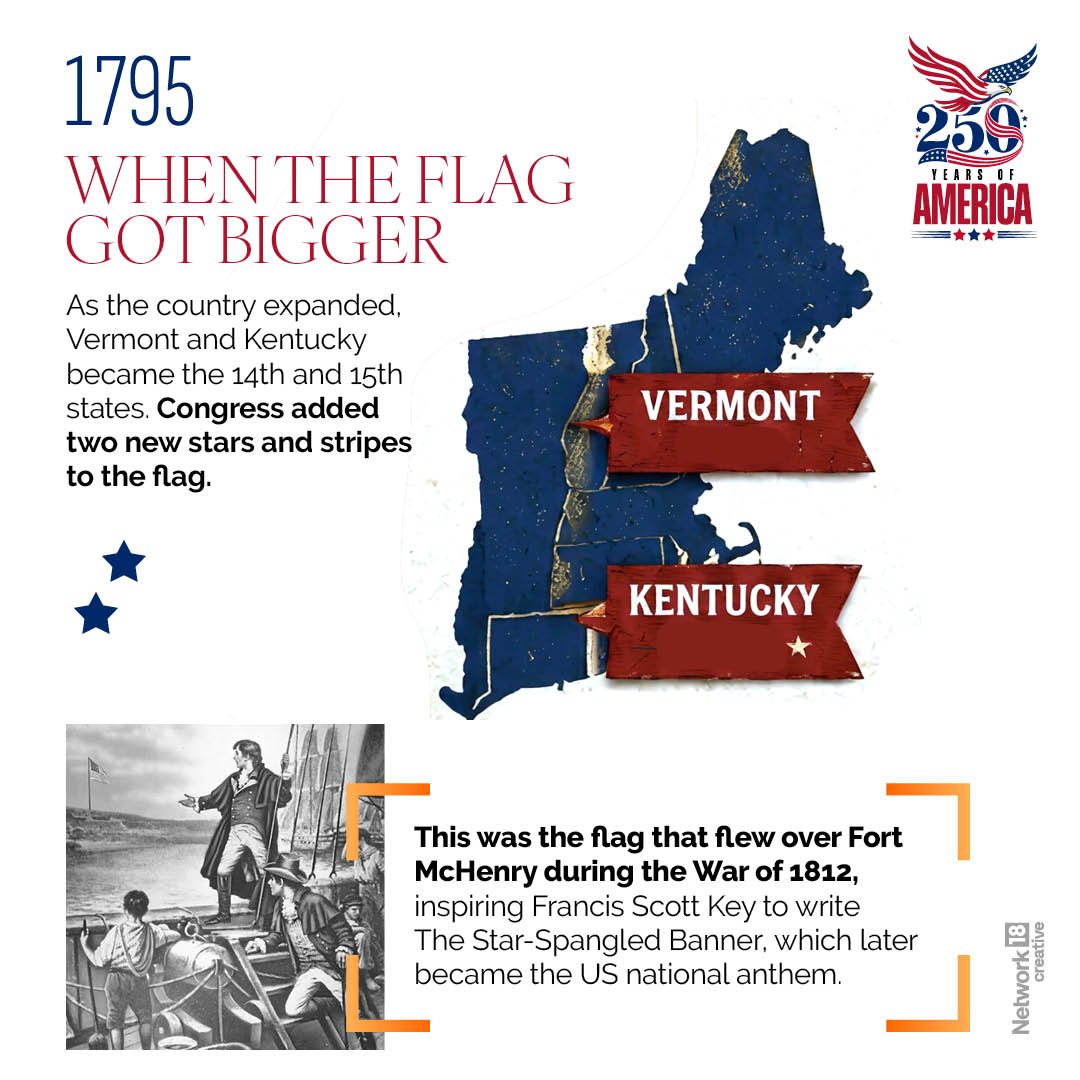
When Vermont and Kentucky joined the Union, the flag was updated to include 15 stars and 15 stripes. This became the only official American flag to feature more than 13 stripes and inspired the flag that flew over Fort McHenry during the War of 1812.
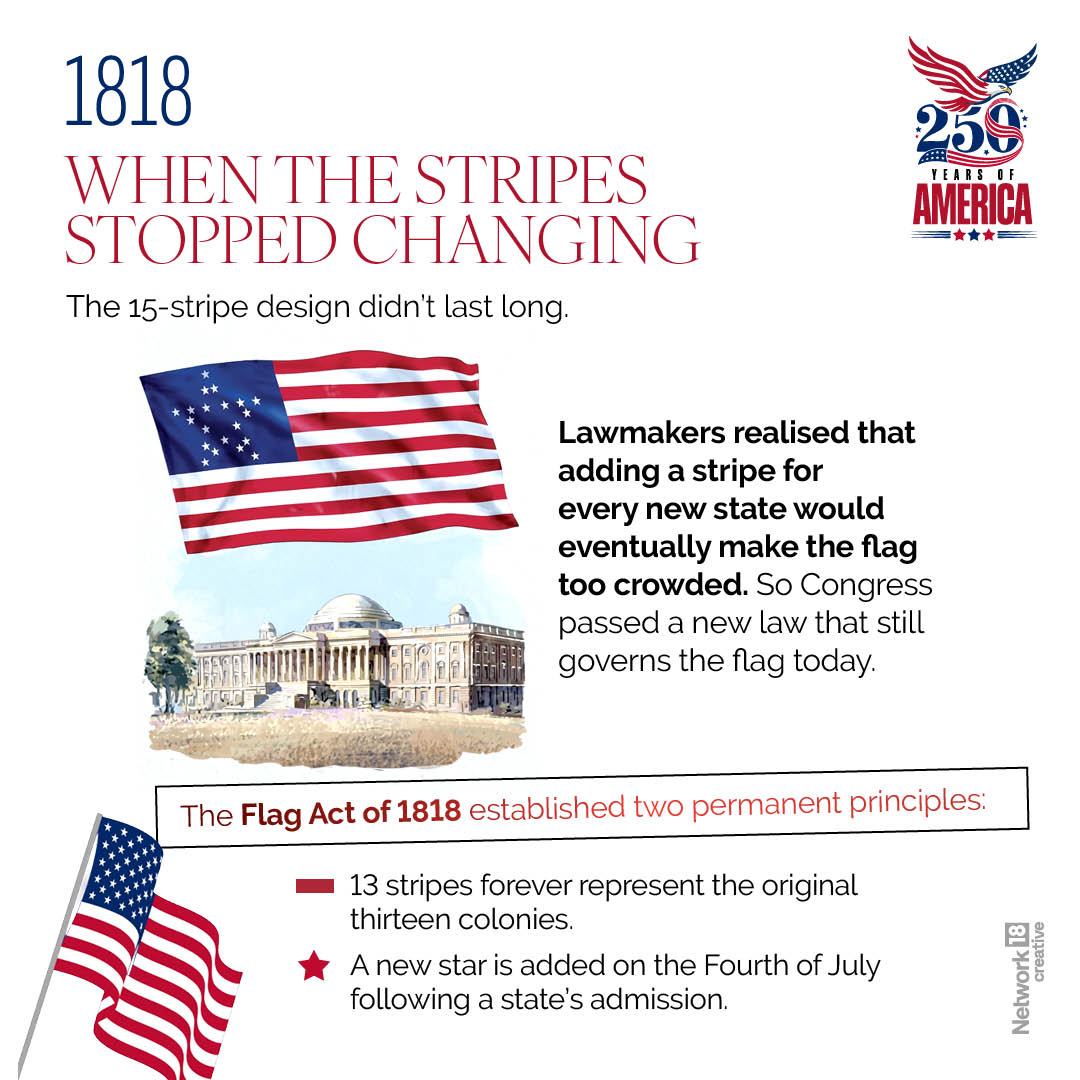
As more states joined the Union, Congress realised the flag would become too large if both stars and stripes kept increasing. The Flag Act of 1818 restored the design to 13 stripes, a tribute to the original colonies, while introducing the practice of adding one new star for every new state.
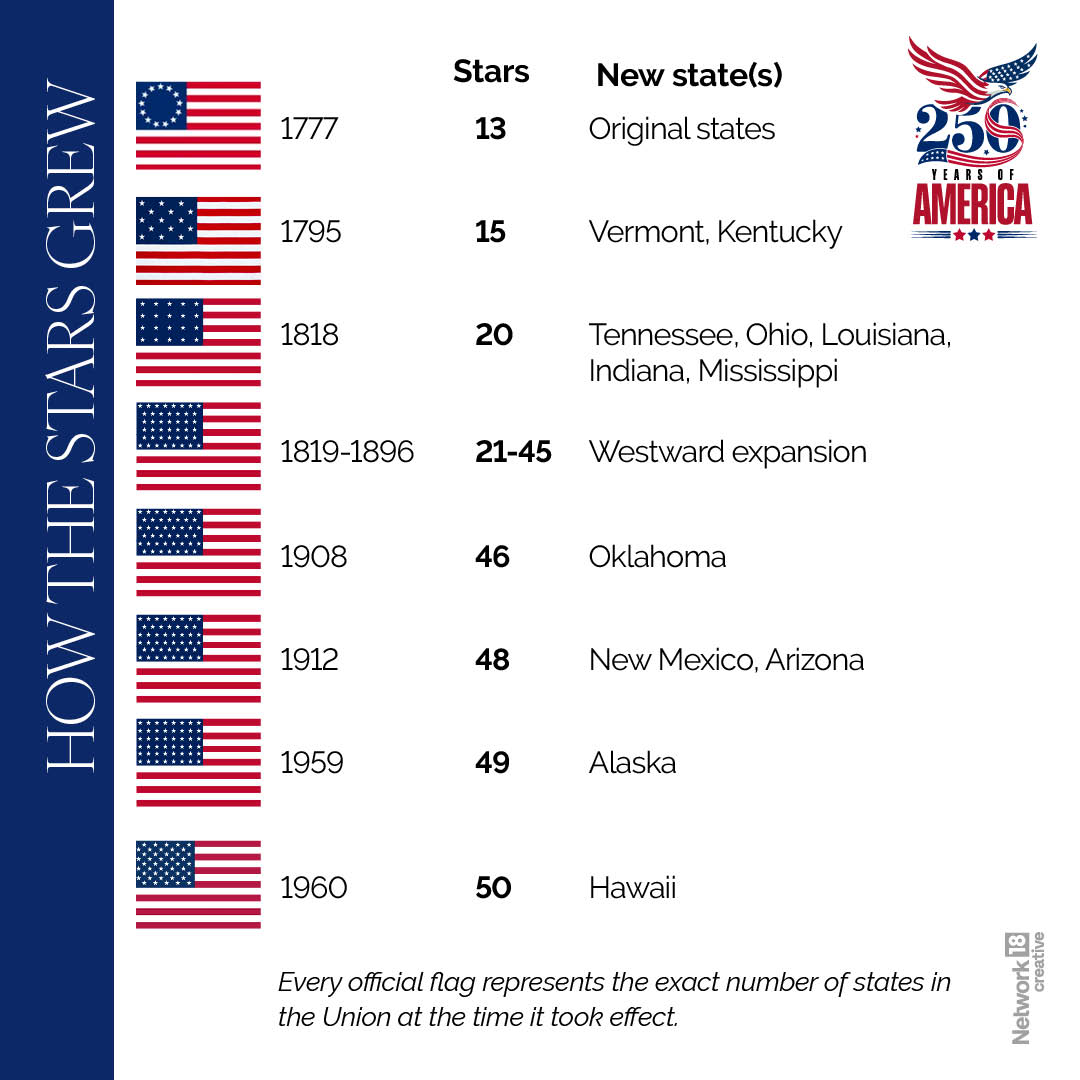
Over the next century, the flag continued to evolve as America expanded westward. New stars were added for states including Tennessee, Ohio, Louisiana, Texas, California, Oklahoma, New Mexico, Arizona, Alaska, and Hawaii, reflecting the country's steady growth.

The 48-star flag represented the United States from 1912 to 1959, making it one of the longest-serving versions in history. The current 50-star flag officially came into use on July 4, 1960, after Hawaii became the 50th state. It remains the longest-serving American flag to date.

The American flag has had 27 official versions since 1777. Even today, if a new state were admitted to the Union, another star would be added to the flag on the following Fourth of July.
News Photogallery world Fourth Of July: Here's How The American Flag Changed Through History | GFX









 English (US) ·