

 2 days ago
5
2 days ago
5
ARTICLE AD BOX
5 min readFeb 8, 2026 04:52 PM IST
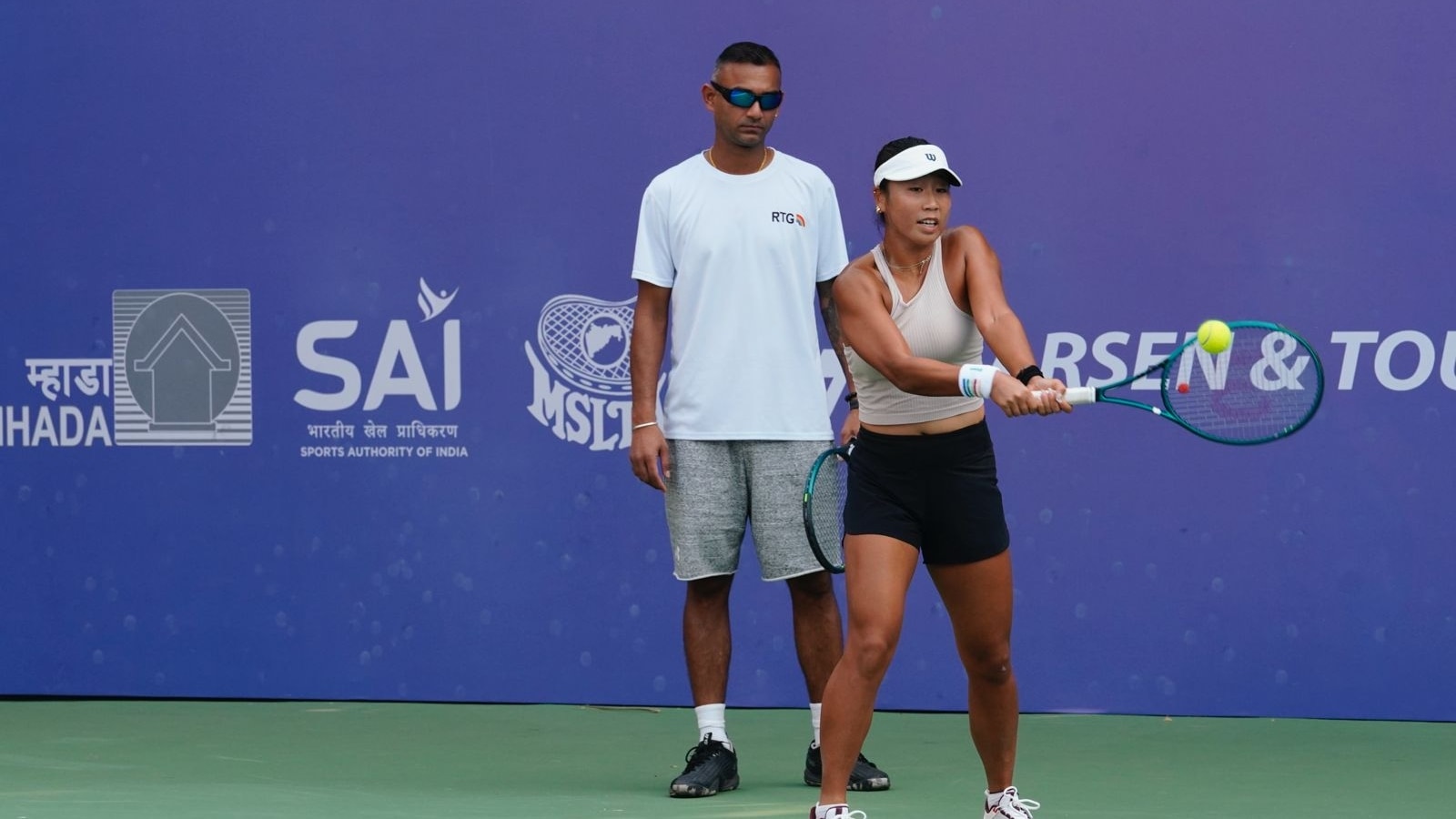 While Mangal Sriram taught Fangrian Tian discipline, she ensured he turned punctual
Tennis coach Mangal Sriram, who had started coaching in Beijing, China, was trying to toughen up one of his charges, Fangran Tian, by teaching her jiu-jitsu, doubling up as her fitness coach. “I’m not sure if she remembers this,” he says at the Cricket Club of India, hosting the L&T India Open WTA 125 event, “But she got so good at it she threw me to the ground, and my knee was gone and I couldn’t play tennis for 2 years, ending my playing career.”
How does Tian remember this KO? “I was pretty proud of myself that I’d knocked out my coach. But yes, he was on crutches for a long time,” she guffaws. This week, it was Mangal’s turn to be punch-pleased and mighty proud of his ward of a decade, who not only won her first WTA125 main-draw match but also went all the way to the semis. “I love playing in India, and I’d won my first ITF junior tournament in Madurai. We keep food simple during tournaments, but I love butter chicken,” she adds, of her fifth visit to India, a country she calls lucky.
So how did an Indian wind up coaching a Chinese? “Nobody wanted to coach her,” he quips. It’s his turn to guffaw. “But I really enjoy working with him. He humbles me when I’m feeling too confident. It’s a bond of 10 years, our families know each other, we go on vacations with them all,” the World No 325, says.
Mangal started tennis at 4 after his father conned him by telling him the sport he was playing was cricket. “My uncle Devaraj played Ranji Trophy for TN, but my father never wanted me to play cricket. He put me in tennis and said this was cricket,” he recalls. He ended up at University of Hawaai, Hilo, playing NCAA with a tennis scholarship, and didn’t particularly want to become a coach. The typical Chennai chagrin of pressure of ambition ruining love for the game, surfaces. “I never wanted to be a coach because you spend all your life trying to be a great player and fail. Then I got into some trouble at University.”
He had a flair for coaching, so he picked up USTA certifications quickly and landed up training at a resort in Bali, Indonesia. It’s when the Chinese Tennis Federation was looking for coaches and contacted USTA, who recommended his name, and he found himself at Beijing’s biggest tennis nursery – the Yuxin Middle School. China has a huge number of female tennis players, some Grand Slam and Olympic champions. “They are independent and strong-minded and have had success for 10-12 years more than their men.” Women’s tennis was a big deal in China. Tian, was one of the many he began coaching and taking to age-group national titles – she was driven, but scared of Coach Mangal’s discipline.
“Now I’m scared of her!” he jokes.
While he taught her discipline, she ensured he turned punctual. “I used to be late everywhere, she taught me to be on time. And I learnt to speak Mandarin fluently because of her,” he says. “He taught me everything about tennis, and my English wasn’t very good back then. He improved that, too,” Tian recalls.
In Mumbai, she was thrilled to get into the main draw and notch a couple of come-from-behind three-set wins. “China builds amazing stadia in the tiniest of places, and it’s all state-of-the-art, maintained perfectly. Tian wasn’t the top junior in China when she started at 10, and there was no pressure from her family for early results. But she was emotionally committed and ridiculously tough. Nothing brings her down. She plays a match and says ‘Next’, after tough losses. Very mature and smart, though bad days in practice can make her sensitive,” Mangal says.
Story continues below this ad
China has imported tennis coaches at different levels from all over the world, especially Spain, France and Australia, and a lot of exchange of knowledge and frequent upskilling happens, which means Mangal is thriving in an atmosphere trying to take his Chinese ward to the next level.
Preseason in Thailand also helped Tian cope with Mumbai’s humidity. “When I met him first I was at one of Beijing’s top schools known for tennis, and he was working on another team but we then got him as head coach. He shaped me as a player, and he’s now family,” she says.

Shivani Naik is a senior sports journalist and Assistant Editor at The Indian Express. She is widely considered one of the leading voices in Indian Olympic sports journalism, particularly known for her deep expertise in badminton, wrestling, and basketball. Professional Profile Role: Assistant Editor and Columnist at The Indian Express. Specialization: While she covers a variety of sports, she is the primary authority on badminton for the publication. She also writes extensively about tennis, track and field, wrestling, and gymnastics. Writing Style: Her work is characterized by "technical storytelling"—breaking down the biomechanics, tactics, and psychological grit of athletes. She often provides "long reads" that explore the personal journeys of athletes beyond the podium. Key Topics & Recent Coverage (Late 2025) Shivani Naik’s recent articles (as of December 2025) focus on the evolving landscape of Indian sports as athletes prepare for the 2026 Asian Games and beyond: Indian Badminton's "Hulks": She has recently written about a new generation of Indian shuttlers characterized by power and physicality, such as Ayush Shetty and Sathish Karunakaran, marking a shift from the traditionally finesse-based Indian style. PV Sindhu’s Resurgence: A significant portion of her late-2025 work tracks PV Sindhu’s tactical shifts under new coaching, focusing on her "sparkle" and technical tweaks to break out of career slumps. The "Group of Death": In December 2025, she provided detailed tactical previews for Satwiksairaj Rankireddy and Chirag Shetty’s campaign in the BWF World Tour Finals. Tactical Deep Dives: She frequently explores technical trends, such as the rise of "backhand deception" in modern badminton and the importance of court drift management in international arenas. Legacy and History: She often revisits the careers of legends like Saina Nehwal and Syed Modi, providing historical context to current Indian successes. Notable Recent Articles BWF World Tour Finals: Satwik-Chirag have it all to do to get through proverbial Group of Death. (Dec 2025) The age of Hulks in Indian badminton is here. (Dec 2025) Treadmill, Yoganidra and building endurance: The themes that defined the resurgence of Gayatri and Treesa. (Dec 2025) Ayush Shetty beats Kodai Naraoka: Will 20-year-old be the headline act in 2026? (Nov 2025) Modern Cinderella tale – featuring An Se-young and a shoe that fits snugly. (Nov 2025) Other Sports Interests Beyond the court, Shivani is a passionate follower of South African cricket, sometimes writing emotional columns about her irrational support for the Proteas, which started because of love for Graeme Smith's dour and doughty Test playing style despite being a left-hander, and sustained over curiosity over their heartbreaking habit of losing ICC knockouts. You can follow her detailed analysis and columns on her official Indian Express profile page. ... Read More
© The Indian Express Pvt Ltd








 English (US) ·