

 1 hour ago
4
1 hour ago
4
ARTICLE AD BOX

The evolution of AI on the PC has transitioned from invisible background processes to a specialised software work. Today, we are in the era of the “AI PC,” where the heavy lifting has moved from the cloud back to the local desktop, allowing for real-time generative tasks such as live language translation, background noise removal and on-device image generation.
With the rise of language models optimised for local hardware, PCs have evolved from windows into the internet to engines of intelligence. But is this enough? Are they just a few tricks that ‘wow’ people or are we heading into an AI-first world where living with AI is going to be as normal as having a mobile phone. We find out.
Part 1: How it all began
When OpenAI launched ChatGPT in November 2022, the technology world paused and quickly changed its tracks.
A conversational AI that could write essays, debug code, answer complex questions and hold a coherent dialogue available for free, to anyone with an internet connection felt like an inflection point. The public response was unlike anything the tech industry had seen in years. No company moved faster to capitalise on that moment than Microsoft. Within weeks, the software giant had announced a multi-billion dollar deepening of its relationship with OpenAI and within months, it had begun weaving AI into the fabric of products used by hundreds of millions of people every day.
Microsoft Bing got an AI-powered search experience; Microsoft Edge got an AI assistant built directly into the browser, and Microsoft 365 productivity tool suite used by businesses and students across the world got Copilot, an AI assistant capable of summarising documents, drafting emails and generating presentations at the click of a button.
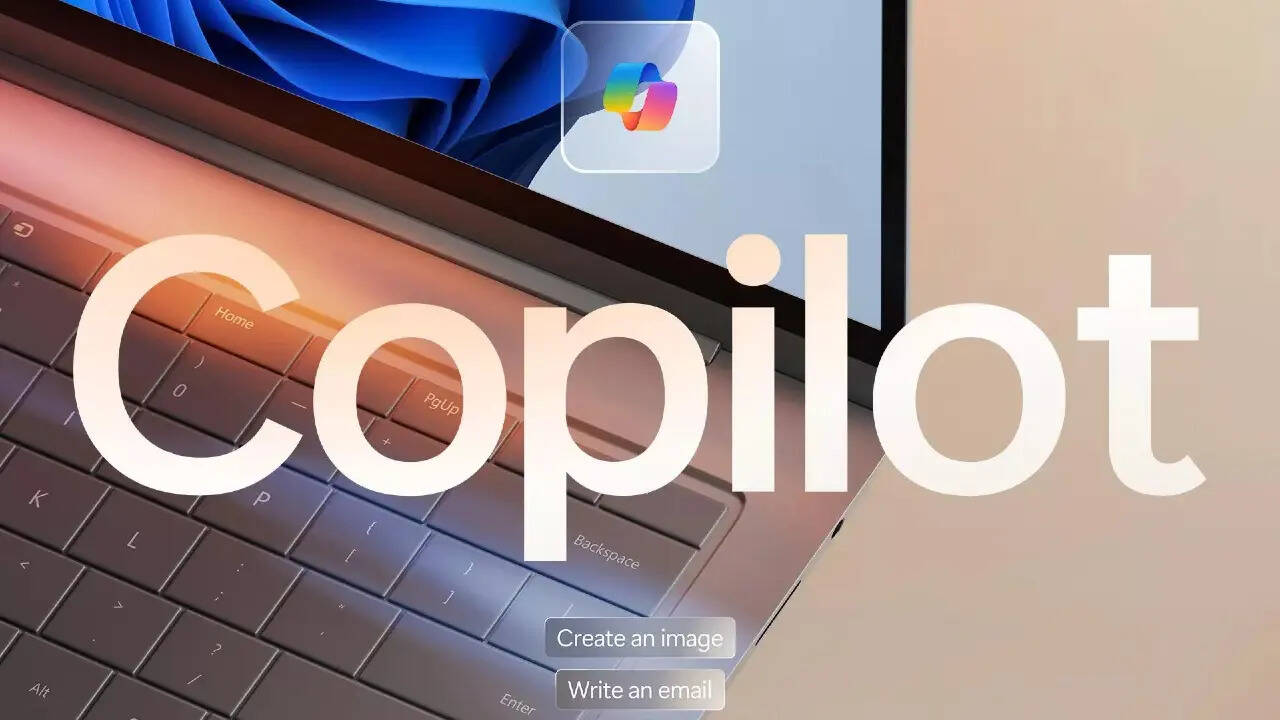
Then came the hardware. Microsoft pushed its PC manufacturing partners like Asus, Dell and MSI to build a new category of device: the Copilot+ PC, a laptop purpose-built to run AI features locally using dedicated Neural Processing Units (NPUs) for AI workloads.
Keyboards on new Windows laptops gained a dedicated hardware button and the Copilot key was placed where the menu key once sat.
Part 2: AI features multiply but…
Through 2023 and into 2024, the list of AI features arriving on Windows laptops grew steadily. Some were genuinely useful but to perform these tasks like they way they have been developed, it needed sophistication at a level that people readily pay for them. PC makers like Asus, Dell and MSI saw the opportunity and invested in developing AI features that ran along with Microsoft’s own set.
But then came the big ‘confession’.
Part 3: Dell’s AI PC ‘confession’
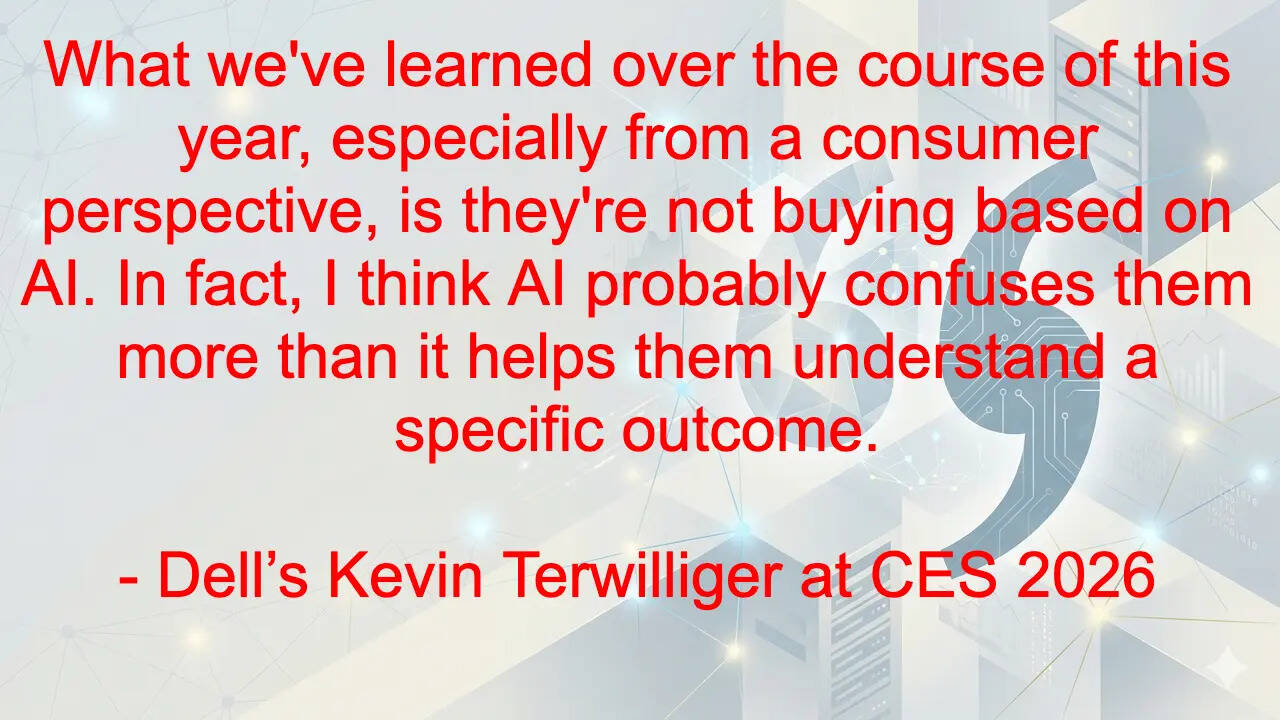
While 2025 was all about AI PCs, at CES 2026, Dell’s head of product Kevin Terwilliger publicly admitted that the industry’s central bet of the past two years had not landed the way anyone hoped.“What we've learned over the course of this year, especially from a consumer perspective, is they're not buying based on AI. In fact, I think AI probably confuses them more than it helps them understand a specific outcome,” Terwilliger told PC Gamer.
Dell is one of Microsoft’s largest hardware partners and that had spent the past two years launching Copilot+ certified devices, marketing AI features and building NPU-equipped machines to Microsoft's specifications. When asked about the claim, Raj Kumar Rishi - vice president and general manager, APJ Consumer business, Dell Technologies, told The Times of India that Dell’s approach of offering products is different from its competitors while highlighting that customers are still buying PCs as an overall package that now includes AI.“We’re committed to advancing AI capabilities across our consumer and commercial portfolios, but our approach is tailored to different audiences. With consumers, core needs still drive purchasing decisions – performance, battery life, reliability, and value. AI is enhancing many of these experiences, and customers are benefiting from on-device AI every day. Combined with the promise of agentic capabilities coming quickly, this will further extend and expand the utility of the AI PC,” Rishi told TOI.He also explained that a majority of deliberate AI spending is coming from large enterprises and government organisations, followed by professional creators, freelancers and small businesses.

Students and casual consumers are engaging with AI primarily through integrated features - often without realizing it. But that's the point. As on-device AI becomes more embedded in everyday experiences, the profile of the ‘AI buyer’ will broaden quickly.
The growth opportunity isn't just about who's paying for AI features today - it's about who will come to depend on them tomorrow as use cases continue to expand,” Rishi pointed out.
Part 4: Where is the industry headed to
Not just Dell, other key players like Asus and MSI are also actively building AI experiences that are embedded more organically into the devices people already want to buy. For example, Asus has taken an approach to integrate Copilot across approximately 90% of its device lineup, including a dedicated Copilot key, while developing its own AI-native software experiences. StoryCube, a one-stop AI media hub, and MuseTree, an AI-powered image generation application, represent Asus's attempt to make AI tangible for everyday users – giving it a specific, understandable purpose rather than presenting it as an abstract capability.
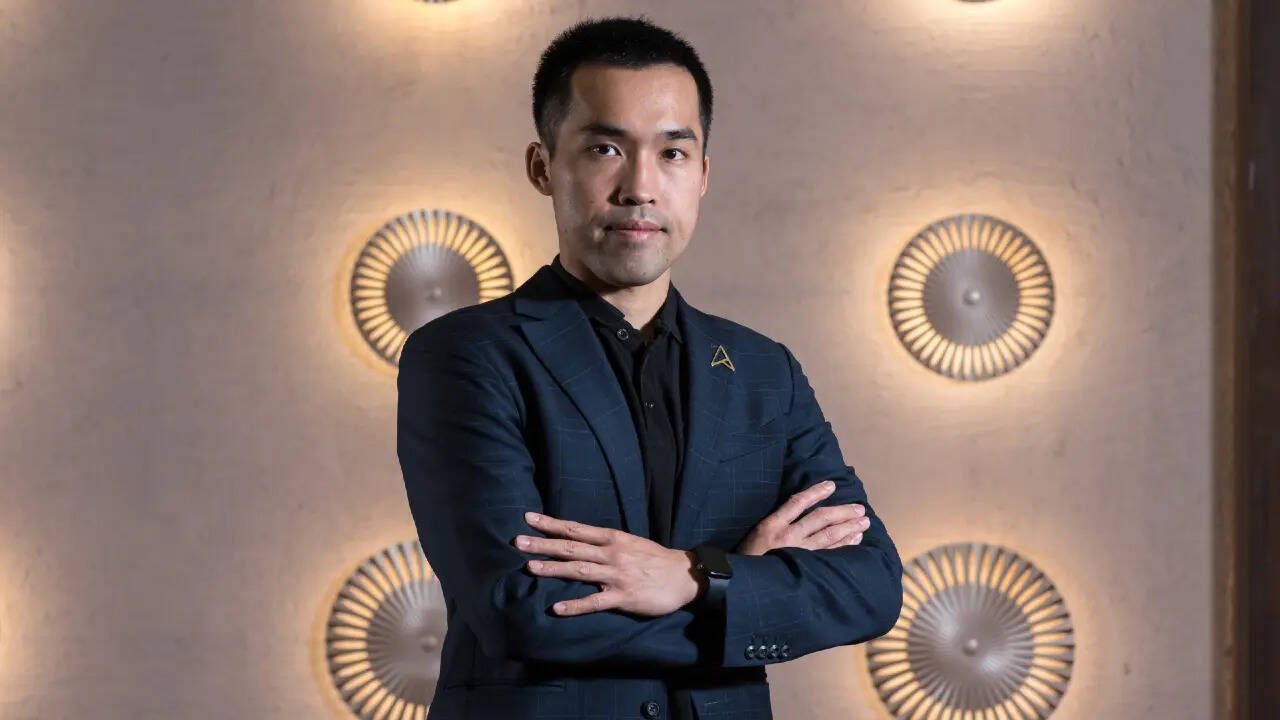
But Arnold Su, vice president, consumer and gaming business, Asus India, told TOI how AI has evolved in the past few years.“It’s [AI is] far more embedded into the system itself today.
AI is no longer something you use occasionally, it’s quietly working in the background, improving how the device performs, how applications interact, and how efficiently users can get things done,” Su said.The company sees the shift to on-device AI processing, enabled by NPUs, as addressing the two concerns that have historically held AI features back.“With the integration of NPUs, more AI workloads are now being handled locally, which makes the experience faster, more reliable, and also addresses concerns around privacy and latency,” he added.AI in gamingMSI, the brand most closely associated with gaming laptops, has taken a different angle. For gamers, AI is not an abstract productivity tool but a technology that makes games look better, run faster and feel more responsive. AI-powered upscaling technologies like NVIDIA's DLSS, AMD's FSR and Intel's XeSS have transformed the visual quality achievable on gaming laptops, intelligently reconstructing image frames in real time to deliver fidelity that traditional rendering could not match at equivalent performance costs.
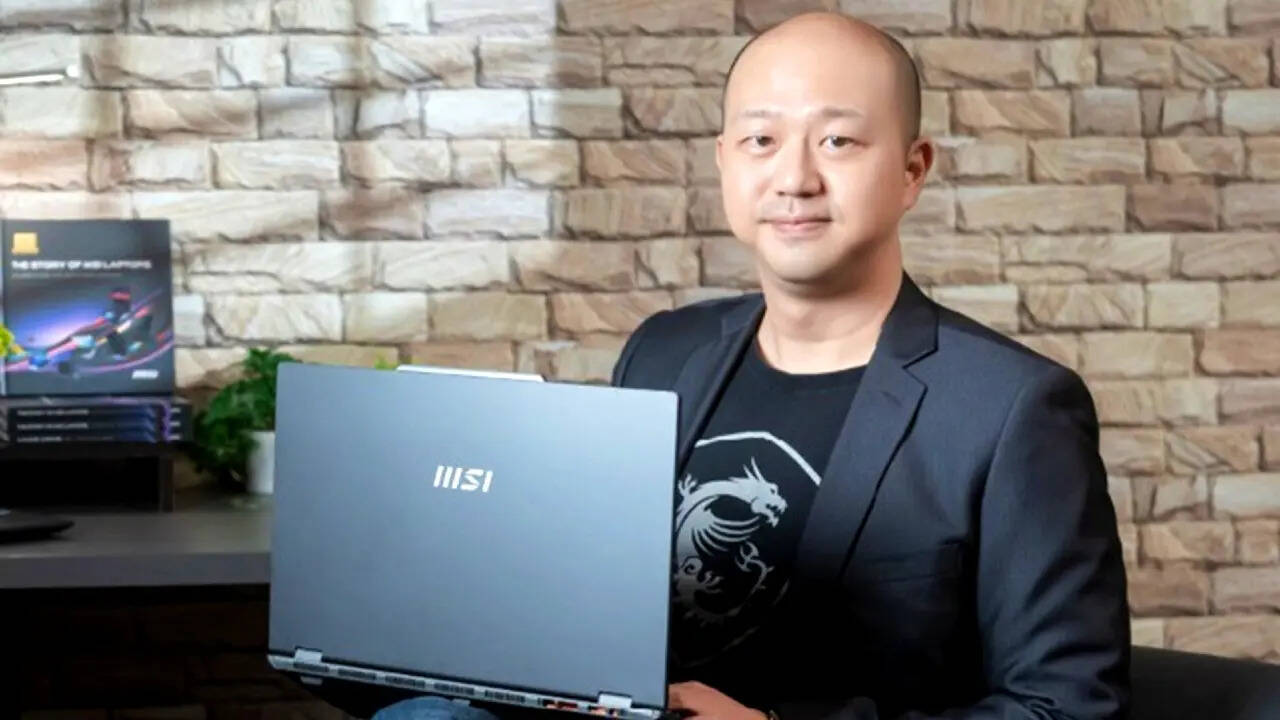
James Sung, Notebook sales director of India at MSI, says for competitive players, AI-assisted latency optimisation reduces the gap between input and display response.“It's important to understand that AI computing extends beyond the NPU; graphics play an equally critical role, assuming greater responsibility in AI workloads,” he told The Times of India, explaining how AI is playing a vital role in gaming machines.“Performance varies by task — for heavy AI computing like machine learning and modeling, graphics power matters most, while NPUs handle daily AI tasks, freeing up GPUs and boosting overall power efficiency. MSI ensures peak graphics performance through advanced cooling solutions, empowering professionals who tackle the most demanding AI workloads. Through our partnerships with NVIDIA and Intel, these capabilities are deeply integrated, delivering the right compute resource for the right task, seamlessly and without compromise,” said Sung.
Sung says that PC performance facilitated by NPU, combined with “cooling efficiency, power delivery and system-wide synchronization” and upscaling visuals are two dimensions but for MSI they are “inseparable”.
“The combination of smarter upscaling and tighter system optimisation will define the next chapter of what gaming laptops can deliver.”Beyond visuals, MSI’s AI integration extends to thermal management, where NPUs intelligently redistribute workloads between CPU and GPU to keep temperatures in check during extended gaming sessions.“AI's impact now extends well beyond visuals. On thermals and battery, the NPU intelligently offloads AI-intensive tasks from the CPU and GPU, enabling the system to run cooler and more efficiently, critical for Indian users who cannot always rely on consistent charging access,” Sung said, adding, “Learnings from the first-generation Claw also shaped improvements in speakers, thermals, battery, and ergonomics in the Claw 8 AI+, reflecting how hardware intelligence and AI together elevate every dimension of the experience.
”
Part 5: The Agentic future
Looking ahead, the conversation across the industry has shifted toward agentic AI – a term to describe AI systems capable of acting autonomously on a user’s behalf, rather than simply responding to commands. Asus is already looking at the next evolution of this technology.“Agentic AI is essentially the next logical step, moving from systems that respond to systems that actually assist in actioning the tasks at hand.
But I think it’s important to simplify what that means in reality. The goal isn't immediate full autonomy, but rather streamlining user interactions to reduce complexity and effort. So instead of switching between apps, searching, organising, and then executing, the system starts doing parts of that for you,” Su explained.For Asus, preparation for agentic AI is happening at the hardware and ecosystem level simultaneously with Su pointing out that “the shift to agentic AI will feel like systems gradually becoming more helpful, more context-aware, and more proactive over time.”
Meanwhile, MSI is approaching the agentic shift through what it calls an Edge AI strategy, ensuring that devices can handle persistent, autonomous computing tasks locally, without depending on cloud connectivity. Its MSI AI Engine learns from individual user scenarios to optimise system performance based on real-world patterns rather than theoretical benchmarks. “MSI's preparation for agentic AI begins with the foundation we are building today, hardware capable of running intelligent workloads locally, without cloud dependency.
To take AI performance further, we've built a robust database and placed a strong focus on system synchronization between hardware and software,” Sung said of MSI plans on infusing Agentic AI into its machines.“As we evolve our portfolio in 2026, MSI intends to be among the brands whose hardware and ecosystem are fully ready for the agentic shift from the ground up,” Sung declared.Dell is more measured, emphasising that the shift to agentic AI will be gradual rather than sudden – a steady extension of today's embedded AI features rather than a dramatic leap.
Part 6: The Indian question
Nowhere is the gap between AI’s promise and consumer reality more interesting to watch than India. It is a market that is one of the world’s fastest-growing economies that quickly adopts technology yet remains most price-sensitive with customers willing to pay but for the right reasons.The honest answer from all three brands – Asus, Dell and MSI – is essentially the same: Indian consumers are not paying a premium for AI features in isolation; They are paying for devices that represent good overall value, and AI is increasingly part of what makes a device feel future-ready, rather than a standalone purchase driver.While Asus points to strong double-digit growth in the premium laptop segment in India, with some quarters recording close to 50% year-on-year growth, Dell observes a strong momentum for AI PCs across premium segments and metro markets.“India continues to be a price-sensitive market, but what’s important is that price sensitivity doesn’t mean unwillingness to spend. It means users are far more conscious about what they’re paying for,” Su said, adding, “With Windows 10 end-of-support and enterprises beginning to upgrade systems, AI-ready devices are becoming a more relevant consideration.”

AI-generated image depicting AI agents.
When it comes to adoption of AI PCs and AI as a technology itself, Su said that in the current landscape, “AI adoption in PCs is still evolving but the demand signals are becoming much clearer.” He explained that while enterprises are currently driving this momentum, there has been a broader shift in how devices are being evaluated. Consumers look for AI as an added feature rather than an add-on. “India may still be in the early stages of large-scale AI adoption in personal devices compared to some global markets, but we are clearly seeing strong signs of a mindset shift, particularly in the PC category.
Factors such as price sensitivity and relatively modest penetration have slowed initial adoption; however, the fundamentals for rapid growth are firmly in place. We’ve seen this pattern play out in multiple instances, whether it was smartphones, digital payments, or even 4G and 5G adoption,” Su said.However, he said that “Indian consumers are highly receptive once the value proposition becomes clear.” Rishi also praised Indian customers’ mindset of being ahead of the curve in technology adoption and making decisions on the basis of the value it brings. “India is ahead of the curve on mindset - consumers here show high awareness and a strong appetite for experimentation. We're seeing strong momentum for AI PCs across premium segments and metro markets, with adoption accelerating broadly as consumers experience the tangible benefits firsthand. We expect AI to integrate seamlessly into daily life for Indian consumers and businesses alike - not as a feature they buy for, but as a capability that becomes essential to how they work and live,” Rishi told TOI.
Conclusion
According to Asus, Dell and MSI, the path to broad adoption runs through making AI invisible rather than making it obvious. It is a ‘work in progress’ and the industry is still working out how to answer. However, what is clear is that the AI PC era is real, it is accelerating and it is producing devices that are genuinely more capable than anything that came before.Dell’s honesty at CES was – in a strange way – an optimistic sign suggesting that the industry willing to acknowledge that its pitch is not working but it is capable of finding a better one.









 English (US) ·