

 6 days ago
10
6 days ago
10
ARTICLE AD BOX
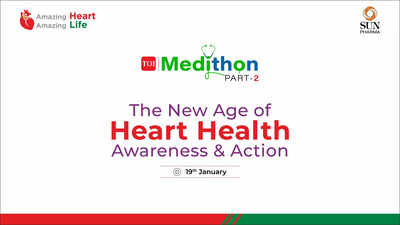
Heart disease doesn't wait—in India, it often knocks on the door a decade sooner, thanks to the relentless nature of modern living, packed with long workdays and inadequate sleep. The TOI Cardio Medithon 2 campaign shed light on the vital role of daily habits in disease prevention and pointed out the often-overlooked subtlety of symptoms in women.
Heart disease remains one of India’s biggest health threats. Research published in The Lancet shows that Indians tend to develop heart problems almost ten years earlier than people in many Western countries.
Long work hours, diabetes, smoking, poor sleep, and delayed check-ups quietly strain the heart every day. Even though India’s doctor-to-patient ratio stands at 1:834, timely and affordable heart care still does not reach everyone when it matters most. Against this backdrop, TOI Cardio Medithon 2, held on January 19, brought cardiologists, real-life concerns, and everyday habits into one open conversation. The aim was to make heart health easier to understand, easier to talk about, and harder to ignore.
Prevention: How everyday habits quietly decide heart health
The opening session made one message clear. Heart disease does not begin with a heart attack. It begins years earlier, in ordinary routines. Dr Biswa Ranjan Jena, MD (Medicine), DM (Cardiology), Consultant Interventional Cardiologist and Diabetologist from Bhubaneshwar, explained how sleep loss, unmanaged stress, unhealthy food, lack of exercise, and tobacco use slowly damage the heart. Dr Gautam Swaroop, Director and Head of the Department of Cardiac Sciences at Tender Palm Super Speciality Hospital, Lucknow, highlighted that these risks are now appearing in younger adults and even children.
Dr Rizwan Ul Haque, Interventional Cardiologist and Chairman and Chief Consultant at Apex Superspeciality Hospital, Solapur, emphasised that early symptoms are often ignored or mistaken for acidity or fatigue, leading to dangerous delays in treatment.The discussion stressed that prevention is personal. Knowing blood sugar, blood pressure, and cholesterol numbers is as important as taking medicines. Simple habits such as daily walking, yoga or breathing exercises, and balanced meals were described as long-term protectors of heart health.
Women and the heart: When symptoms whisper instead of shout
The second session focused on a reality that is often missed. Heart disease in women does not always look dramatic. Dr Rajiv Gupta, Chairman of Preventive Cardiology, General Medicine and Research at Eternal Hospital, Jaipur, explained that many women do not experience classic chest pain during a heart attack. Symptoms may include breathlessness, fatigue, sweating, jaw discomfort, or a vague sense of unease.Dr S. Aravinda Kumar, Chief Consultant, Interventional Cardiologist and Lead Consultant for Heart Failure Services at Kauvery Hospital, Tiruchirappalli, spoke about hormonal protection before menopause and how diabetes, stress, poor sleep, or early menopause can weaken this protection.
Pregnancy-related conditions such as gestational diabetes and high blood pressure were highlighted as early warning signs for future heart disease.
Dr Arnab Ghosh Chaudhary, Consultant Interventional Cardiologist and Director at Dyuti Cardio & Gastro Solutions, Durgapur, added that stress, indoor air pollution, PCOS, and thyroid disorders quietly raise heart risk in women. The session reinforced one key message.
Women should not wait for pain to take heart symptoms seriously.
Life after a heart attack: Recovery beyond survival
Surviving a heart attack is only the beginning. The third session explored what happens after hospital discharge, when fear and uncertainty often take over. Dr R. Ravindran, Associate Professor of Cardiology at Madras Medical College, explained that recovery is gradual. Medicines must be taken exactly as prescribed. Warning signs should never be ignored.
Physical activity should return slowly, not suddenly.Dr Praveen P. Sadarman, Senior Consultant and Director of Cath Lab at Trustwell Hospitals, Bengaluru, discussed cardiac rehabilitation and clarified that it includes emotional support, lifestyle education, and confidence-building, not just exercise. Dr Soumya Kanti Dutta, Consultant Interventional Cardiologist from Kolkata, stressed that stopping medicines without advice increases the risk of another heart attack.
The panel highlighted that anxiety and low mood are common after a cardiac event, and mental calmness directly supports physical healing.
Young hearts at risk: Why prevention must start early
The final session turned attention to Gen Z and Generation Alpha. Heart disease is no longer limited to older adults. Dr Tiny Nair, MD, DM Cardiology, Head of the Department of Cardiology at PRS Hospital, Trivandrum, explained how long screen time, poor sleep, and physical inactivity are reshaping heart risk in children and teenagers.
Dr K. A. Sambasivam, MD, DNB, Senior Interventional Cardiologist and Chairman of the Department of Cardiology, spoke about early diabetes, obesity, and unhealthy food habits pushing heart disease to younger ages.Dr Karumuri Srinivasa Reddy, MD, DM, Interventional Cardiologist and Chairman at Karumuri Hospital, Guntur, highlighted that habits formed in childhood often decide adult heart health. Reduced outdoor play, frequent junk food, and irregular sleep patterns are creating silent risk.
The discussion called for lifestyle education at home and in schools. Simple actions such as daily movement, balanced meals, and limited screen time were described as future-saving habits.
What makes this conversation stay with you
What set TOI Cardio Medithon 2 apart was its tone. The discussions led by experienced cardiologists avoided fear and complex language. They focused on clarity, honesty, and practical wisdom. Across sessions, one idea returned again and again. The heart responds to how life is lived every day. Prevention is not about perfection. Recovery is not about rushing. Awareness is not about panic.







 English (US) ·