

 1 week ago
9
1 week ago
9
ARTICLE AD BOX
Last Updated:April 21, 2026, 14:18 IST
Tamil Nadu Elections 2026 Opinion Analysis: CM MK Stalin's bid for continuity comes amid a shifting political tide as AIADMK-BJP and outlier TVK pose a massive challenge


For Tamil Nadu CM MK Stalin, the 2026 assembly election is a "litmus test" for the future of the DMK as well as himself and his family’s legacy. (Image: PTI/File)
Tamil Nadu Elections 2026 Opinion Analysis: This time, in the Tamil Nadu assembly elections on April 23, Chief Minister MK Stalin is seeking a historic second term for himself and his party, the DMK, but is this what the poll battle is all about?
Going by the campaign speeches of Stalin and his fellow DMK leaders as well as the political narrative in Tamil Nadu, there is much more at stake – almost as if it were a battle for the “soul" of the state, a bid to preserve Tamil identity from “those controlled by Delhi", and the continuance of what the ruling party calls a “Dravidian model" of governance.
But Stalin’s historic bid for continuity comes amid a shifting political tide in the southern state – the AIADMK, which is back in the NDA fold, and the outlier TVK, pose a massive challenge. For decades, the state’s political landscape was defined by a shift between the DMK and AIADMK – a cycle that even his father, the late M Karunanidhi, rarely managed to break.
This election is, therefore, more than just a quest for five years in power. It is an existential struggle to cement the “Dravidian model" of governance as permanently defining Tamil identity.
WHAT ARE THE STAKES FOR STALIN?
For Stalin, the 2026 assembly election is a “litmus test" for the future of the DMK as well as himself and his family’s legacy.
A primary objective is securing the succession path for his son, Udhayanidhi Stalin, whom he has significantly elevated within the cabinet and the party hierarchy. A decisive victory will be seen as a validation of Udhayanidhi’s popularity, effectively silencing critics who decry “dynasty politics" while a significant loss could trigger internal friction over future leadership.
To ensure this dominance and ward off a resurgent opposition, the chief minister has set an ambitious target exuding confidence that the DMK-led Secular Progressive Alliance (SPA) will win more than 200 seats. This “big brother" status is essential for him to maintain his grip on a massive coalition that includes the Congress, Left parties, and the VCK (Viduthalai Chiruthaigal Katchi).
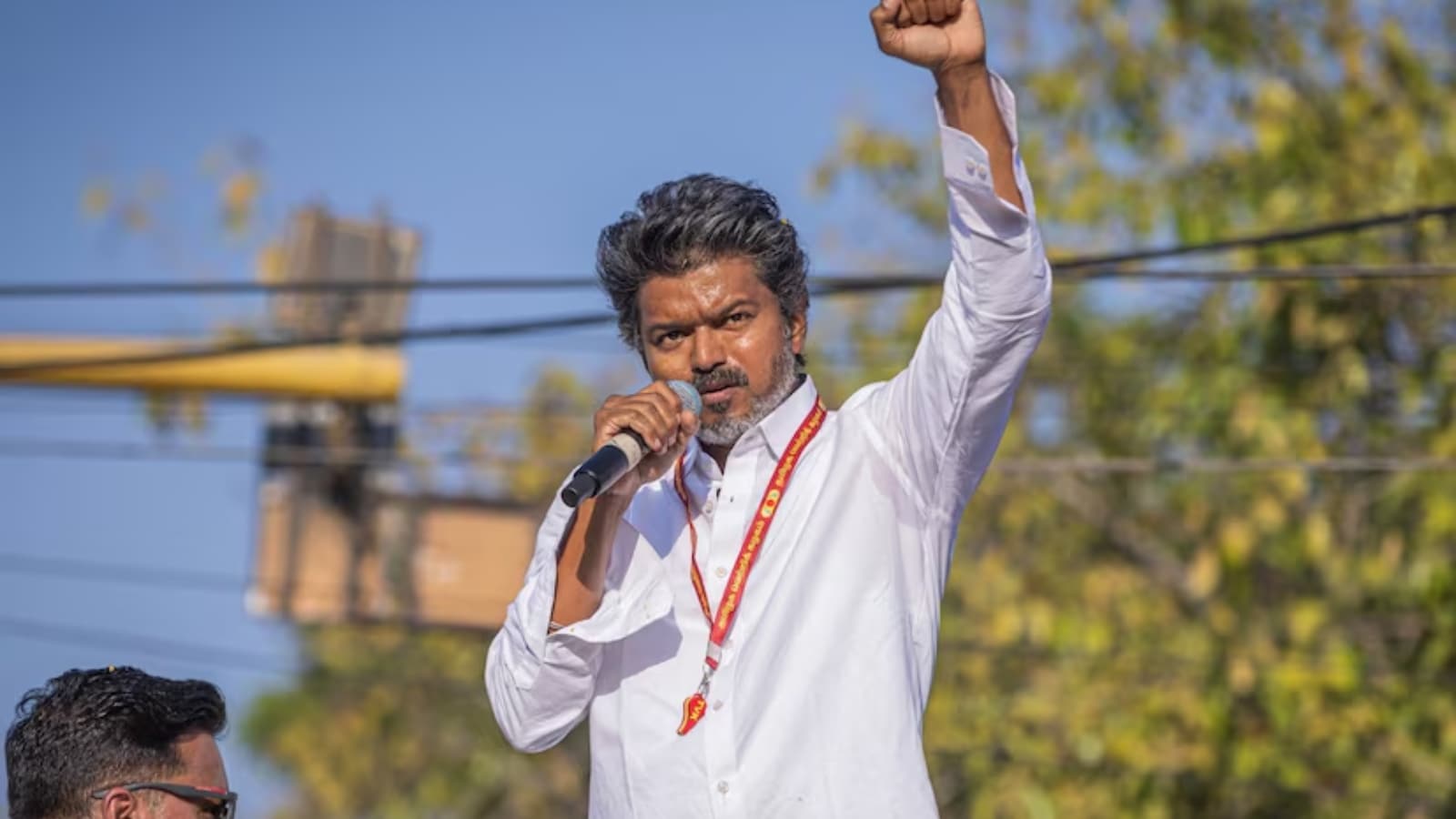
But, a third entrant has complicated this political landscape: actor-turned-politician Vijay and his party, Tamilaga Vettri Kazhagam (TVK). Stalin must navigate this new challenge to ensure the TVK does not erode the DMK’s core youth and urban vote banks, which could disrupt the traditional bipolar arithmetic of the state.
WHAT IS STALIN’S ‘DRAVIDIAN MODEL 2.0’ CAMPAIGN?
Stalin’s campaign is built upon the successes of his first term, which he characterises as the “Dravidian model" – a blend of social justice, women-centric welfare, and robust industrial growth.
Pitching a “Dravidian model 2.0", he is promising to take Tamil Nadu to the next level of development. He frequently cites his government’s performance, including achieving an 11.19 percent economic growth rate and implementing pioneering projects like the school breakfast programme, laptops for students, and the ‘Naan Mudhalvan’ initiative for youth empowerment.
Key to his appeal are social welfare schemes such as the Kalaignar Magalir Urimai Thogai (women’s rights grant), free bus travel for women, and doorstep healthcare services. During rallies, the CM has highlighted his record in addressing long-standing issues, such as the Ramanathapuram joint drinking water scheme, which he has claimed has eased water scarcity in the region.
He has framed his governance as a protective shield for the Tamil people, stressing that while money or land can be taken away, the education his government provides is a permanent asset.
WHAT IS THE IDEOLOGICAL BATTLE?
The election has evolved into a fierce ideological clash between the ruling DMK-led alliance and the AIADMK-BJP coalition.
Stalin has positioned himself as the ultimate defender of Tamil identity against what he characterises as the Centre’s overreach and “communal narratives". A major flashpoint is the issue of delimitation, which he has labelled “anti-Tamil Nadu" and an attempt to “punish" progressive states that have successfully controlled population growth and excelled in industrial development.
He has been vocal in his opposition to the proposed delimitation-linked reforms. On Tuesday, at a campaign rally, he said the “fire we lit has reduced that bill to ashes" after the 131st Constitution Amendment Bill failed to secure a majority in Parliament.
Stalin has further accused the BJP of attempting to impose a “double engine" government model that will put Tamil Nadu in danger, while dismissing allegations that the DMK is “anti-Hindu" by pointing to the recovery of temple lands worth Rs 7,000 crore. By framing the AIADMK as a “subservient party" to its BJP “master", he is seeking to portray the election as a choice between Tamil self-respect and submission to a divisive, anti-people ideology.
Drawing on his own history of resisting the Emergency in the 1970s, he has now adopted a “father figure" role pledging to stand firm against forces that seek to destroy the state’s culture, language, and rights.
DOES HE HAVE SUPPORT FROM OTHERS?
Stalin’s fellow opposition leaders from the INDIA bloc have staunchly supported his re-election bid. On Monday, AAP convener Arvind Kejriwal entered the poll fray in Tamil Nadu by holding a high-profile roadshow with him in Chennai to laud his development efforts.
During the event, Stalin reciprocated the solidarity by targeting the central government over Kejriwal’s imprisonment alleging it was based on “fabricated charges". This has been echoed by Congress MP Rahul Gandhi, who has led the charge against the BJP’s delimitation plans, calling them an “attack on the idea of the union of India" and an attempt to reduce the representation of the south and northeast.
The DMK-Congress front has launched a coordinated offensive against the AIADMK-BJP combine, particularly over the linkage of women’s reservation with delimitation. The campaign has also seen instances of sharp conflict with central agencies.
Stalin has strongly condemned the income tax department’s action against Tamil Nadu Congress President K Selvaperunthagai, calling it a “conspiracy" born of the BJP’s “fear of defeat". This national solidarity reinforces his position as a central figure in the broader opposition movement against the BJP, indicating that the results on May 4 will have profound implications for the country’s socioeconomic and political trajectory.
As the campaign enters its final stretch, this election stands as a defining moment for Stalin. It is an election that will decide the future of dynastic succession, alliance stability, and the survival of the Dravidian ideology against a resurgent opposition and a shifting three-way contest. For the DMK boss, anything less than a comfortable majority will be a sign of fragility.
Handpicked stories, in your inbox
A newsletter with the best of our journalism
First Published:
April 21, 2026, 14:18 IST
News india From 'Dravidian Model' To Anti-Delimitation, Is This Poll Battle Stalin's Bid To 'Save' Tamil Nadu's Soul?
Disclaimer: Comments reflect users’ views, not News18’s. Please keep discussions respectful and constructive. Abusive, defamatory, or illegal comments will be removed. News18 may disable any comment at its discretion. By posting, you agree to our Terms of Use and Privacy Policy.
Read More


 English (US) ·