

 2 weeks ago
3
2 weeks ago
3
ARTICLE AD BOX
Last Updated:May 04, 2026, 13:58 IST
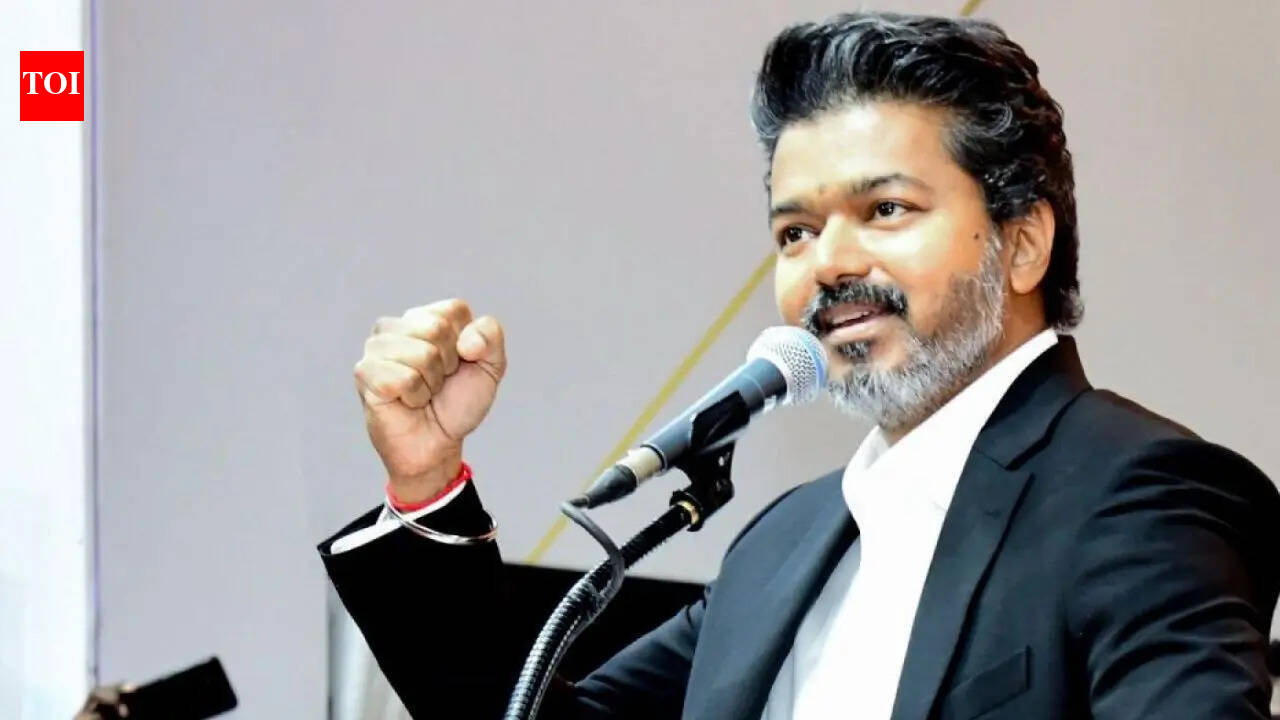
Vijay Thalapathy's Big Win: Party to power in 24 months. 234 seats. Zero allies. Tamil Nadu has never seen a debut like this.


Tamil Nadu Elections Results: A rapper-engineer cracked Kathmandu. A superstar is cracking Tamil Nadu. Gen Z doesn't ask for power anymore — it takes it.
Balen Shah stormed Nepal’s capital as an unknown rapper-engineer. Now Vijay — Thalapathy, the people’s hero — is shaking the mightiest political fortress in South India. Tamil Nadu’s Gen Z didn’t just vote. They revolted. Against dynasty, against entitlement, against a Dravidian duopoly that assumed it owned them forever.
On May 4, as counting began across 234 constituencies, early trends showed TVK leading in over 70 seats — ahead of both the DMK and AIADMK. The old guard was shaking.
The Balen Blueprint: When Stars Become Symbols
In 2022, Balen Shah won Kathmandu’s mayoralty as a near-unknown independent, defeating parties that had traded power among themselves for decades. No political machine. No family dynasty. No inherited cadre. Just fury, fandom, and a generation that had grown up digitally fluent and was done being taken for granted.
Tamil Nadu 2026 is that same story, written larger and louder across a state of 57 million voters.
Vijay’s Tamilaga Vettri Kazhagam — TVK — was founded just two years ago, in February 2024. It contested all 234 seats alone, without a single alliance, against two Dravidian machines that have collectively ruled Tamil Nadu since before most of its voters were born. Political analysts called it reckless. Vijay called it necessary. The audacity, it turned out, was the message.
MGR Did It First — But Vijay Did It Faster
The last time Tamil Nadu witnessed anything structurally similar, it was MG Ramachandran. MGR came from cinema, built a personality that transcended politics, launched the AIADMK in 1972 from inside the DMK’s own shadow, and swept to power in 1977 — defeating the very party he came from.
He came from nothing in political pedigree terms. But here is the difference: MGR had years of DMK organizational infrastructure behind him before he broke away. He knew the machine from the inside before he built a new one.
Vijay had none of that. TVK was built from scratch in twenty-four months. Candidates were fielded in every single constituency. The arena was entered solo.
There is no modern parallel in Tamil Nadu’s political history for what TVK attempted — and the scale of that ambition is itself a marker of how much this generation has changed the calculus.
21% Of The Electorate Is Under 29 — And They Came Prepared
The numbers tell the story before the results do. Over 1.22 crore voters between the ages of 18 and 29 make up 21.2% of Tamil Nadu’s electorate this cycle. Nearly 15 lakh of them were casting their ballot for the very first time. They did not come reluctantly.
Tamil Nadu recorded 85.1% voter turnout on April 23 — the highest in the state’s assembly election history, a full twelve percentage points above the 72.7% recorded in 2021.
The actual votes polled increased by 5.5% compared to the previous election. That surge doesn’t happen without young people showing up in numbers this state has never seen.
Outside a polling booth in Chennai’s MGR Nagar, a 19-year-old voter named Sugirthan admitted he was nervous the first time the machine didn’t register his vote — but came back and completed it.
V Bhuuven, a medical intern, described voting as a satisfying civic act tied to the possibility of real change. In another part of Chennai, a group of young men turned up to vote dressed like Vijay. This was not passive participation. This was a statement.
The Viral Campaign: Politics As A 30-Second Reel
Vijay understood something the Dravidian old guard fundamentally didn’t — that this generation doesn’t attend rallies, they document them. His campaign events looked like film premieres: punch dialogues, dramatic gestures, moments precision-engineered to be filmed on phones and shared as reels.
His cycle ride through a crowd became a viral moment that no television advertising budget could manufacture or buy. Politics, for the first time in Tamil Nadu, was being consumed as content.
It forced the establishment to respond in kind. Chief Minister MK Stalin — a politician of the old school, comfortable with podiums and party cadres — began incorporating carefully crafted moments of relatability into his campaign.
He took auto rides. He stopped at roadside stalls to crush sugarcane. He accepted shawls from cadres mid-walk. These were not spontaneous gestures. They were social media strategy. When a sitting Chief Minister starts campaigning like a content creator, it means the challenger has already shifted the terrain permanently.
Even AIADMK’s Edappadi K Palaniswami pivoted — reminding student voters that it was he who introduced the all-pass system during COVID, positioning himself as someone who had protected young people when it mattered. Every party, in the end, was chasing the same voter: young, digital, impatient, and newly powerful.
Solo And Fearless: Why Contesting Alone Was The Whole Point
Every analyst flagged it as high risk. TVK going it alone across all 234 seats meant no safety net, no seat-sharing arithmetic, no borrowed votes from a larger alliance.
Conventional Tamil Nadu political wisdom said you needed partners to survive a three-cornered contest. Vijay rejected the conventional wisdom entirely.
But that rejection was precisely the point. An alliance would have made TVK look like every other party — transactional, negotiated, ideologically blurred.
Contesting solo sent an unambiguous message to first-time voters that this was not politics as usual. It also meant that every single vote TVK received was a vote of conviction — not coalition loyalty, not caste arithmetic, not the residue of an older alliance. Whatever the final seat count, the vote share will carry the real weight of history.
What The Numbers Say — And What They Don’t
Exit polls ranged with a wildness that itself tells the story. Axis My India projected 98 to 120 seats for TVK — potentially enough to form government — and placed Vijay ahead of Stalin in Chief Minister preference, 37% to 35%.
People’s Pulse projected just two to six seats for TVK, with the DMK winning comfortably at 125 to 145. Matrize gave TVK zero to six seats. People’s Insight gave them 30 to 40. The divergence across serious polling organizations ran to nearly a hundred seats.
When pollsters disagree by that margin, it doesn’t mean the data is bad. It means the old models have broken. Tamil Nadu’s electorate has introduced a variable that decades of Dravidian psephology cannot fully account for.
The formulas built on caste consolidation, alliance mathematics, and loyalty to the sun and rising-sun symbols are encountering something they were not designed to measure: a first-time voter with no inherited political identity, choosing for the first time, on his or her own terms.
What Happens If TVK Wins — And Why It Was Always Going to Matter
Here is what Balen Shah taught us: the first campaign is about proving the system can be cracked. Shah proved it in Kathmandu. Vijay may have just proved it across an entire state.
As counting progresses on May 4, TVK is closing in on the halfway mark of 118 — the number that makes a Chief Minister. For a party that didn’t exist twenty-four months ago, contesting alone, with no allies and no safety net, that is not a result. That is a reckoning.
The Dravidian establishment built its fortress over six decades. Two parties, two sun symbols, one assumption: that Tamil Nadu was theirs to trade between themselves indefinitely. That assumption is now rubble.
TVK has not just won seats — it has shattered the idea that this state is a permanent two-party system. The urban youth vote, the first-time voter, the Gen Z Tamil who grew up watching Thalapathy on screen and walked into a booth in April 2026 to vote for him as a citizen — not a fan — has made history today.
Whether the final count puts Vijay in the Chief Minister’s chair tonight or leaves him just short, one thing is already irreversible. A generation announced itself. Tamil Nadu’s old guard didn’t just hear it. They felt it.
Handpicked stories, in your inbox
A newsletter with the best of our journalism
News india From Kathmandu To Chennai: How Balen Shah Playbook Became Vijay's Blueprint For Cracking Old Guard
Disclaimer: Comments reflect users’ views, not News18’s. Please keep discussions respectful and constructive. Abusive, defamatory, or illegal comments will be removed. News18 may disable any comment at its discretion. By posting, you agree to our Terms of Use and Privacy Policy.
Read More




 English (US) ·