

 38 minutes ago
6
38 minutes ago
6
ARTICLE AD BOX
In Meerut, government-backed loans have helped Rajkumar Thakur and Mamta Garg expand their businesses. Their journeys show how timely credit can turn small ventures into local employment engines.
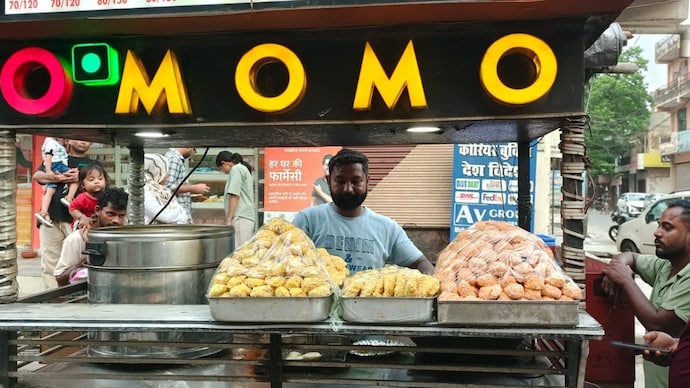
Once a private-sector employee, Rajkumar Thakur turned a Rs 10,000 momos venture into a thriving business with support from the Chief Minister Startup Scheme.

Meerut,UPDATED: Jul 13, 2026 03:56 IST
Meerut is steadily emerging as a city of entrepreneurs, with government-backed startup and self-employment schemes helping young people and women transform small business ideas into thriving enterprises. Beneficiaries of initiatives such as the Uttar Pradesh government's Chief Minister Startup Scheme and the Centre's Stand-Up India programme are not only building successful businesses but also creating jobs for dozens of others.
Two such success stories—that of momos entrepreneur Rajkumar Thakur and handicraft business owner Mamta Garg—illustrate how access to timely financial assistance can change lives and generate employment at the grassroots level.
A RS 10,000 VENTURE THAT BECAME A GROWING FOOD BUSINESS
A few years ago, Rajkumar Thakur was working in a private company when he decided to pursue his dream of starting a business of his own. Determined to offer fresh and quality food products, he launched a small momos venture with an initial investment of just Rs 10,000.
In the early days, Rajkumar and his wife prepared momos by hand and sold them from a modest stall. As word spread about the taste and quality of their products, demand grew steadily. Orders began coming in from local restaurants and food outlets, but meeting rising demand through manual production became increasingly difficult.
The turning point came when Rajkumar learned about the Chief Minister Startup Scheme. He applied for financial assistance and secured a loan of Rs 5 lakh. The funding enabled him to import a modern momos manufacturing machine, significantly increasing production capacity.
Today, his factory produces between 6,000 and 7,000 momos every day. The business offers 29 varieties of momos to customers, while six major variants are produced on a large scale and supplied to restaurants and retail outlets across the city. His products are now available at around 30 to 35 outlets in Meerut.
The enterprise has also become a source of livelihood for many others. Eight women and three men are employed directly at the factory, while nearly 50 people benefit indirectly from the business. Rajkumar operates stalls in Mangal Pandey Nagar and Jagriti Vihar, where customers flock daily during evening hours.
A graduate by qualification, Rajkumar credits much of the business's growth to government support. He says purchasing an expensive production machine would have been impossible without assistance under the startup scheme. His future plans include expanding the factory further and creating additional employment opportunities.
WIDOW ENTREPRENEUR BUILDS THRIVING HANDICRAFT BUSINESS
Another example of entrepreneurship-driven transformation in Meerut is Mamta Garg, who has built a successful handicraft business with the help of government-backed financing.
Mamta manufactures a range of religious and decorative products, including cradles for deities, thrones, idols of Lakshmi and Ganesha, puja items, and festival-related handicrafts. From her retail outlet in Meerut, products are supplied to traders across India and also reach overseas customers through online channels.
Her entrepreneurial journey began around 15 to 16 years ago when she started training women in handicraft production. As demand increased, she needed additional capital to expand operations. Through the Stand-Up India scheme, she obtained a loan limit of Rs 10 lakh along with Rs 1 lakh in working capital support. The funds helped her procure raw materials and scale up production.
Mamta says the loan was sanctioned after a detailed assessment of her business and completion of necessary formalities. Today, her enterprise operates in an organised manner with GST registration and a structured financial system.
The business now provides direct and indirect employment to around 25 women. Many are trained first and then work from their homes, producing handicraft items that supplement their family incomes.
An MSc and MPhil graduate, Mamta took charge of the business after the death of her husband nearly 16 years ago. Since then, she has steadily expanded the enterprise. Her elder son, an engineer, now assists in the business, while her younger son is preparing to launch a handicraft studio in Delhi.
According to Mamta, the business currently records an annual turnover of around Rs 32 lakh. With her Meerut outlet running successfully, plans are underway to open a new store in Delhi.
She believes government schemes can be a game-changer for people who possess talent and determination but lack access to capital. Timely financial assistance, she says, enables entrepreneurs to become self-reliant and eventually create jobs for others.
FROM JOB SEEKERS TO JOB CREATORS
The success of entrepreneurs like Rajkumar Thakur and Mamta Garg reflects the broader objective of schemes such as the Chief Minister Startup Scheme and Stand-Up India—to encourage self-employment and nurture entrepreneurship among youth and women.
As more small businesses scale up with institutional support, Meerut is witnessing a gradual shift from being a city of job seekers to a city of job creators. The stories of these entrepreneurs demonstrate how targeted financial assistance, coupled with innovation and perseverance, can transform modest ventures into sustainable businesses that contribute to local economic growth and employment generation.
- Ends
Published By:
Nitish Singh
Published On:
Jul 13, 2026 03:56 IST







 English (US) ·