

 54 minutes ago
4
54 minutes ago
4
ARTICLE AD BOX
The Supreme Court has referred the Gyanvapi dispute to a Special Lok Adalat for talks between Hindu and Muslim parties. The move also brings other sensitive religious cases into the Samadhan Samaroh framework for possible negotiated settlements.
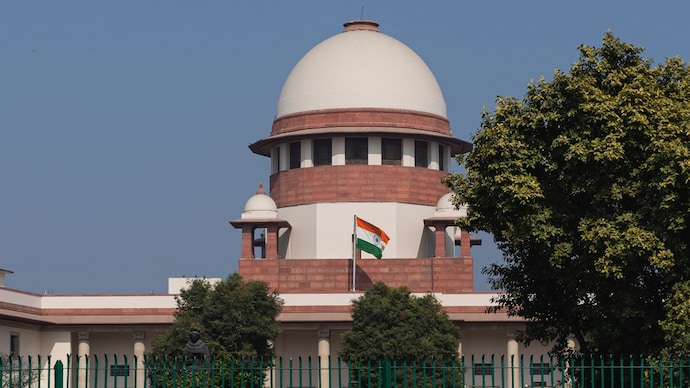
The first round of conciliation efforts in Mathura failed to make progress. (File Photo)

New Delhi,UPDATED: Jul 13, 2026 03:07 IST
In a significant move aimed at exploring negotiated settlements in some of India’s most sensitive religious disputes, the Supreme Court has referred the long-running Gyanvapi case in Varanasi to a Special Lok Adalat under its “Samadhan Samaroh-2026” initiative, encouraging Hindu and Muslim parties to attempt a resolution through dialogue rather than prolonged litigation.
The apex court’s intervention comes as part of a broader effort to facilitate consensual resolution of pending disputes through Special Lok Adalats being organised to mark the court’s 75th anniversary. The initiative, officially titled “Supreme Court Action for Mediated Adjudication and Disputes Harmonization Across Nation (SAMADHAN SAMAROH)”, aims to promote participative justice and amicable settlement of suitable cases pending before the court.
Under the latest direction, the Gyanvapi dispute has been placed before a Special Lok Adalat scheduled for August 21, 22 and 23. Before that, a pre-conciliation hearing is expected to be held in Varanasi on July 14 to explore the possibility of dialogue between the rival parties. The Supreme Court has expressed hope that discussions facilitated through the Lok Adalat mechanism could help bridge differences and pave the way for a mutually acceptable solution.
The development is particularly noteworthy because the Gyanvapi dispute, centred on the mosque-temple complex in Varanasi, remains one of the most closely watched religious and legal battles in the country.
MATHURA DISPUTE ALSO BROUGHT UNDER SETTLEMENT FRAMEWORK
The Supreme Court’s reconciliation initiative has also extended to the Shri Krishna Janmabhoomi-Shahi Idgah Mosque dispute in Mathura. Special Leave Petitions (SLPs) linked to the case were referred to a Special Lok Adalat in line with the court’s Samadhan Samaroh programme, with an attempt made to bring both Hindu and Muslim parties to the negotiating table.
However, the first round of conciliation efforts in Mathura failed to make progress. According to reports from the proceedings, representatives of the Hindu side attended the hearing conducted before Additional District and Sessions Judge Surendra Prasad, while no representative from the Muslim side appeared. As a result, the conciliation process could not move forward and was subsequently declared unsuccessful.
Mahendra Pratap Singh, one of the Hindu litigants in the Krishna Janmabhoomi case, said that around 18 suits related to the dispute are currently pending before the Allahabad High Court. He stated that seven SLPs had recently been filed before the Supreme Court seeking a negotiated resolution, following which the matter was referred to the Lok Adalat process.
NOTICES ISSUED IN OTHER RELIGIOUS DISPUTES
The court’s initiative is not limited to Gyanvapi and Mathura. Notices have also reportedly been issued to parties in the Hari Mandir-Mosque dispute in Sambhal as part of the broader settlement exercise.
Through Samadhan Samaroh-2026, the Supreme Court is attempting to create a platform where litigants in long-pending and sensitive disputes can engage in dialogue and explore consensus-based solutions. While such efforts depend entirely on the willingness of both sides to participate, the court’s decision to bring high-profile religious disputes within the ambit of the Special Lok Adalat framework marks a notable attempt to reduce confrontation through mediation and negotiated settlement.
- Ends
Published By:
Nitish Singh
Published On:
Jul 13, 2026 03:07 IST





 English (US) ·