

 1 hour ago
2
1 hour ago
2
ARTICLE AD BOX
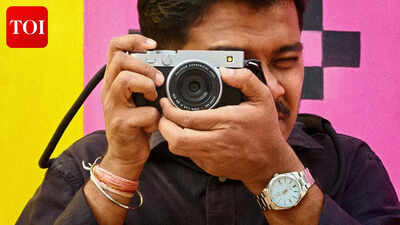
The X-E5 went to Mumbai and Ho Chi Minh City with the wrong lens on it. Neither city cared. Forty megapixels, Fujifilm's best colour processing, and a film simulation system that has finally matured into something genuinely useful—all in a body compact enough to disappear into a bag and considered enough to disappear into your hand. No weather sealing, a screen that undersells itself, a price that stings. The photos don't.
The 23mm f/2.8 pancake that ships with the X-E5 kit is the obvious choice. Same field of view as a fixed-lens camera Fujifilm is very famous for, makes the whole setup look intentional, fits in a jacket pocket.
I used it for a day, decided it wasn't for me, and swapped it for the XC 15-45mm zoom from my own kit.I don't shoot wide. Never really have. If you've read anything I've written about cameras, you already know this about me. Something about 35mm equivalent just doesn't click with how I frame things—I tend to work somewhere in the 35-50mm full-frame range, which is the comfortable middle of that zoom's reach. So that's where most of these frames happened.
Fujifilm probably didn't imagine this configuration when they sent the camera over. But that's the point of an interchangeable lens mount—you're not locked into one person's vision of how the camera should be used. You bring your own. That's the entire case for this camera over Fujifilm's fixed-lens darling—and whether that case holds up is exactly what two cities worth of shooting was going to tell me.
When your hand stops thinking
There's a particular stretch near Kala Ghoda where the footpath widens just enough to walk without dodging traffic, and the buildings on either side are old enough that the light does interesting things to them in the afternoon.
I was somewhere along there, about an hour into shooting, when I realised I hadn't thought about the camera in a while.
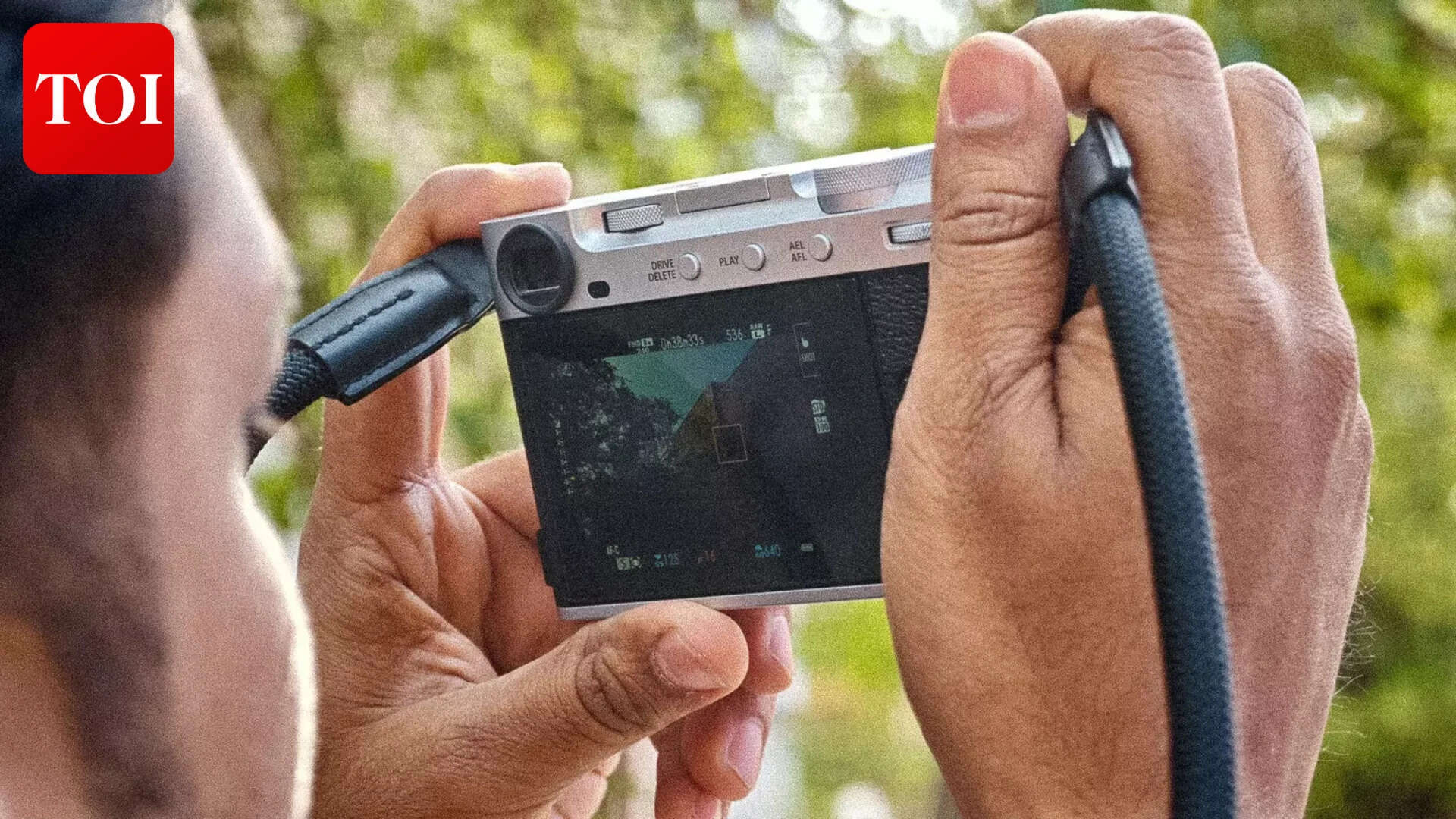
Body-only, it fits in one hand without negotiation. The sensor does the rest.
Not in a checked-out way. More that it had just settled into my hand and stopped demanding attention. The grip—a modest carved bump on the front, a ridge on the back—isn't dramatic. It's not the deep handle you'd get on an X-T5. But it was enough that the camera sat where it was supposed to sit, and my fingers found the controls without looking.
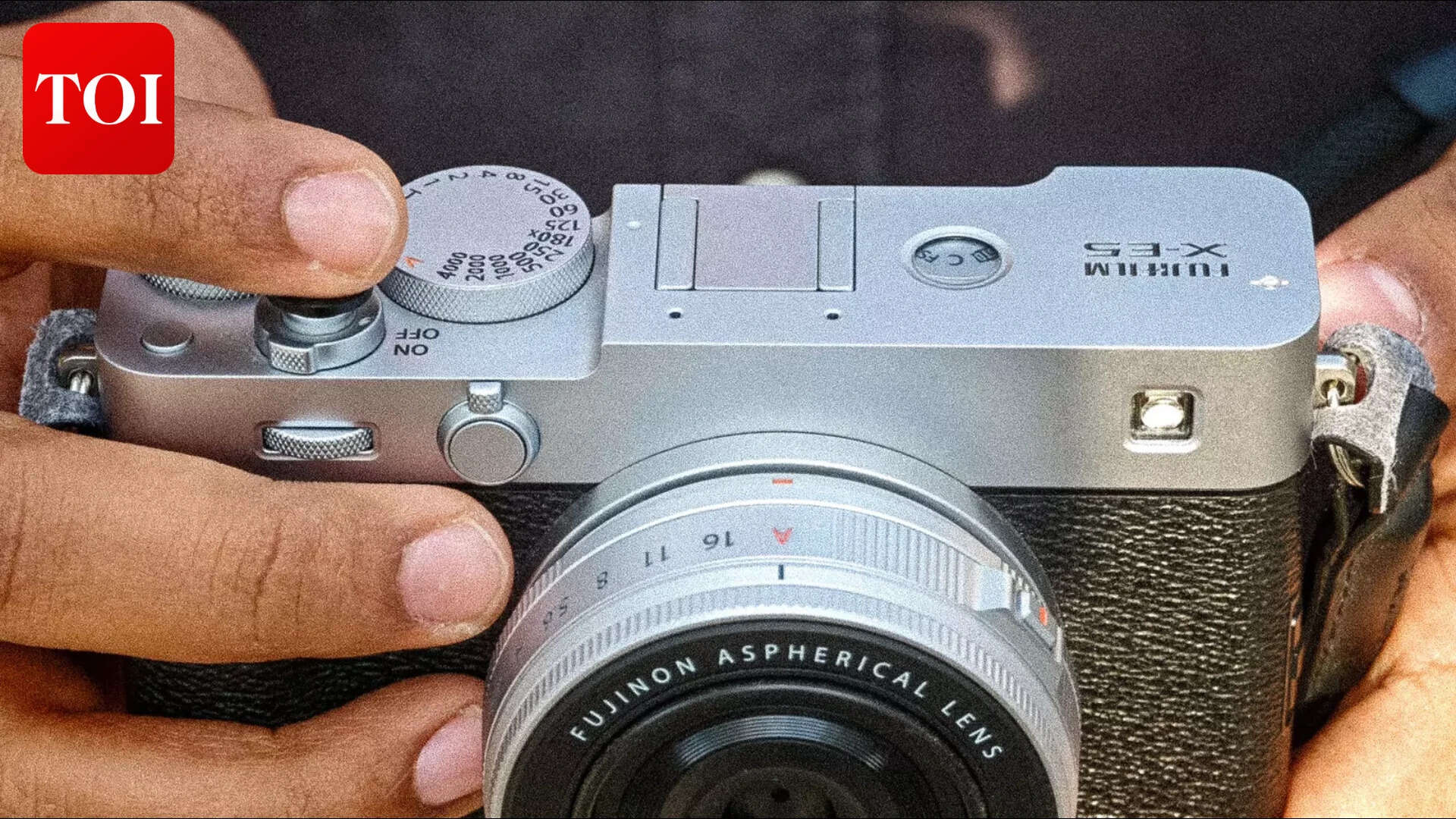
The top plate is one machined piece. Every dial sits exactly where your hand expects it
That's the thing about the X-E5's physical design that's hard to describe without sounding vague: it's considered in ways you only notice after the fact. The aluminium top plate—machined from a single piece, same process as the GFX100RF—gives the camera a density that feels earned rather than heavy. The dials are knurled and inlaid into bevelled edges. Every click has weight to it. When I reached for the exposure compensation dial mid-walk without breaking stride, it was exactly where my hand went.
No fumbling, no looking down.
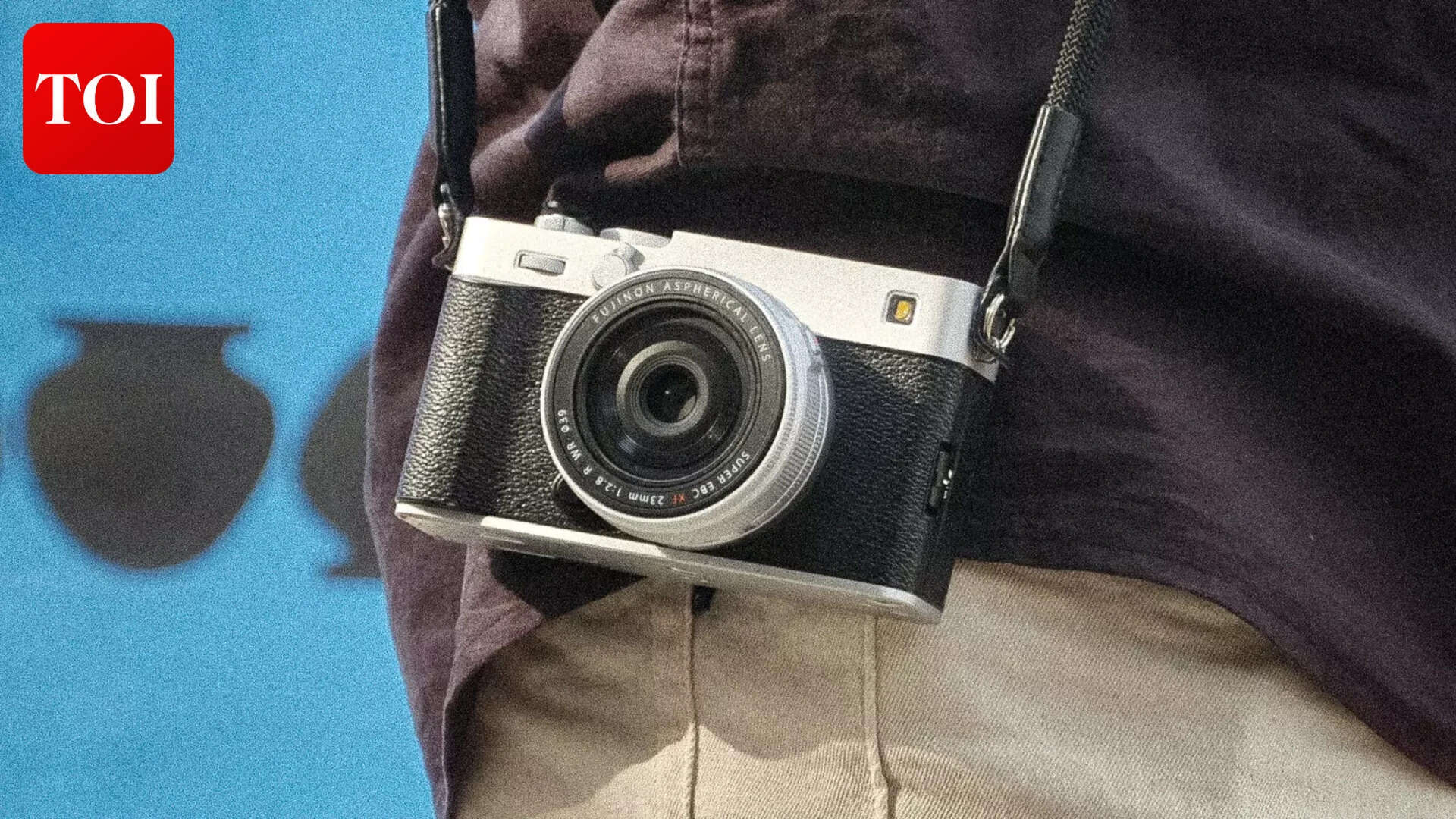
The kit lens stayed on for the product shots. The rope strap stayed on for everything else.
The rope strap that comes in the box is genuinely nice—the kind of strap you'd buy separately rather than replace immediately. Small thing, but cameras usually ship with straps that end up in a drawer. This one I kept on.
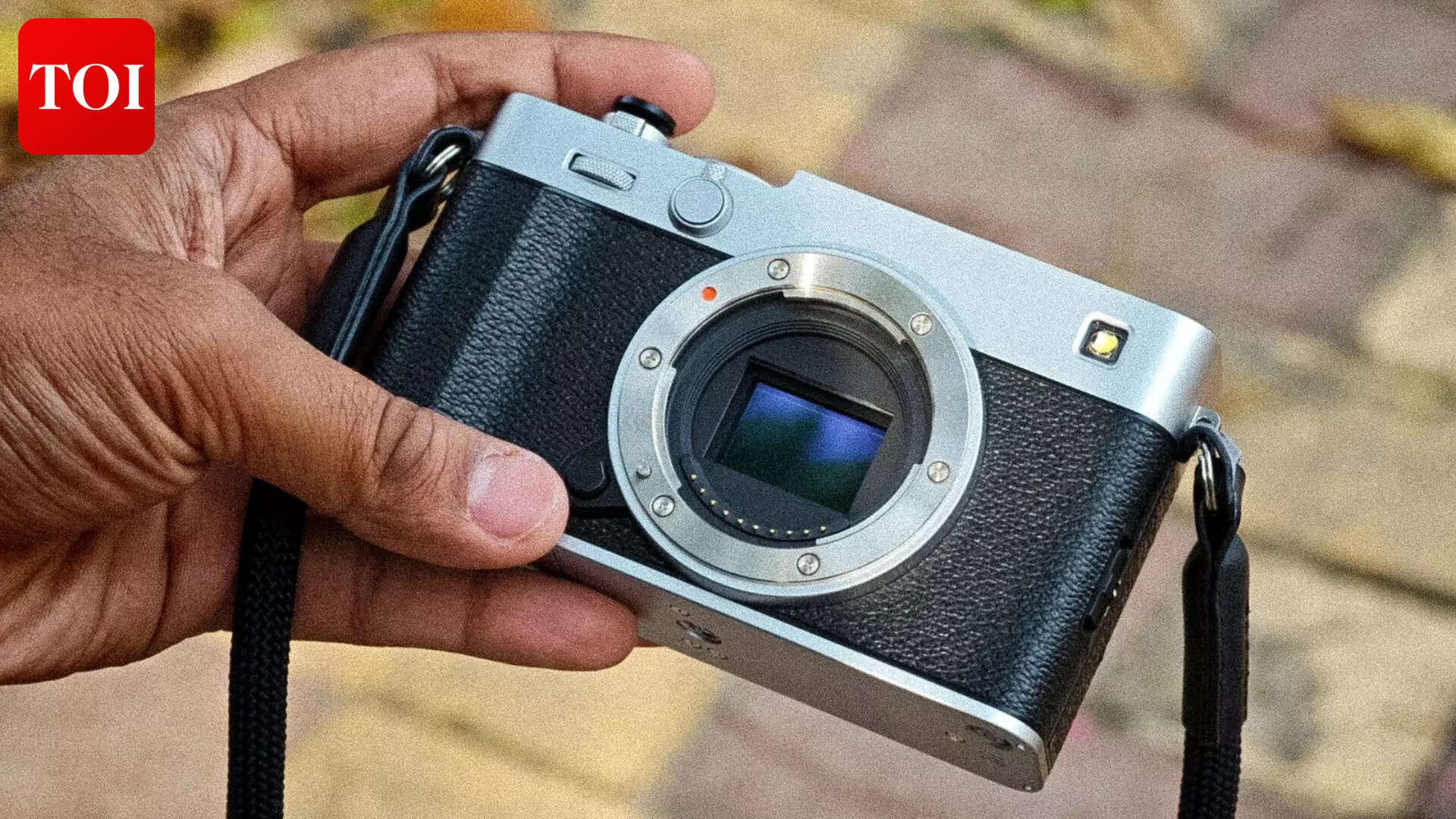
The X-E4, which this replaces after a four-year gap, felt hollow by comparison. Lightweight in a way that made you question it. The X-E5 is 80 grams heavier and every gram is accounted for.
You feel the difference within thirty seconds of picking it up.
Ballard Estate, on a Spring afternoon
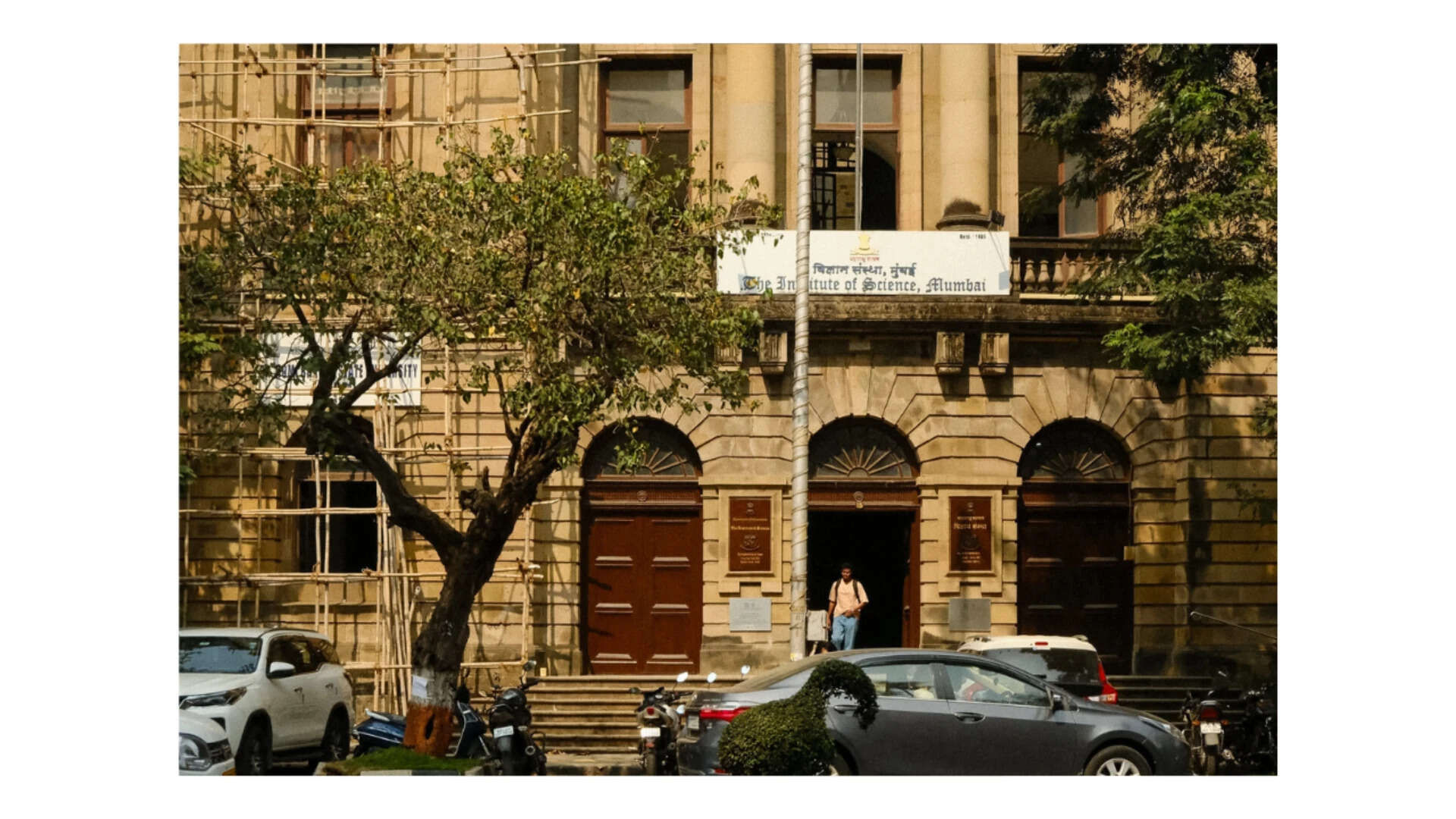
Scaffolding on the Institute of Science, a student in the archway, and enough shadow to test a sensor.
South Mumbai (oops, it's Bombay, isn't it?) in March has a specific quality of light—harsh, directional, the kind that bleaches colonial stonework and throws everything in shadow into absolute darkness. The Institute of Science building on Dr. DN Road was half-covered in scaffolding the afternoon I shot it, which sounds unfortunate but actually gave the frame something to work with.
A student stepping out through the arched entrance, warm stone, deep shadow around the doorway.I exposed for the facade and pulled the shadow detail back in post. On a lot of APS-C sensors, that transaction costs you—colour noise creeps in, shadow areas go muddy, you start to feel the sensor's ceiling. The 40MP X-Trans CMOS 5 HR didn't do that. The entrance came back clean. The student's figure retained shape rather than dissolving.
This isn't a new sensor—it first appeared in the X-H2 in 2022—but it's still the best APS-C chip Fujifilm makes, and in this kind of contrasty afternoon light, that lineage shows.
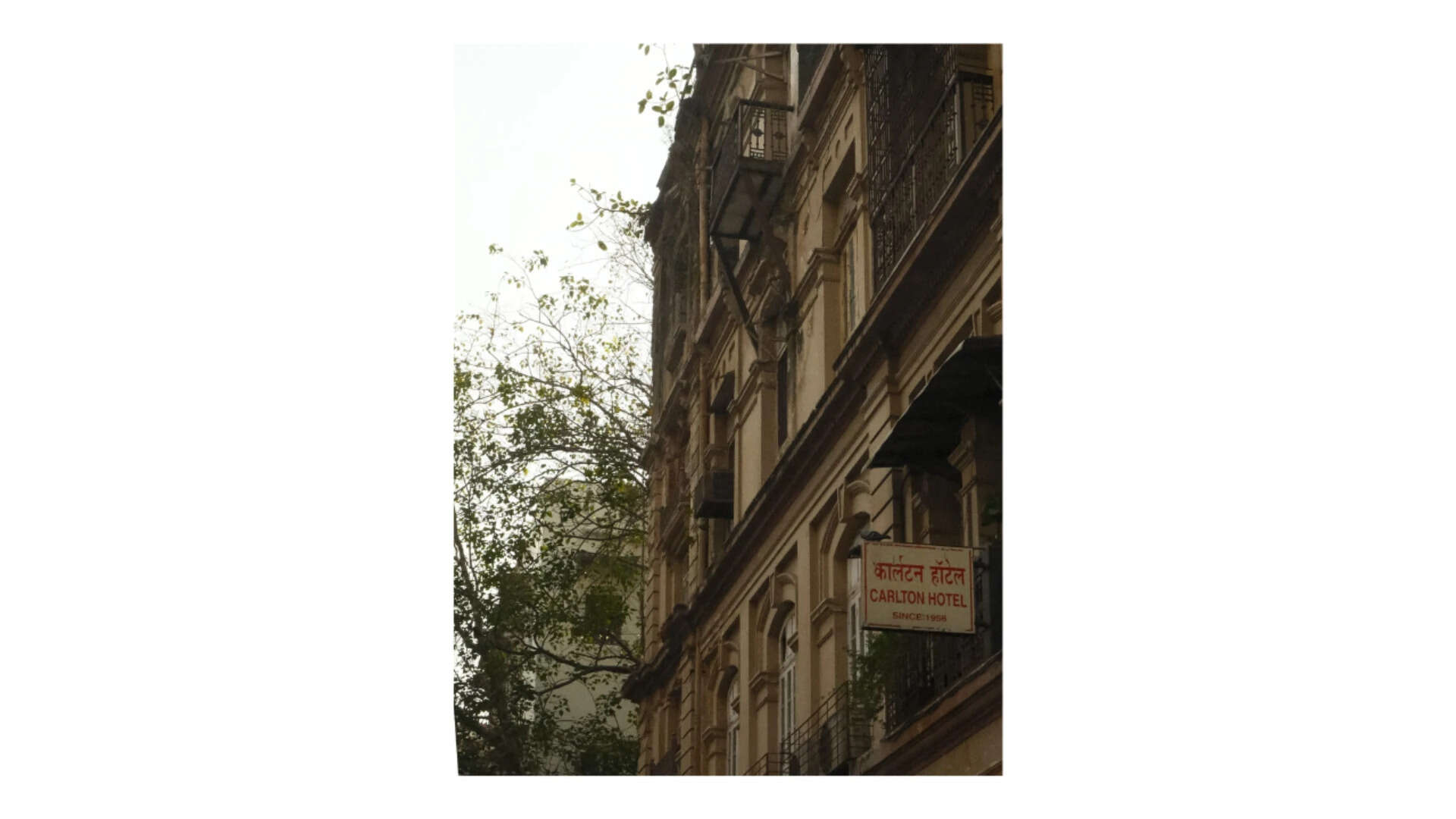
Devanagari above, English below, "Since: 1956" in smaller text—the kind of detail 40 megapixels is actually for.
Down the lane, the Carlton Hotel sign—Devanagari lettering, English below, "Since: 1956" in smaller text—is the kind of subject that makes you glad for 40 megapixels. Not because you need to print it large, but because you can crop into it later and find detail you hadn't planned for when you pressed the shutter.
That freedom compounds over a shooting day.
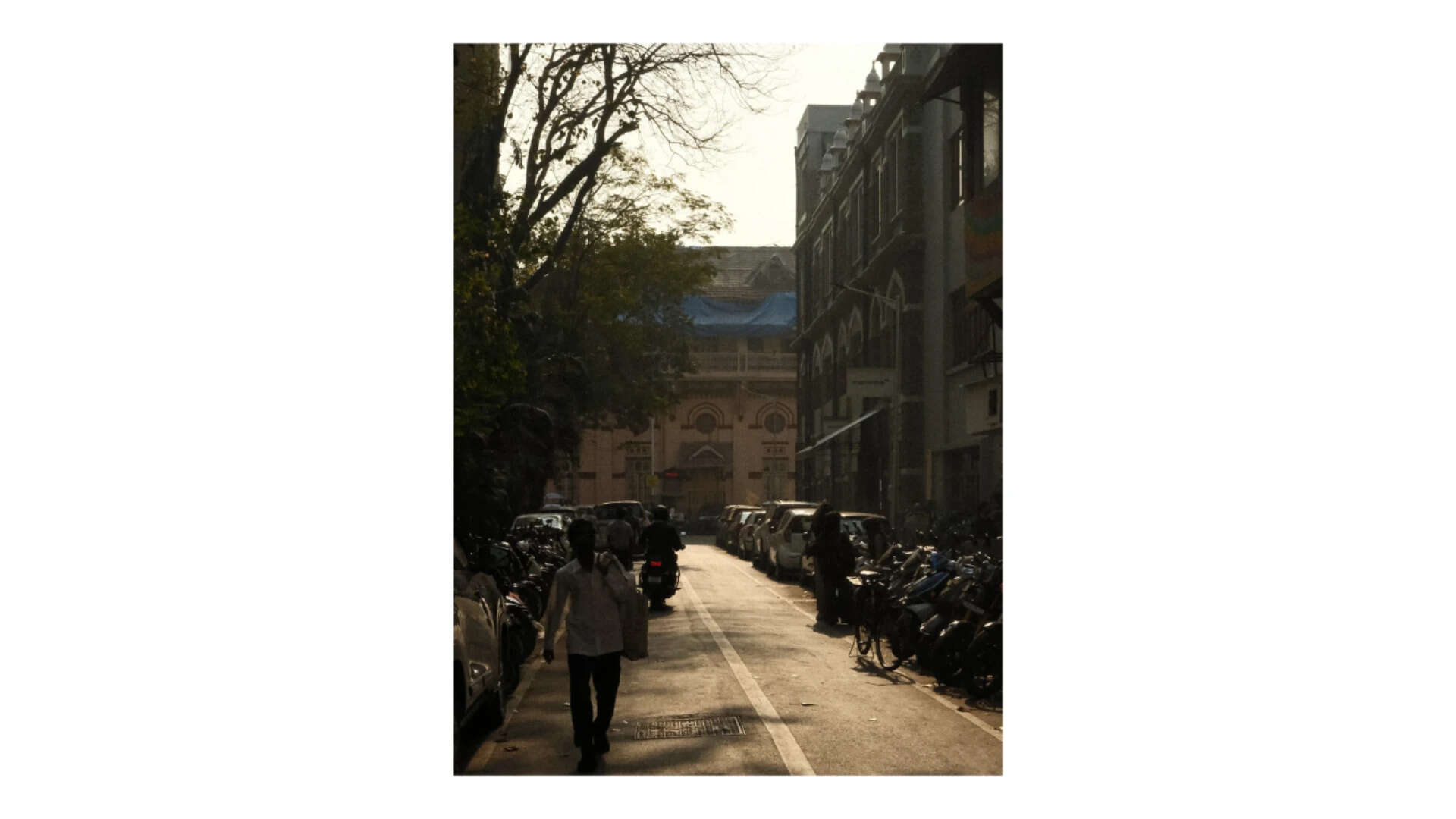
Classic Chrome made this look like a decision. It was barely a second.
The backlit street shot—a man walking toward camera, everything else going into silhouette, warm light bouncing off the road, motorcycles parked either side—was shot in Classic Chrome and came out already looking like a decision had been made. This is the part of Fujifilm's colour processing that's difficult to talk about without sliding into marketing language, so I'll just say: the shadow falloff didn't crush into pure black, the warm tones stayed warm without going orange, and the frame looked like someone had thought about it.
Because the camera had, in a way.
The dial you'll actually use
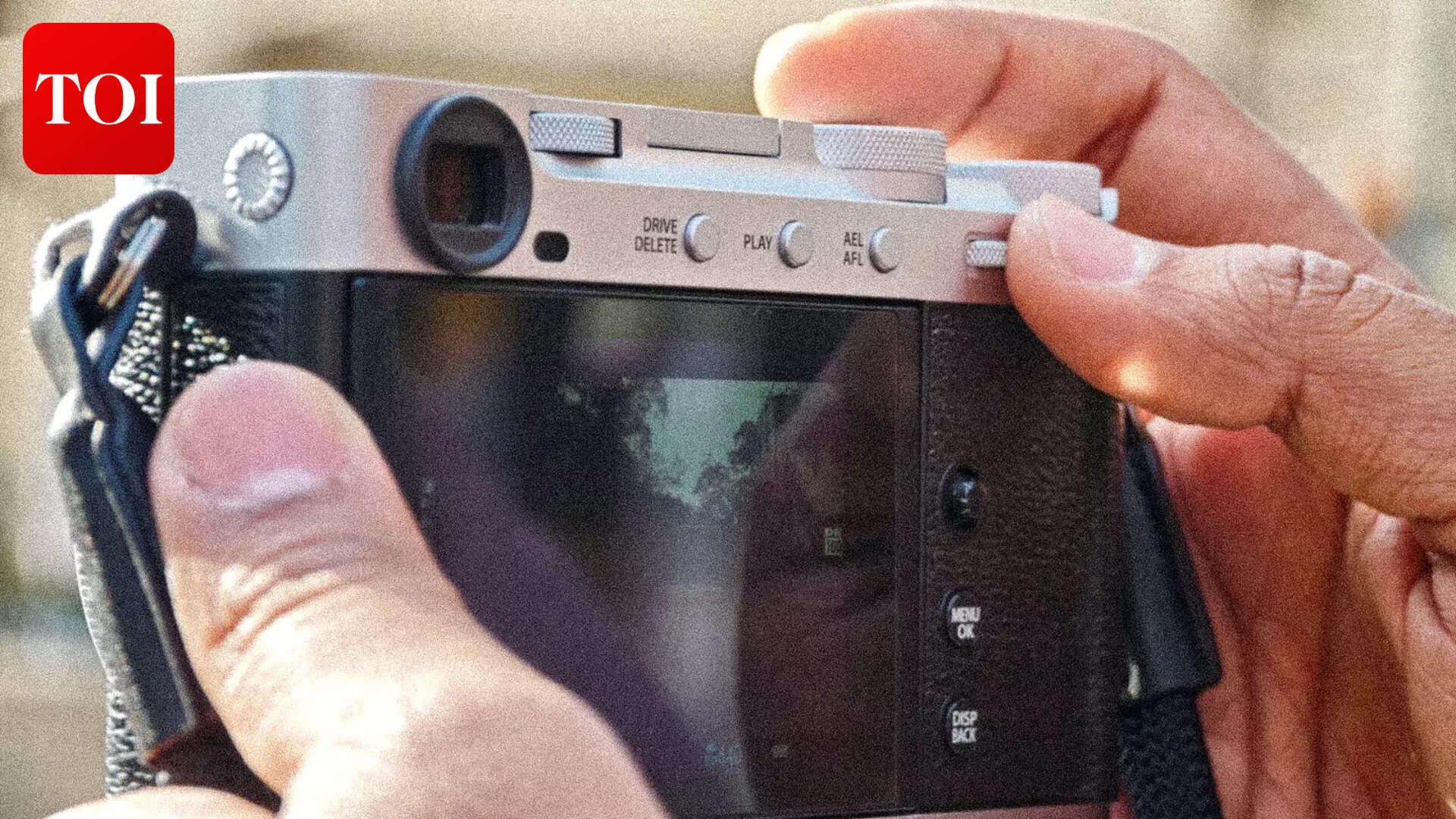
The recipe slots don't change how the camera works—just how the world looks through it
Every recent Fujifilm has gotten a film simulation dial, and the discourse around it follows a familiar pattern—half the people find it genuinely useful, the other half think it's a tactile affectation for photographers who like turning things.I bought the X-M5 partly because of this dial, so I'm not a neutral observer here. Film simulations are genuinely how I shoot—not as a post-processing safety net, but as a decision made before the shutter.
What the X-E5 does differently isn't the dial itself, it's what you can save to it.On other Fujifilm bodies, saving a custom setup saves the whole camera configuration—film simulation, yes, but also focus mode, drive speed, everything attached to that state. Change your look and you risk changing things you didn't mean to touch. On the X-E5, the recipe slots are isolated. They hold only image processing parameters: grain intensity, highlight and shadow curve, clarity, Colour Chrome settings.
The way the camera actually operates stays completely separate.
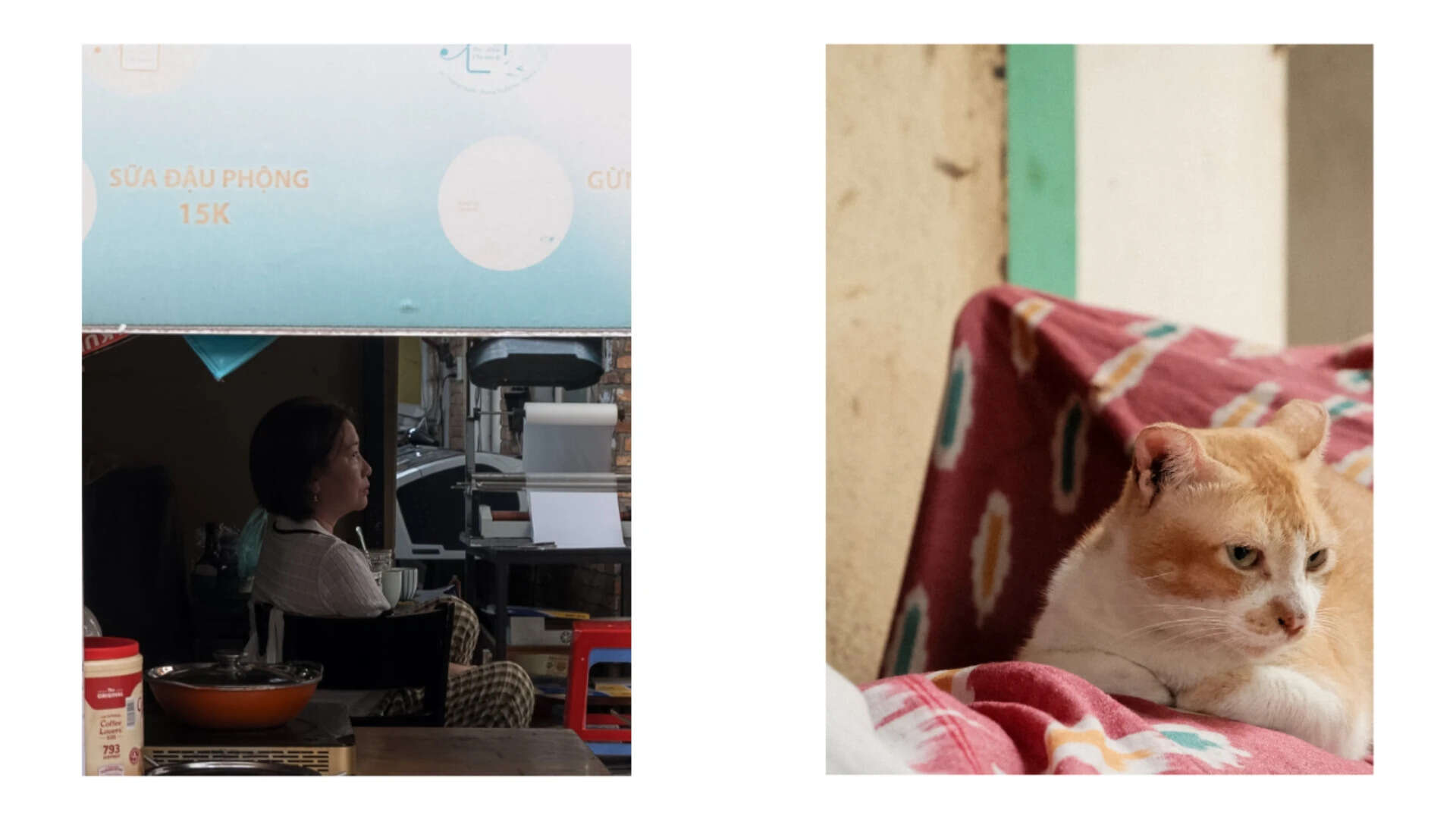
The dial was on Classic Chrome for the cat, Eterna for the café—both frames knew it before I did.
I had FS1 set to Classic Chrome with slightly pushed grain and pulled highlights. FS2 was Acros with a red filter. FS3 was Eterna Bleach Bypass for scenes that wanted to feel drained. Moving between them while walking is fast—one click, the change is live in the viewfinder, keep moving. The Vietnamese alley shot with Communist Party flags strung overhead looks like a different photograph in Acros than it does in Classic Chrome.
Not better. Different. The dial made that a two-second decision instead of a menu excavation.One physical flaw worth naming: the dial sits directly above the eye sensor. Reach for it while the camera is at your eye and you trip the sensor, which kills the rear screen. It happens often enough to be genuinely annoying, and in a design this considered everywhere else, it reads as a blind spot.
The viewfinder has one idea and it's a good one
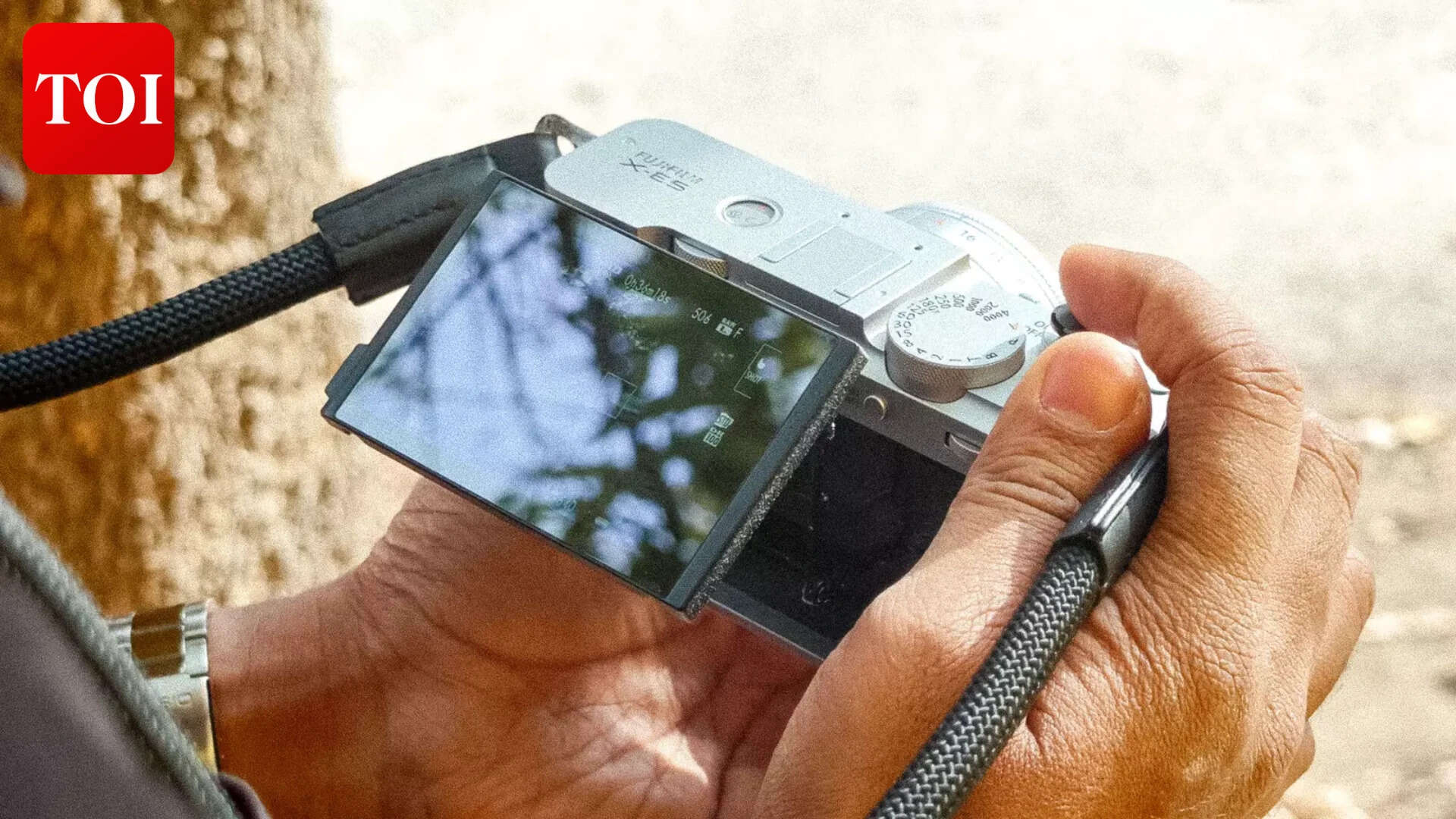
The flip-forward screen is genuinely useful—until you put something in the hot shoe.
The spec: 2.36 million dot OLED, 0.62x magnification. Smaller and less sharp than you'd hope at this price.
That's the honest version.What makes it more interesting is the Classic Display mode—a new EVF option that removes every overlay except a minimal red LED-style readout at the bottom and an analogue needle on the right indicating your exposure compensation. It looks exactly like peering through a well-kept 1970s SLR. I switched to it on the second day in Mumbai and mostly left it there. Not because it's technically better—it isn't—but because reading a needle asks for more presence than glancing at a number.
You're slightly more in the frame, slightly more aware of what you're doing to the exposure. Small distinction, but it accumulates over a day.The rear screen is the more legitimate complaint. At 1.04 million dots it's noticeably softer than you'd want at this price, and in direct afternoon sunlight—which Mumbai offers in abundance—it loses enough clarity that you're partly guessing at fine detail. The flip-forward function is genuinely useful: the screen pivots over the top plate and faces you, making low-angle shots and self-facing frames much easier.
But mount a microphone in the hot shoe and it blocks most of the flipped screen. A vlogging feature that vloggers can't cleanly use is an odd design outcome.
Ho Chi Minh City moved faster
Mumbai is dense but it has a pace you can read. Ho Chi Minh City's District 1 doesn't offer the same courtesy—it's compressed, quick, constantly rearranging itself, and it doesn't slow down because you're trying to take a photograph.
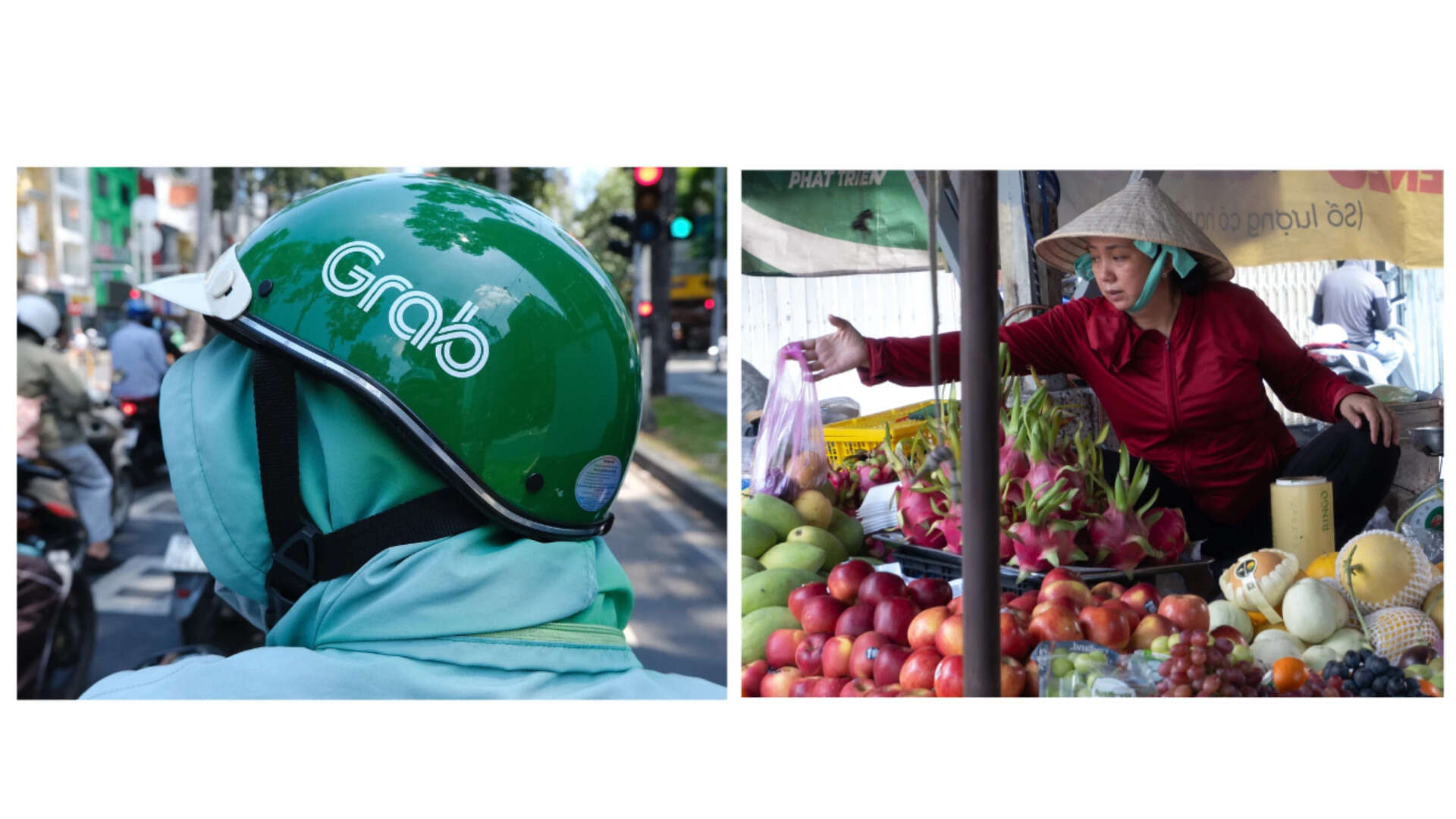
Green helmet at the junction, dragon fruit at the stall—phase detection and eye AF working through traffic glare and market noise without being asked twice.
The Grab driver at the traffic junction—green helmet glossy in the afternoon sun, the city spreading out behind him in every direction—was maybe two seconds of total decision-making.
Camera up, focus acquired, frame, shutter. The phase detection found him fast. The fruit vendor at the open market, leaning forward with a plastic bag outstretched, dragon fruit stacked in layers in front of her, was moving constantly.
Eye detection found her face through the backlight and the visual noise of the stall without needing much encouragement.
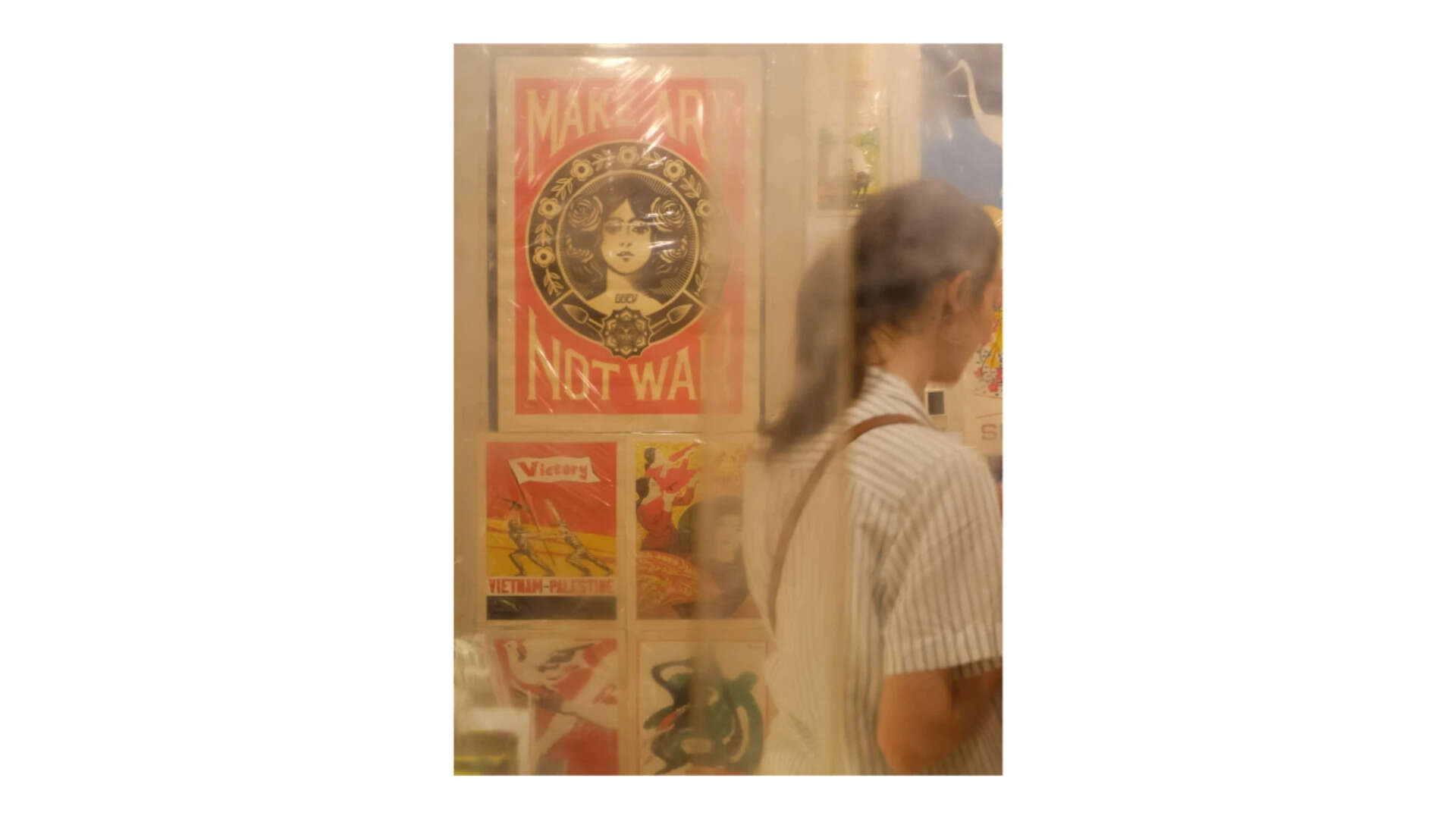
1/40s handheld, her movement blurred, the background held—that's the IBIS working
It didn't nail everything. The poster shop interior—a woman browsing past propaganda-era prints in low, indirect light—required accepting that the AF was working near its limits.
There was a moment of hunting before it settled. Fujifilm's continuous tracking still trails Sony and Canon at the sharp end, and the X-E5 doesn't change that. But for moving through a city and reacting to what appears in front of you, it was consistent enough that I stopped thinking about it, which is really what you want.
The poster shop frame wasn't lost either—just earned. The woman, slightly motion-blurred as she turned, was shot at 1/40s handheld.
The IBIS—the first time any X-E camera has had it—kept the background stable while her movement gave the frame its life.
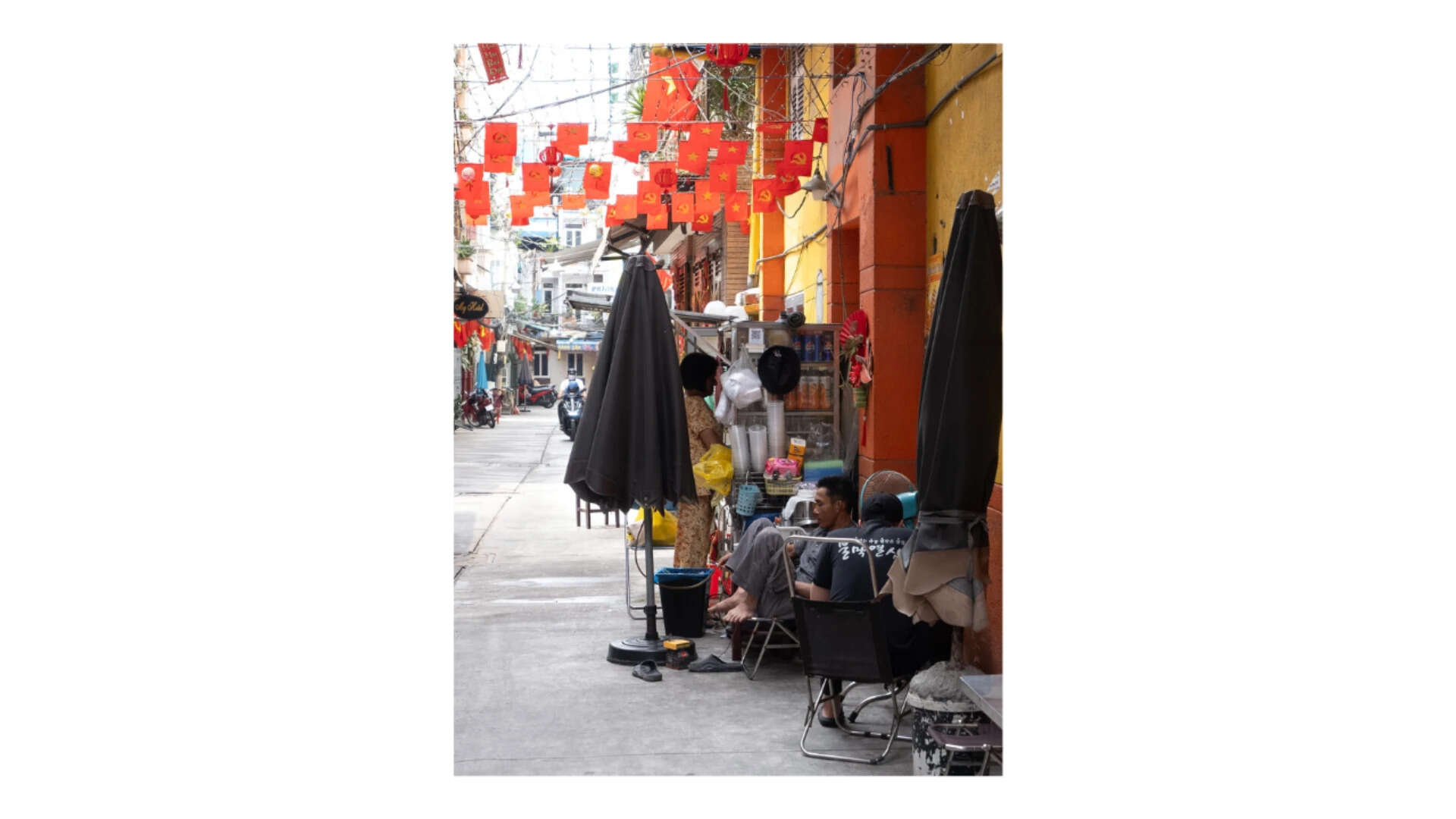
The Vietnamese alley with the flags is the frame I keep returning to. Red flags overhead, a man in a plastic chair looking at his phone, a food cart in the middle distance, the lane opening up to white sky at the far end. Shot at base ISO in Acros. The grain simulation sat in the shadows and midtones rather than appearing uniformly across the frame—more texture than noise, which is the right distinction.
Now, the price
The price is Rs 1,44,990 body-only, Rs 1,61,990 with the 23mm kit lens. That's a real number for an APS-C camera, and it deserves a real answer rather than the usual softening.The no-weather-sealing situation is the one thing that doesn't get easier to accept at this price. The new 23mm kit lens is weather-sealed. The body it's designed for is not. In both Mumbai and Ho Chi Minh City I got lucky with dry weather—but the awareness of having no protection sat at the back of every uncertain sky, every crowded market where someone else's water bottle gets too close.
For a camera clearly aimed at travel and street photographers, it's a strange omission.What you're buying, when you look past the compromises, is specific. A 40MP sensor with real dynamic range and Fujifilm's best colour processing. A film simulation system that has finally, with the recipe slots, matured into a genuine tool. A build that feels like it cost what it costs. And a body compact enough to disappear into a bag and light enough to carry all day without negotiating with your wrist about it.None of that is abstract. I used this camera across two cities, with the wrong lens, with no particular agenda, and came back with frames I was genuinely happy with. The Carlton Hotel sign. The silhouetted lane in the golden hour. The woman at the fruit stall with the dragon fruit and the outstretched arm. The Vietnamese alley with its flags.All of that, and the camera never once made itself the point. The photographs came from the places, the light, the people in them. The camera just made sure nothing was lost in translation. At Rs 1.5 lakh, you're entitled to expect exactly that. The X-E5 never once made me feel otherwise.








 English (US) ·