

 50 minutes ago
4
50 minutes ago
4
ARTICLE AD BOX
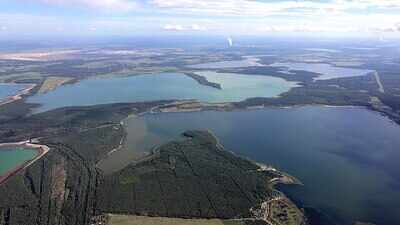
Lausitzer Seenland. Image Credit: Wikimedia Commons
For more than a century, the landscape of Lower Lusatia in eastern Germany was shaped by lignite, also known as brown coal. Massive open-pit mines created jobs and industrial development, but they also left vast craters and severe environmental damage.
However, today, many of these mines represent something completely different.According to a recent peer-reviewed study published in Ri-Vista: Research for Landscape Architecture, Lower Lusatia has undergone one of Europe's most ambitious post-mining transformations. The researchers describe the region as home to Europe's largest system of artificial lakes, created as former lignite mines were reclaimed and flooded.From lignite capital to deserted minesMining began in Lower Lusatia during the 19th century and expanded rapidly during the 20th century, particularly when East Germany relied heavily on lignite for electricity generation.
As the authors of the latest research state, large-scale open-pit mining changed the area by destroying local villages, forests and arable land to access lignite underground.After German reunification in 1990, many of the mines became economically unviable and were gradually closed. This shutdown created new problems, including unstable ground, soil pollution, water-system disruption and unemployment among mining workers.
The researchers say the region's recovery required environmental, social, and economic challenges to be addressed together.Europe’s biggest landscape created from artificial lakesOne major result was the creation of the Lusatian Lakeland. As the study indicates, numerous abandoned open-cast pits were deliberately flooded as groundwater levels rose, forming an elaborate system of artificial lakes. This new landscape has been created on large tracts of previously mined land.Germany’s federal mine rehabilitation company, LMBV (Lausitz and Central German Mining Administration Company), says that the Lusatian Lakeland comprises numerous post-mining lakes, which are connected by navigable canals as part of the rehabilitation process. It is described by the organisation as one of the largest projects of landscape rehabilitation in Europe, which has taken place during several decades of engineering and environmental monitoring works and substantial investments.
According to LMBV, rehabilitation across the region has required investments running into hundreds of millions of euros over several decades.
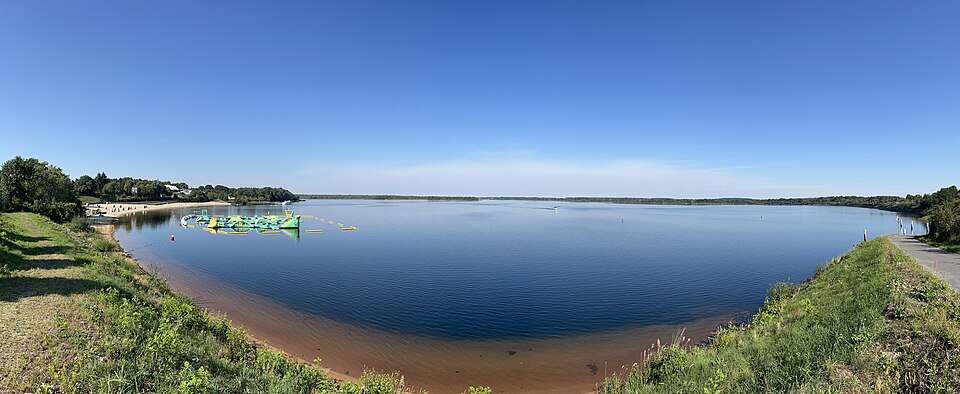
Lower Lusatia transformed its former lignite mines into Europe's largest artificial lake system. This ambitious post-mining reclamation involved engineering and ecological recovery efforts over decades. Abandoned open-pit mines were flooded, creating navigable canals and new habitats for wildlife. Image Credit: Wikimedia Commons
The return of nature, however, is taking place slowlyRestoration meant much more than refilling mines with water. According to the study, reclamation involved stabilising slopes, improving soil properties, planting forests and allowing ecological recovery to proceed naturally. With time, habitats for birds, fish, and various kinds of animals have developed in the reclaimed sites.Researchers writing in Environmental Sciences Europe also note that the post-mining sites still keep changing owing to varying climatic situations. The 2023 study says continuous monitoring is needed because change can continue for decades after mining stops. Restoration is both an engineering challenge and a natural process.Tourism and renewable energy have replaced miningThe regeneration of Lower Lusatia has also focused on developing a new economy. According to the Ri-Vista paper, industrial land has been transformed into tourism-related amenities, cycling trails, marinas, and renewable energy sources.
The lakes have become popular for boating, sailing, swimming, and ecotourism, while the recovered land now features solar farms and other energy projects.Similar transitions are under way in other former coal-mining regions across Europe. A 2026 report by the United Nations University describes Lusatia as an important case study in post-coal regional planning. These features of the region have also been noted because the presence of man-made lakes, forests and renewables is increasingly becoming an object of study for those regions planning their own post-industrial transformation.An enduring learning process in the restoration of landscapesAccording to the findings of the study, the recovery of Lower Lusatia took many years. Many efforts and hard work on behalf of policymakers and specialists in the field of ecology and engineering were needed to make it possible. Many obstacles remain, including demographic pressures and ecological sustainability. However, Lower Lusatia proves that a ruined industrial landscape can be revived and used for recreational, natural and green purposes.
This case is especially relevant nowadays when many countries face problems related to the aftermath of coal mining.








 English (US) ·