

 6 days ago
9
6 days ago
9
ARTICLE AD BOX
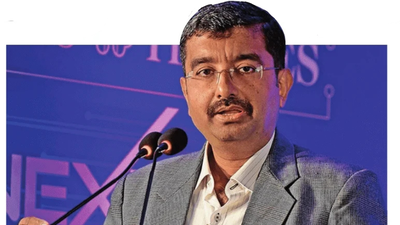
Venkat Padmanabhan, MD of Microsoft Research India, says the world has entered a new phase of AI: not pilots and demos, but real adoption that is moving business outcomes, national competitiveness and even GDP.Delivering the keynote address, Padmanabhan described this as “AI diffusion”, a phrase Microsoft CEO Satya Nadella uses to capture what matters now: getting AI into everyday workflows so it creates measurable impact. This emerging transformation, he said, has three phases.The first phase is “AI with humans in the loop” – using AI to take the tedious parts of work and help a human professional scale, while keeping a person involved to prevent errors and drift.
In education, he pointed to Shiksha, a “teacher’s copilot”, where the goal is to help teachers create lesson plans that stay faithful to the curriculum, and also to the language and cultural context of the classroom. Padmanabhan noted that if a teacher wants to explain nutrition using protein-rich foods, a generic internet search may throw up items that children in India cannot relate to.
Shiksha has been piloted with around 10,000 teachers across Karnataka and Telangana, and is now scaling.
In road safety, Microsoft Research has a project to automate driving licence tests. Currently, a majority of licences are seen to be issued without a test, which helps explain India’s high road accident record. The idea was to place a smartphone on the dashboard o r windshield and use its sensors, plus ondevice AI, to administer the test and produce an objective result.Across these examples, Padmanabhan said, success depended on domain expertise.
Shiksha required educators. The road-safety work depended on Maruti Suzuki. Without such partners, he argued, research teams would likely build tools that fail in real-world environments.The second phase, he said, is where the industry is rapidly moving: “human on the loop”. Here, humans define a broader goal, and AI agents plan, reason and execute – with humans checking in only when needed. He cited Microsoft Research work that demonstrated agents navigating complex websites, such as searching flight options and completing bookings.
The implication is cultural as much as technical. Employees will need to get comfortable collaborating with “digital colleagues”.The third phase is still emerging: reimagining workflows entirely, rather than merely automating old ones. Padmanabhan pointed to scientific discovery, including drug discovery and materials design. Traditionally, researchers ran wet-lab experiments or relied on high-performance simulations that took time. AI can now sift through vast molecule candidates, predict properties, and narrow down what needs to be synthesised – compressing work that once took years into days or weeks.





 English (US) ·