

 1 hour ago
7
1 hour ago
7
ARTICLE AD BOX
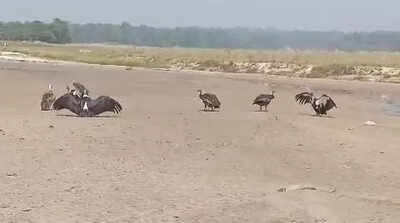
Bettiah: The endangered vulture population in Valmiki Tiger Reserve (VTR) in West Champaran is showing encouraging signs of recovery, offering renewed hope for biodiversity conservation in the region.Five acres of land in compartment number T-22 of the Gonauli forest range under VTR have been earmarked for setting up a Vulture Conservation Centre, said district forest officer, VTR division-2, Vikas Ahlawat.Officials said groups of around 25 to 30 vultures have recently been sighted in areas like Madanpur, Gobardhana, Harnatand and along the Gandak river within the VTR landscape. The species observed mainly include the long-billed vulture (gyps indicus) and the white-rumped vulture (gyps bengalensis), both listed as critically endangered on the International Union for Conservation of Nature (IUCN) Red List.Experts have attributed the sharp decline in vulture numbers over the decades primarily to the widespread use of diclofenac, a non-steroidal anti-inflammatory drug given to livestock. When vultures fed on carcasses of animals treated with diclofenac, the drug proved fatal to the birds.West Champaran forest conservator-cum-director Neshamani K said sustained efforts by the forest department to protect and revive vulture populations were now yielding results.
He said recent surveys and field observations had confirmed the presence of vultures across different parts of the reserve.The forest department accorded special priority to vulture conservation in VTR and launched a dedicated programme during 2023-24. The initiative focuses on regular monitoring, identification and protection of nesting sites, and the creation of safe feeding zones within the reserve.Ensuring the availability of safe food sources has been a key part of the strategy.
Diclofenac-free veterinary practices are being promoted in villages around the reserve, while veterinarians and livestock owners are being encouraged to use safer alternatives. Local communities are also being sensitised about disposing of livestock carcasses at designated safe locations.Highlighting the ecological importance of vultures, Neshamani said, “Vultures are extremely important to the ecosystem.
According to one estimate, a single vulture can consume around 1 to 1.5 kilograms of carrion per day, which significantly reduces the spread of diseases. That is why vultures are often referred to as ‘sanitation sentinels’ and ‘heroes of the ecosystem.’”He added that the forest department has set a target of increasing vulture numbers in the Valmiki Tiger Reserve by 30 to 40% over the next five years.Wildlife experts said the gradual return of vultures is a positive indicator of ecosystem health. Samir Kumar Sinha, chief ecologist, Wildlife Trust of India, said, “While the use of non-steroidal anti-inflammatory drugs (NSAIDs) such as diclofenac in livestock has been widely recognised as a major cause of vulture decline, non-targeted poisoning through pesticide-laced carcasses in several parts of the country has emerged as another significant cause of vulture mortality.
”









 English (US) ·