

 2 days ago
6
2 days ago
6
ARTICLE AD BOX
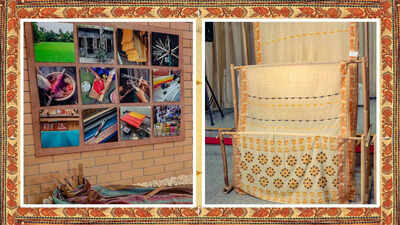
Before a Tangail sari takes form on the loom, it is first imagined in a language of dots and grids on a graph
Once defined by classic butis, florals and geometric borders, Tangail saris are now being reimagined for a new audience.
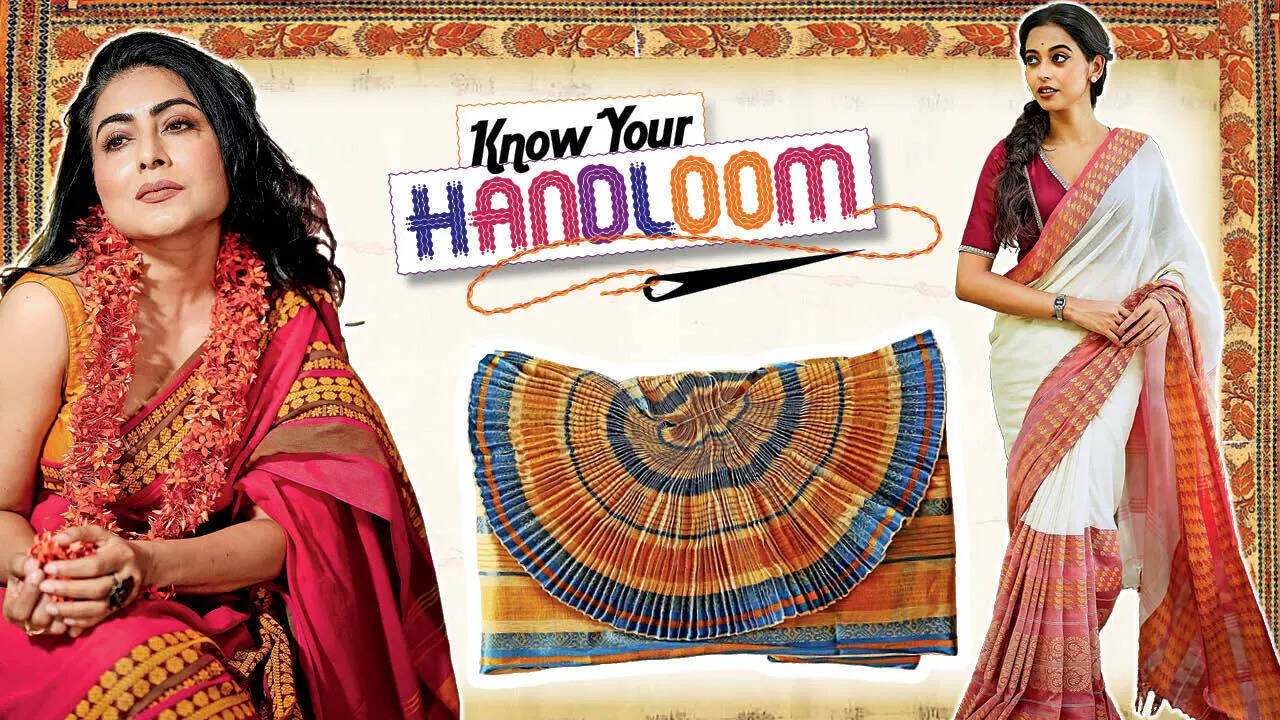
'Tangail is evolving while retaining its core identity' (Photos L-R: Anindiya Saha, @bongoniketan, @kathatale)
What is TangailA Tangail sari is a lightweight, handwoven cotton sari known for its airy drape, fine texture and delicate motifs.
It originates from the Tangail region of Bangladesh, though it is also woven today in parts of West Bengal.A motif of Bengali prideBefore a Tangail sari reaches the loom, it is first mapped in dots and grids – where a designer quietly translates pattern into punch cards, turning artistic vision into a precise weaving blueprint. “The Tangail sari is a motif of Bengali pride,” shares Khokan Basak, a ninth-generation Tangail sari weaver, who showcased over 300 saris at the Bangladesh High Commission in Delhi recently, adding that the 200-year-old sari weaving tradition is “guarded by memory and continues to be woven by hand”.The saris are produced primarily by the Basak community, historically settled along the riverbanks in Tangail. During weaving, a solution made from binni rice is applied by hand, giving the fabric its characteristic softness. The region’s warm, humid climate also plays a role, enhancing the lustre and finish of the cotton used. Anindya Saha‘Tangail sets itself apart from jamdani through its denser weave, smoother finish’
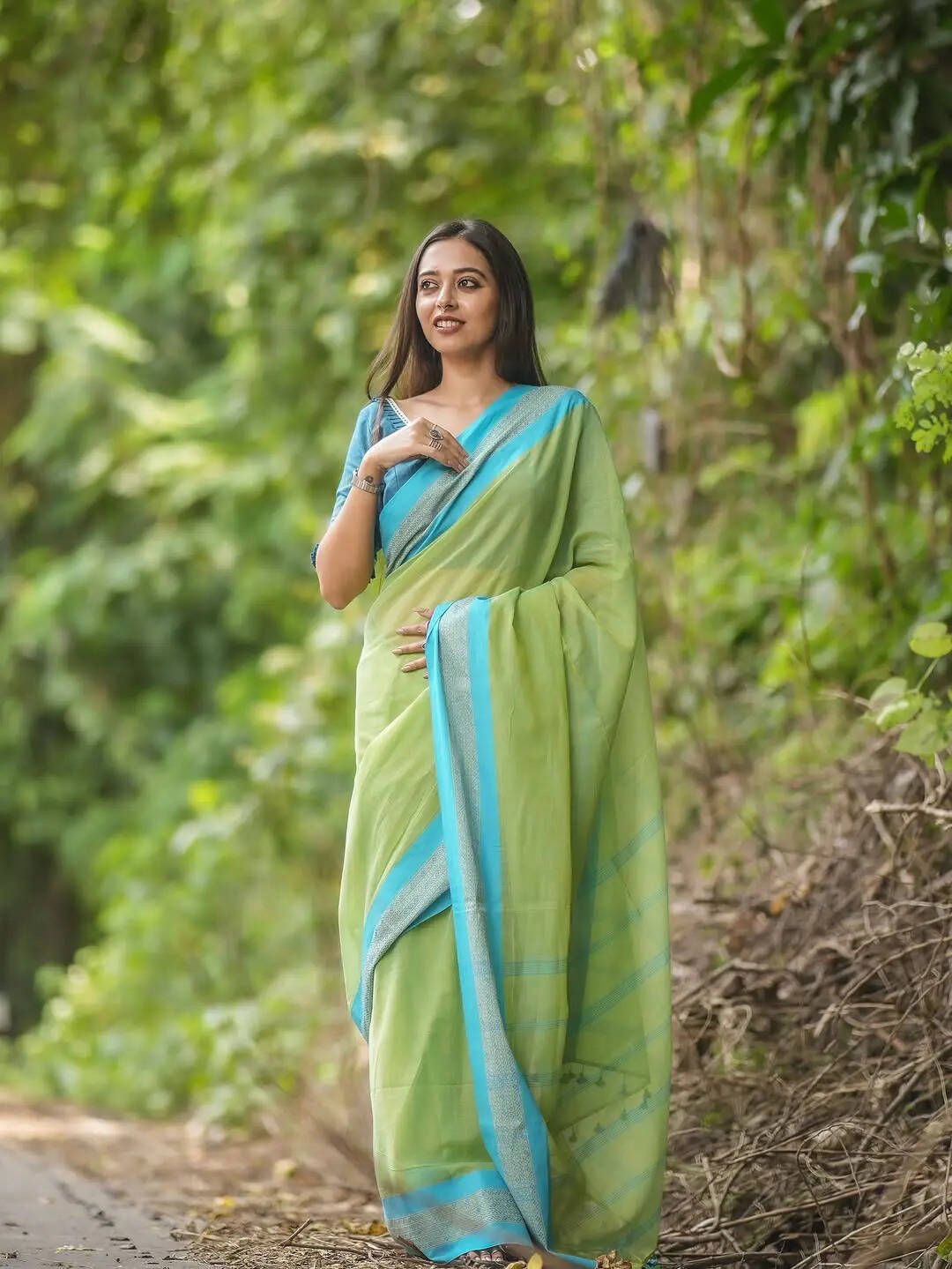
‘Tangail sets itself apart from jamdani through its denser weave, smoother finish’ (Pic: @kathatale)
The traditional Tangail design vocabulary is rich and deeply codified.
Suchandra Sengupta, founder, Katha: A Tale of Weaves, tells us, “Signature motifs include butidar (small dotted motifs), jamdani -style florals, paisleys (kairi, kalka), and geometric forms such as diamonds and checks. Borders often feature linear patterns, temple-inspired edges, or delicate floral vines, while the anchal (pallu) carries more elaborate compositions with dense motif arrangements.
These designs are crafted using discontinuous weft insertion – a labour-intensive technique where artisans interlace coloured threads into specific sections rather than weaving continuously across the fabric.”Tangail sari is often compared to Jamdani. Suchandra adds, “Tangail sets itself apart from jamdani through its slightly denser weave, smoother finish, and a more structured drape that gracefully holds its form while remaining feather-light. Tangail is evolving while retaining its core identity. Contemporary interpretations include larger, more spaced-out motifs, subtle asymmetry, and modern palettes ranging from soft pastels to bold contrasts.
”
Tangail is evolving while retaining its core identity. Its structure is increasingly being merged with the intricacy of Jamdani, making it relevant to younger audiences
Suchandra Sengupta, founder, Katha: A Tale of Weaves
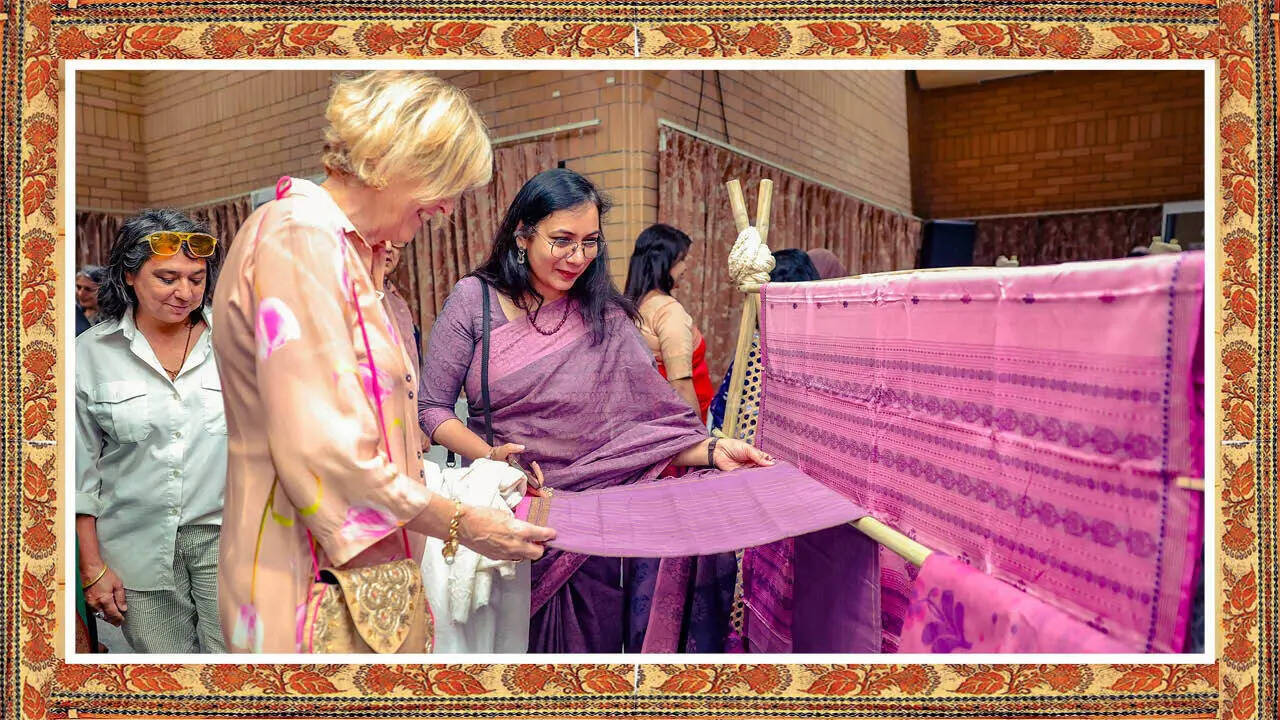
Behind its airy cotton drape and delicate motifs lies the quiet labour of a designer who translates design onto punch cards. It is at this intersection of craft and calculation that Tangail begins.
Fact-sheet● The traditional weaving art of Tangail was officially inscribed on the UNESCO Representative List of the Intangible Cultural Heritage of Humanity in December 2025● India was officially granted a Geographical Indication (GI) tag ‘Tangail Saree of Bengal’ on January 2, 2024, acknowledging the skill of weavers in West Bengal’s Nadia and Purba Bardhaman districts. This brought the controversy of origin to the fore● Tangail saris share historical and technical links with jamdani weaving, particularly in their use of extra-weft techniquesOn a jacquard loom, a weaver can produce up to five saris a week, but a single sari with dense motifs can take up to five days to completeMore than a sari: Tangail exhibition spotlights shared art & textile heritageCoded by colour and weaving style, Tangail, Pabna and Jamdani saris hung on bamboo scaffoldings at the recent exhibition in Delhi at the Bangladesh High Commission.
Riaz Hamidullah, High Commissioner of Bangladesh, says, “The Tangail sari is shared heritage between Bangladesh and India. The craftspeople create pieces of art out of their loom, which AI can't. Handloom is not a product; one cannot put a price on the time, labour and imagination of the weaver.
Handloom survival in both India and Bangladesh is a huge issue; the weavers are in crisis.”'Buying handmade clothes sustain entire communities’Spotlighting the need to safeguard the handloom, Chandra Shekhar Shaha, President of the National Crafts Council of Bangladesh, says, “Industrial aggression has reduced everything to a product, leaving handloom weavers in a shaky position. Buying handmade sustains entire communities, it is tied to identity, whereas machinemade textiles carry no such heritage.”
In terms of culture, India, Bangladesh, Bhutan, Nepal, and Sri Lanka share quite a lot, but it is seldom that we find occasions to see each other’s traditions. One’s always amazed at the variety there is, and how a single strip of cloth can take on so many different forms, colours and stories
Laila Tyabji, craft activist
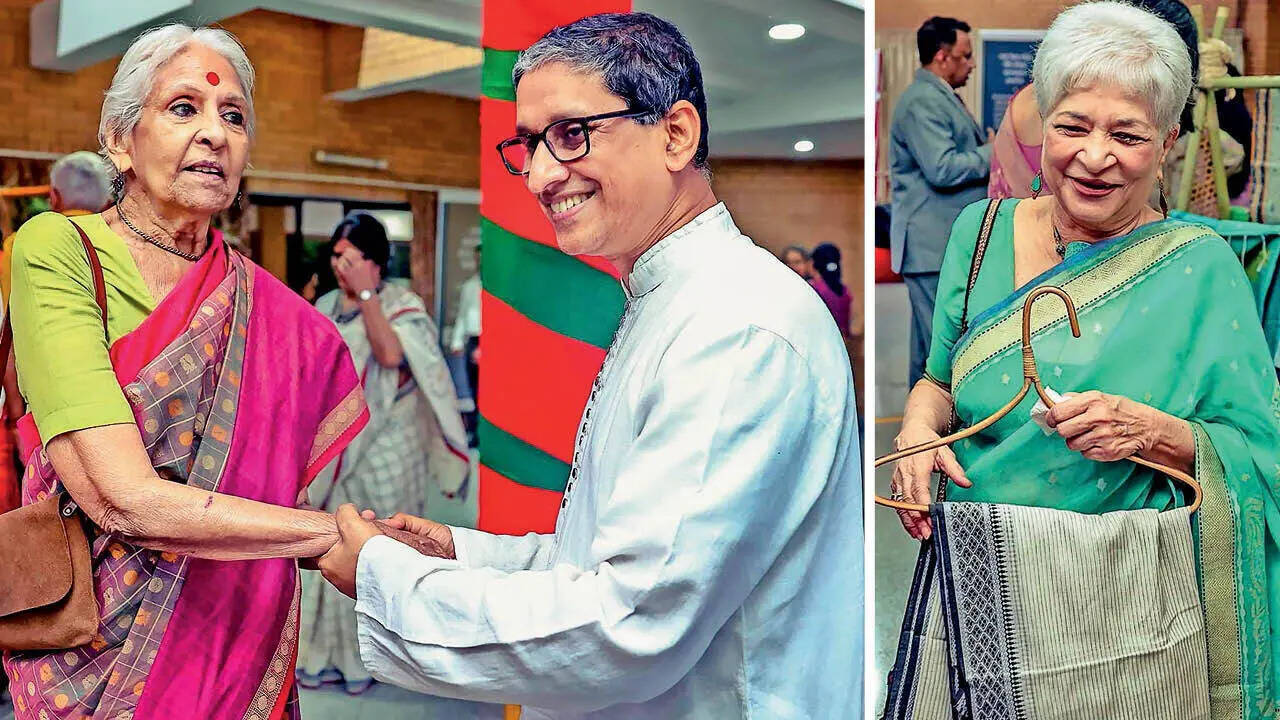
Jaya Jaitley with the Bangladesh High Commissioner Riaz Hamidullah; Laila Tyabji
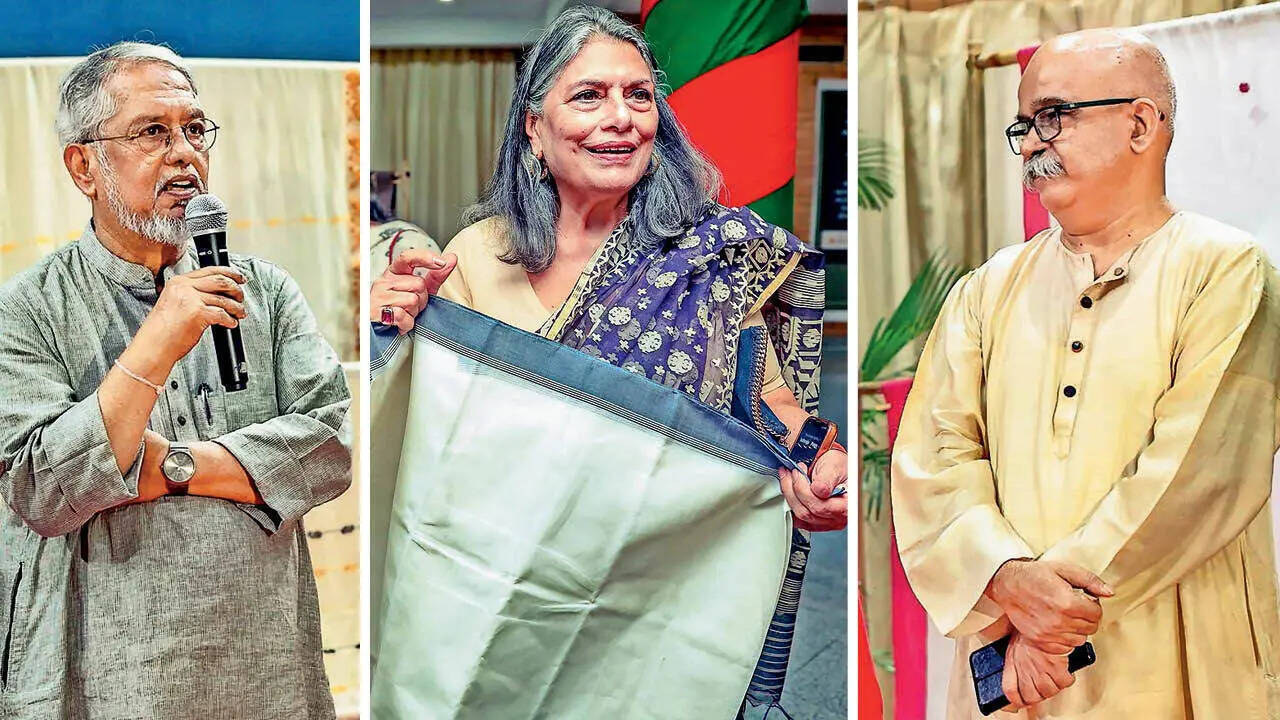
Chandra Shekhar Shaha, Sunita Kohli and Chandra Shekhar Veda






 English (US) ·