

 17 minutes ago
2
17 minutes ago
2
ARTICLE AD BOX
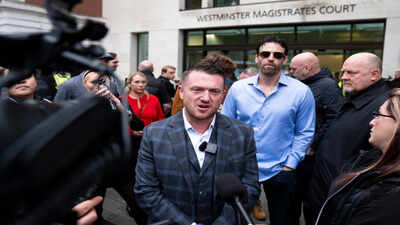
Tommy Robinson, whose real name is Stephen Yaxley-Lennon, arrives at Westminster Magistrates' Court after he was charged with failing to provide the PIN to his phone, London, Tuesday, Oct. 14, 2025. (Ben Whitley/PA via AP)
“Mrs Robinson”, one of Simon and Garfunkel’s most iconic songs, has a line: “Hello, Mrs Robinson, Jesus loves you more than you can know.” The same line could be repurposed for Britain in 2026: “Hello Mr Robinson, Albion loves you more than you know.
”Though one suspects Tommy Robinson probably does know how popular he is, perhaps even more than the current Prime Minister, who has the approval rating of a trans therapist at an Elon Musk party.
In a piece, The Economist labelled him “Britain’s worst ambassador”. But even the piece, which by dint of its existence gave someone the establishment despises the oxygen of publicity, acknowledged that his “world is closer than you think”.The various British establishments, from Church to Parliament to Royalty, are peculiarly adept at absorbing dissenting views, with the brief interruption of Cromwell. That makes it rather odd that a former football hooligan from a working-class background now holds Britain’s most powerful microphone, with talking points amplified by Elon Musk, who Robinson says also pays his legal bills, and views in complete coherence with his MAGA cousins across the pond.
So how did Tommy Robinson become so popular, an agent of chaos who epitomises Sir Humphrey Appleby’s worst nightmare: unmalleable, inflexible and beyond reason? And what is his story?
Who is Tommy Robinson?
Tommy Robinson is what happens when a football-terrace identity acquires broadband. He was born Stephen Christopher Yaxley-Lennon in Luton in 1982, a name hardly worthy of launching a revolution. So he adopted the name of a football hooligan from Luton Town and, with it, the terrace dichotomy of us versus them.His early biography contains the raw material of modern British alienation: Luton, football firms, working-class anger, racial tension, economic uncertainty, and the sense that the state speaks fluently to everyone except the people who feel they are losing the country beneath their feet. He trained as an aircraft engineer, but his life took a different turn after criminal convictions, football violence and then activism.In 2009, he co-founded the English Defence League, which became the prototype for his politics.The EDL took the old British far right, removed some of the more openly fascist furniture, wrapped itself in St George’s Cross patriotism, and claimed it was not against Muslims, only against radical Islam. Its rallies had the texture of football away days with politics attached: flags, chants, police lines, counter-protesters, YouTube clips, beer-breath nationalism and the eternal thrill of feeling besieged while outnumbering everyone else on the street.He later left the EDL after it became “too toxic” and reinvented himself as a citizen journalist, the far-right activist reporting from the heart of the wound. The EDL made him notorious on the streets. Social media made him unavoidable on screens. But his rise would not have been feasible without the MIA establishment.
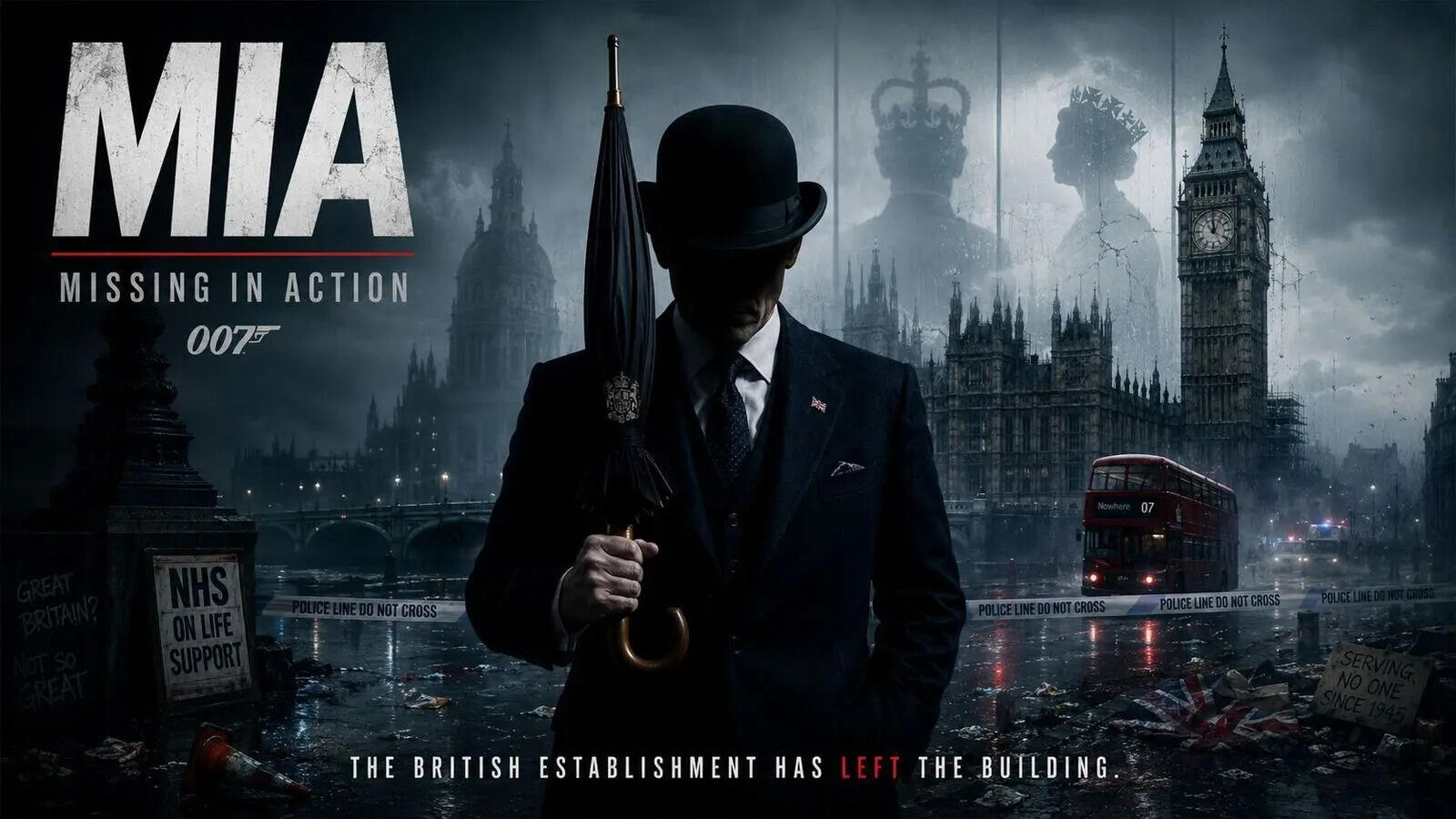
MIA: The British establishment
There are two Great Britains: a fictional version that exists in the works of Messrs Kipling, Forsyth, Le Carré, Fleming and others, where Great Britain is truly great, where despite the end of its Empire it still calls the shots on the global stage, where it meets triumph and disaster and treats both impostors the same.Then there is the second, more real version, more often found in Guy Ritchie movies of urban dystopia and neurosis, where the establishment has simply forgotten that people exist, where the economy is in shambles, law and order is a joke, where the state appears more bothered about policing jokes than actual policing, and where Britain appears to be meeting only disaster, never triumph.For years, the British establishment pretended many of these disasters did not exist.
Anyone raising those anxieties had crude labels thrown at them: anti-Muslim, Islamophobic, xenophobic, anti-immigration, far-right.
Some of these labels are accurate when applied to Robinson, but they still dodge the harder question that besieges liberals around the world: why did so many people conclude that this deeply flawed man was more representative of their views than their actual representatives?Britain built what might be called a system of no rebuttal. Rebuttals were reserved for highfalutin speeches in Westminster.
On immigration, citizens were told that concern was bigotry. On integration, they were given sermons about diversity, but little explanation of what a shared national culture was supposed to mean. On policing, they were told institutions were neutral, even when many felt the law arrived slowly for some and eagerly for others.
On free speech, they watched people lose jobs or reputations for clumsy comments online while serious failures were smothered in procedure.Nowhere did this system of no rebuttal prove more politically disastrous than in the grooming gangs scandal. The establishment did not even know what to call it, first reaching for “Asian grooming gangs”, then “South Asian grooming gangs”, before the backlash from Indian and Sri Lankan-origin Britons forced a more precise term: Pakistani grooming gangs.Grooming gangs were not a figment of the far right’s imagination.
There were real victims, real crimes, real official failures and a real institutional crisis. In towns such as Rotherham, Rochdale, Telford and elsewhere, girls were abused while agencies that should have protected them failed repeatedly. The forces of law and order appeared more bothered about correct political language than calling a spade a spade.That is where Robinson found his opening. He became the loudest voice against grooming gangs not because he was careful, nuanced or responsible, but because he was blunt where others were evasive.
He fused grooming gangs, immigration, Islam, policing, media cowardice, elite denial and free speech into one grievance. For many of his followers, he became the man who said the unsayable. For Britain’s establishment, that was the bill for leaving too much unsaid for too long.Indian stand-up comic Varun Grover has a joke about liberals that sums up why the British establishment was brought to its knees. The joke goes that liberals can turn even an orange into a seminar on pesticide lobbies, privilege and moral anxiety, while the right simply says: here is an orange, eat it, and do not wear the colour in a bikini onscreen.
That, in miniature, is Robinson’s advantage. Where the establishment produces subtext, caveat and committee language, he produces accusation.
And that is exactly what Robinson manages to do as the establishment beats about the bush. He takes unanswered questions, strips them of nuance, attaches them to a villain, and offers emotional clarity where official Britain offers fog.
How he built the machine
As far as demagogues go, Robinson is hardly an orator of note or someone with an iota of sophistication.
He is not Enoch Powell with livestreaming equipment, Roger Scruton with a Telegram channel, or even Nigel Farage with his pub-bore effect.His skill lay in understanding the new politics of grievance before many of his opponents understood the new politics of attention.The old far right needed marches, membership rolls, pub meetings, newsletters and town-square intimidation. Robinson needed a phone, a confrontation and an audience that already distrusted everyone else.
Everything became content: a court appearance, a police warning, a prison sentence, a hostile interview.Robinson was jailed twice and used both cases to bolster his mythology. In 2018, he was jailed after livestreaming outside Leeds Crown Court during a criminal trial involving grooming-gang defendants, where reporting restrictions were already in place.He was jailed again for contempt of court in 2024, after admitting he had repeatedly breached a court injunction banning him from repeating false allegations about Jamal Hijazi, a Syrian refugee schoolboy.
And yet he managed to spin that mendacity into a tale of persecution, presenting himself as a man punished for speaking for working-class Britain.To the courts, these were questions of due process, prejudice and false claims. To his supporters, they were proof that Britain would rather punish Robinson than confront the scandals he was shouting about.This is the Robinson loop. He provokes. The state reacts. He calls the reaction persecution.
Supporters donate, share and march. The media covers him. Politicians denounce him. His followers conclude that the denunciation proves his importance.
MEGA meets MAGA
This is where Robinson’s story stops being merely British and becomes part of a wider right-wing international. Musk restored Robinson to the town hall and helped turn him into an exhibit in a global argument about free speech, migration and Western decline.When Musk pushed the slogan “Make Europe Great Again”, he was signalling that Trump’s movement now had a European franchise.
In another post, Musk put it even more plainly: “From MAGA to MEGA: Make Europe Great Again!” The branding was unsubtle, but that was the point. The American culture war had crossed the Atlantic, put on a St George’s Cross waistcoat, and discovered Tommy Robinson waiting by the bar.
Robinson fit perfectly into that ecosystem. Musk shared Robinson-linked material with the words “Worth watching”, then posted “Free Tommy Robinson!” and asked: “Why is Tommy Robinson in a solitary confinement prison for telling the truth?” For Robinson’s supporters, it was the benediction they had been waiting for: the world’s richest man validating the idea that their man was not a criminal agitator, but a dissident.JD Vance supplied the geopolitical version of the same argument at Munich. He said Europe’s real danger was “the threat from within”, “not Russia, not China”, and accused European leaders of “running in fear of their own voters”. In that framing, Robinson is not an embarrassment to Britain. He is evidence for the prosecution: proof that Europe’s elites have lost control of immigration, lost faith in free speech, and lost the ability to hear their own people.The American right looks at Robinson and sees a British morality play with St George’s Cross as set dressing. For MAGA, he turns Britain into a warning poster: the mother of free speech reduced, in their telling, to arresting its own dissidents. The shared vocabulary is familiar: free speech, invasion, grooming gangs, corrupt media, political prisoners. Robinson personalises it as the persecuted Englishman punished by a decadent empire that forgot its own people.That is why MEGA and MAGA meet so easily. Both rely on nostalgia. Both insist that the nation was stolen from its rightful owners. Both turn institutional decline into betrayal. Both promise that the old country can be restored if only the cowards, judges, bureaucrats, journalists and liberal scolds are swept aside.
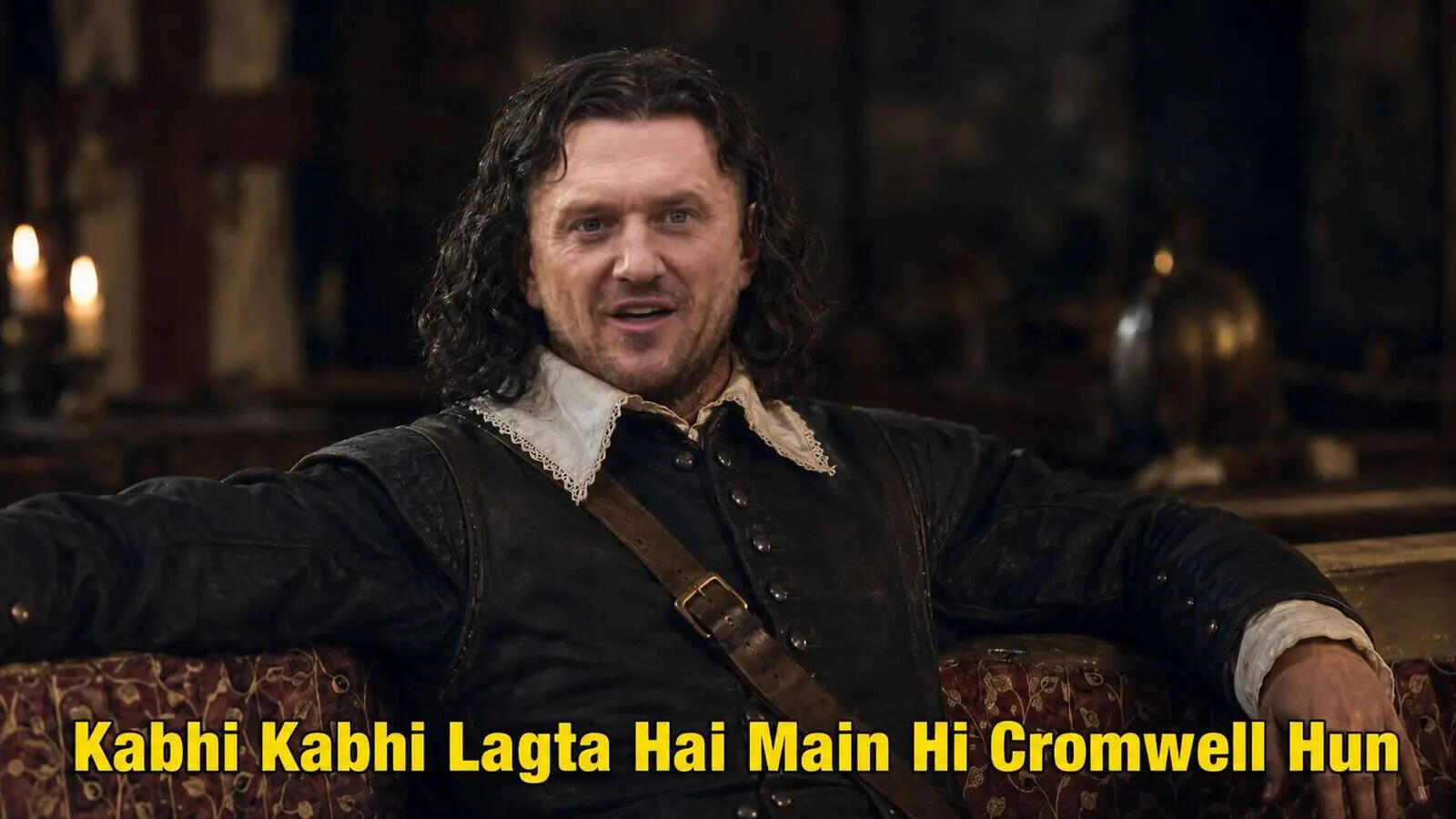
New-age Cromwell?
Robinson is unlikely to become prime minister, lead a major party, or storm the citadel of British politics through the conventional machinery of elections.
He is too legally burdened, too polarising, too undisciplined and too personally toxic for that. But that is the wrong metric. He is no Oliver Cromwell either, no grim Puritan general waiting to dissolve Parliament, summon the New Model Army and place Britain under the rule of scripture, steel and military efficiency.Cromwell overthrew the system. Robinson works on its nerves.The danger is not that Robinson marches into Downing Street, abolishes the monarchy and starts issuing decrees from Whitehall.
It is that he becomes the tuning fork for those who do want power. Cromwell took a king’s head; Robinson takes the establishment’s evasions, converts them into rage, and hands the language to politicians respectable enough to pretend they never touched him.
Respectable politicians do not need to endorse him to benefit from the emotional world he has helped create. They can speak the sanitised version of his language, saying “community cohesion” where he says “Islam”, “legitimate concerns” where he says “invasion”, “two-tier policing” where he says the state hates patriots, and “free speech” while quietly harvesting the energy of people who believe Robinson was punished for truth rather than contempt.That is how the fringe wins without taking office. It does not need the crown, the mace or the dispatch box; it only needs to shift what can be said, what must be answered, what parties must address and what newspapers must cover. Robinson’s power lies in emotional agenda-setting, in giving more respectable actors a map of where anger lives.Robinson’s greatest impact may be indirect: making the hardest version of right-wing grievance visible enough that softer versions become electorally usable.
He is not Cromwell at the gates; he is the noise outside the gates, the chant that tells the next Cromwell where the breach might be.Now there is no doubt that Mr Robinson has been heard by all those who matter in Britain. But perhaps another line from Simon and Garfunkel’s classic sums up the situation better, the one about Joe DiMaggio, the vanished hero on whom “a nation turns its lonely eyes”. Paul Simon later said DiMaggio represented a genuine hero rather than merely a baseball player. That is the question behind Tommy Robinson’s rise: where have you gone, Great Britain?





 English (US) ·