

 20 minutes ago
3
20 minutes ago
3
ARTICLE AD BOX
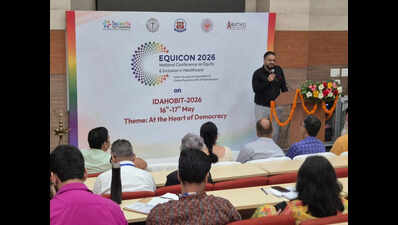
Lucknow: Do you know nearly 17% of people may belong to LGBTQIA+ or gender-diverse communities, yet many rarely interact openly with society as themselves?Experts say stigma, insensitive behaviour and lack of inclusive spaces in society, hospitals, workplaces and public areas force many to hide their identity, affecting mental and physical health.The issue was raised at EQUICON-2026 at KGMU on International Day Against Homophobia, Biphobia and Transphobia on Sunday, organised with Suramya Life Foundation, SAATHII, the Indian Psychiatric Society LGBTQIA+ Taskforce and the Indian Association of Clinical Psychiatry.“Many LGBTQIA+ persons spend their lives hiding who they are because they fear rejection at home, classrooms, hospitals and workplaces,” said Prof Pawan Kumar Gupta, organising secretary and faculty member in the psychiatry department at KGMU.He said global surveys suggest nearly 17% of people in India may belong to LGBTQIA+ or gender-diverse communities. However, official records in UP showed only 1.3 lakh transgender persons in the 2011 Census. Advocacy groups estimate the number to be nearly 80 lakh.“They are at higher risk of depression, anxiety, suicidal behaviour, unemployment-linked stress and trauma caused by discrimination in healthcare, education and housing,” he said.
“These mental health problems are not because someone is LGBTQIA+, but because of rejection, harassment and lack of acceptance. Supportive families, inclusive schools and queer-friendly mental healthcare can greatly improve outcomes,” he added.Dr Shekhar Seshadri, Dr Venkatesan Chakrapani and Dr Swapnjeet Sahu discussed healthcare inequities, discrimination and mental health struggles faced by LGBTQIA+ persons.“Fear of humiliation keeps many away from hospitals even when they need medical help,” experts said, pointing to the lack of gender-neutral wards, insensitive behaviour and limited access to gender-affirming healthcare outside metro cities.They also highlighted discrimination during hiring, pressure to hide identity at workplaces, housing bias against queer couples and difficulties in changing names and gender in official documents.“Many continue to suffer silently because society still treats their identity as something to hide,” speakers said.Experts said small behavioural changes can make spaces safer and more inclusive. These include using respectful language, politely asking preferred pronouns and avoiding jokes about sexuality or gender identity.“We should work to make hospitals inclusive for everyone,” said Prof Soniya Nityanand, vice-chancellor of KGMU






 English (US) ·