

 1 hour ago
5
1 hour ago
5
ARTICLE AD BOX
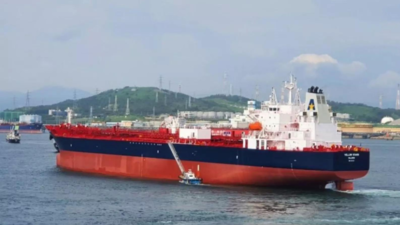
The Middle East conflict has entered its third week and has reshaped how the globe fuels its oil pipelines. Iran’s disruption of the Strait of Hormuz has left many producers scrambling to find alternative ways to move crude to global markets.
With tanker traffic through the strait nearly halted, attention has shifted to the Red Sea as one of the few viable routes.Last week, Saudi Aramco said that it has begun redirecting millions of barrels of crude through its east-to-west pipeline, sending supplies to the Red Sea port of Yanbu instead of routing them via the Persian Gulf. The shift has already had a visible impact, data from Kpler shows daily oil loadings at Yanbu have more than doubled this month compared with last year’s average, CNN reported.
But now even this rerouting is now under pressure.
Here’s why:
Earlier this week, Iran warned that US-linked facilities in the Red Sea could be targeted, raising fresh concerns about the safety of the route.“The presence of the US aircraft carrier Gerald R. Ford in the Red Sea is considered a threat to Iran,” said Iran’s unified military command, according to the country’s semi-official Fars news agency. “Therefore, logistical and service centers supporting the mentioned naval group in the Red Sea will be regarded as potential targets by Iran’s armed forces.”
The warning adds to an already fragile security environment in the Red Sea. Even before the latest conflict erupted on February 28, the region had been facing persistent instability. As David Oxley of Capital Economics observed, it was “not exactly a bastion of geopolitical stability.”
How it all began - Red Sea conflict
Shipping risks in the area have been elevated since late 2023, when Iran-backed Houthi militants began attacking vessels in response to Israel’s war against Hamas.
Those incidents forced shipping firms to divert vessels around the Cape of Good Hope, significantly extending transit times and increasing operational costs.The current conflict has further heightened these risks. In an advisory issued on Monday, the United Kingdom Maritime Trade Operations Centre described the threat level in the Red Sea as “substantial”, pointing to the “continued hostile posture of Houthi forces toward commercial shipping.”“The group retains both the capability and demonstrated intent to conduct maritime attacks in the region,” it said.There are also concerns that the scope of potential attacks could widen. An Israeli source told CNN last week there were indications militants might attempt strikes against Israel, something that has not occurred since the war began.While Saudi Arabia’s pipeline offers an alternative channel, it cannot fully replace the volumes typically passing through the Strait of Hormuz.
The pipeline can carry up to 7 million barrels per day, compared with roughly 15 million barrels that would normally transit the strait.
Outlook
Analysts warn that if tensions escalate in the Red Sea, even this reduced flow could be disrupted. Naveen Das of Kpler said any attack on tankers in the region could trigger a sharp reaction in oil markets.“I think we (will) then see a material price spike in oil,” he said. “Because it basically signals to the market that… all of the sort of escape routes (for oil) are being targeted… There’s no out.”According to Oxley, a complete blockage of oil supplies from the region could drive Brent crude prices up to between $130 and $150 per barrel, significantly higher than current levels of around $100. Prolonged price increases, he noted, would likely feed into broader inflation, raising costs for consumers across sectors such as travel and food.The situation for container shipping is markedly different. Most operators have already been avoiding the Red Sea for months. Peter Sand of Xeneta estimates that around 90% of container shipping capacity that once used the route has been rerouted via the Cape of Good Hope.









 English (US) ·