

 57 minutes ago
2
57 minutes ago
2
ARTICLE AD BOX
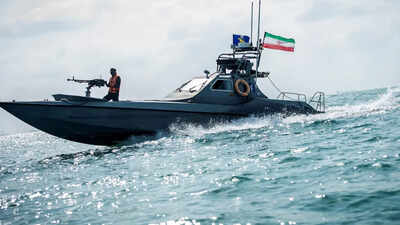
A senior adviser to Iran’s Supreme Leader Mojtaba Khamenie has asserted that Tehran holds the legal right to manage the Strait of Hormuz, one of the world’s most strategically important oil shipping routes, as nuclear negotiations between Iran and the United States enter a crucial phase.Mohsen Rezaei, a former chief of Iran’s Islamic Revolutionary Guard Corps (IRGC) and adviser to Supreme Leader Ali Khamenei, said on Sunday that Iranian control over the strait would “ensure national security” and end what he described as “50 years of insecurity in the Gulf,” according to Iran’s Tasnim news agency.Rezaei also signalled that Tehran was pursuing both military preparedness and diplomacy simultaneously amid the ongoing tensions.“Our fighters have their hands on the trigger today, and our negotiators are working to secure the rights of the Iranian people,” he said. “The war is being managed on both fronts.”The remarks come as US-Iran negotiations appear to be approaching a critical stage. US President Donald Trump said on Saturday via Truth Social that the “final aspects and details of the Deal are currently being discussed, and will be announced shortly.”
According to multiple US and Iranian media reports, negotiators are working on a proposed memorandum that could outline a framework to end months of conflict, reopen the Strait of Hormuz and potentially ease restrictions on Iranian shipping.Reports suggest that the issue of Iran’s stockpile of highly enriched uranium would be addressed separately within a period of 30 to 60 days.US Secretary of State Marco Rubio, speaking during a visit to India, indicated that further developments in the negotiations could emerge as early as Sunday.The Strait of Hormuz remains one of the world’s most critical maritime chokepoints, with a significant portion of global oil and gas shipments passing through the narrow waterway linking the Persian Gulf to international markets.The latest comments from Tehran underscore the parallel military posturing and diplomatic manoeuvring surrounding the negotiations, with analysts warning that the coming days could prove decisive for regional stability and global energy markets.







 English (US) ·