

 1 week ago
10
1 week ago
10
ARTICLE AD BOX
Last Updated:June 18, 2026, 07:40 IST
The US-Iran peace deal halts hostilities and reopens a vital shipping route, but the most contentious issues have merely been pushed into a high-stakes 60-day negotiating window.


The US-Iran MoU has reopened the Strait of Hormuz and extended the ceasefire, but it leaves the most difficult questions unresolved. (AI-generated image)
The US-Iran memorandum of understanding announced on Wednesday has reopened the Strait of Hormuz and extended the ceasefire, but it leaves the most difficult questions — from Iran’s nuclear programme and missile capabilities to its support for regional groups — unresolved.
The agreement also raises a politically sensitive question over a proposed reconstruction plan worth at least $300 billion, even as US President Donald Trump insists Washington will not give Iran any money.
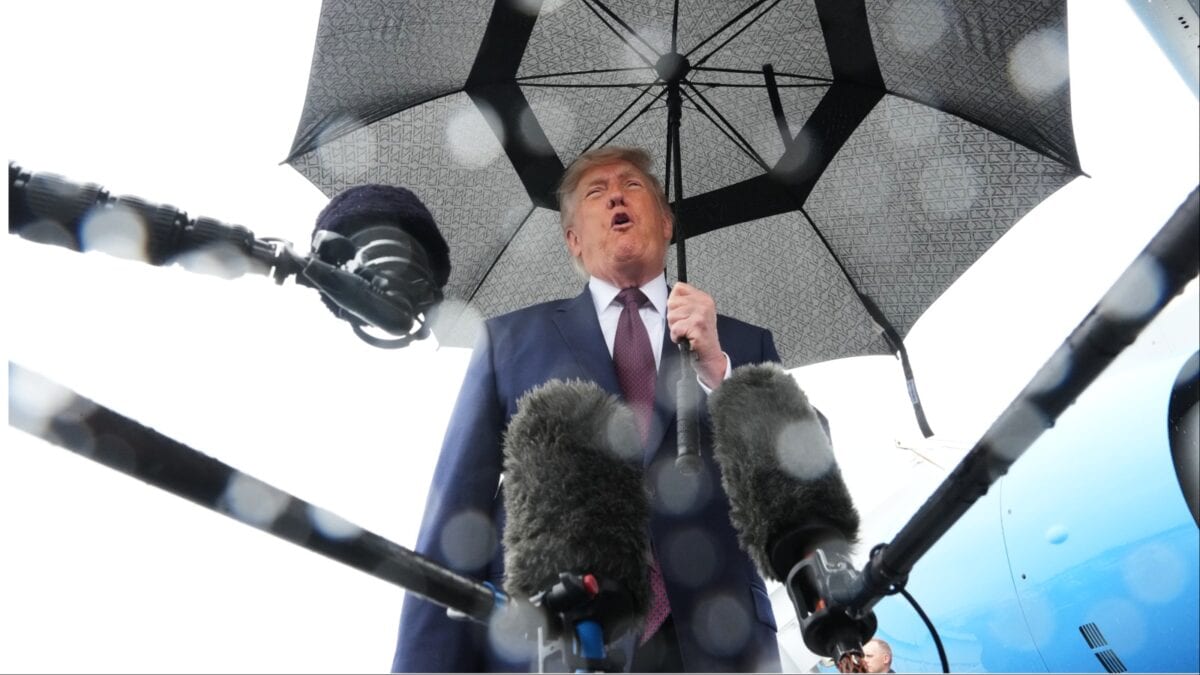
Trump presented the memorandum as a major American victory during a lengthy press conference at the G7 summit in France. The United States and Iran later confirmed that it had been signed electronically on Wednesday and had entered into effect.
However, details provided by US officials during a call with reporters suggest that the document is primarily an interim arrangement. It stops the immediate fighting, reopens the vital maritime route and gives the two sides 60 days to negotiate a broader agreement.
What Has The US-Iran Memorandum Achieved?
The most immediate outcome is the reopening of the Strait of Hormuz, a key shipping route that had become central to the conflict.
The memorandum also extends the cessation of hostilities and sets out a 60-day negotiating period during which Washington and Tehran will try to reach a final nuclear agreement and settle other disputes.
The negotiations are due to begin after the scheduled signing on Friday in Geneva. The document allows the 60-day period to be extended if the two sides need more time.
That means the agreement does not itself constitute a comprehensive peace settlement. Instead, it creates a framework for negotiations on issues that the United States and Iran have not yet resolved.
Why Does The Nuclear Issue Remain Unsettled?
Trump has said the agreement ensures that Iran will never buy, develop or produce a nuclear weapon.
But according to the text read aloud by US officials, the memorandum does not yet provide the detailed terms needed to guarantee that outcome.
For now, Iran has agreed to “downblending" its stockpile of highly enriched uranium under the supervision of the International Atomic Energy Agency.
A senior US official described that commitment as a “significant concession" by Tehran.
However, the technical details have not yet been finalised. The two sides still need to determine how the downblending will be carried out and establish a timeline for the process during the 60-day negotiations.
The limited timeframe makes the task particularly difficult. The Obama administration took around 20 months to negotiate the original Iran nuclear deal reached in 2015. The Trump administration is now seeking to secure a lasting nuclear agreement in just two months.
The provision allowing an extension suggests both governments recognise that the talks may take longer.
What Is The $300-Billion Question?
The reconstruction clause could become one of the most controversial parts of the memorandum.
Trump has repeatedly said that the United States will not provide money to Iran. He has also criticised the Obama administration’s $1.7-billion payment to Tehran in 2016.
The financial issue is important to Trump’s effort to present his Iran agreement as tougher and more favourable to the United States than the deal negotiated by former president Barack Obama.
Yet the memorandum states that the United States will work “with regional partners to develop a definitive mutually agreed plan with at least USD $300 billion" for Iran’s reconstruction.
A senior US official told BBC the agreement does not commit Washington to paying Iran a single cent.
The wording, however, does not clearly explain how the reconstruction plan would be funded or whether the United States could eventually make any payment as part of a final settlement.
It also does not identify which regional partners would contribute to the plan or how the proposed $300 billion would be raised and distributed.
That ambiguity could create a political problem for Trump and Vice-President JD Vance, who campaigned against involving the United States in new “forever wars".
Even if the money does not come directly from Washington, parts of Trump’s anti-interventionist Make America Great Again (MAGA) base may object to an arrangement that facilitates a large reconstruction package for Iran.
Why Are Republicans Criticising The Deal?
The agreement has already drawn criticism in Washington, including from within Trump’s Republican Party.
Members of Congress are seeking briefings and further information from the administration about the deal and the uncertainties surrounding it.
Some Republicans have argued that Trump gave Iran too much while securing too few concrete concessions.
“Iran’s nuclear ambitions were not curbed, and they have learned that threatening the Strait of Hormuz works and will undoubtedly leverage it in the future," outgoing Louisiana Senator Bill Cassidy, who lost a primary challenge to a Trump-backed opponent, said in a post on X.
“This is the worst foreign policy blunder in decades," Cassidy added.
His criticism highlights concern that Iran may view pressure on the Strait of Hormuz as an effective way to gain leverage in future confrontations.
What Does The Deal Say About Hezbollah?
Iran’s support for regional groups was one of the issues identified by Trump when the war began.
The United States wanted to prevent Tehran from funding groups such as Hezbollah. The issue was also a priority for Israel, which joined the US in launching the war and has separately fought the Iranian-backed group in Lebanon.
The cessation of hostilities under the memorandum extends to Hezbollah.
Beyond that, however, the group receives little attention in the document. The memorandum does not clarify whether Iran will be required to end or reduce its support for Hezbollah and other regional groups during the next phase of negotiations.
This leaves another major point of disagreement to be addressed during talks on a final settlement.
Does It Address Iran’s Missile Programme?
The memorandum also does not deal with Iran’s missile programme in detail.
Trump and Israeli Prime Minister Benjamin Netanyahu had both identified the programme as a priority at the beginning of the war.
But the initial agreement does not set out clear restrictions on Iran’s missiles or explain whether the issue will form part of the final pact.
As a result, two of the central concerns raised at the start of the conflict — Iran’s support for regional groups and its missile capabilities — remain largely outside the current arrangement.
What Happens If No Final Deal Is Reached?
The memorandum gives the United States and Iran 60 days to reach a broader agreement, while allowing that period to be extended.
Whether the two sides can bridge their differences remains uncertain.
The agreement still leaves them to negotiate the future of Iran’s enriched uranium, the technical terms of any nuclear settlement, its missile programme, support for Hezbollah and other regional groups, and the structure of the proposed $300-billion reconstruction plan.
Trump himself appeared noncommittal about whether the negotiations would succeed.
“If it doesn’t get done in 60 days, it’s all right," Trump said at the G7 press conference. “We go back to bombing."
The memorandum has therefore halted the immediate conflict and reopened the Strait of Hormuz, but it has not yet removed the risk of renewed military action. The next 60 days will determine whether the document becomes the foundation of a lasting US-Iran agreement or remains only a temporary pause in the conflict.
Handpicked stories, in your inbox
A newsletter with the best of our journalism
About the Author
Karishma Jain, Chief Sub Editor at News18.com, writes and edits opinion pieces on a variety of subjects, including Indian politics and policy, culture and the arts, technology and social change. Follo...Read More
News world Hormuz Reopens, But A $300-Billion Question Remains: What The US-Iran Deal Leaves Unclear
Disclaimer: Comments reflect users’ views, not News18’s. Please keep discussions respectful and constructive. Abusive, defamatory, or illegal comments will be removed. News18 may disable any comment at its discretion. By posting, you agree to our Terms of Use and Privacy Policy.
Read More




 English (US) ·