

 44 minutes ago
5
44 minutes ago
5
ARTICLE AD BOX
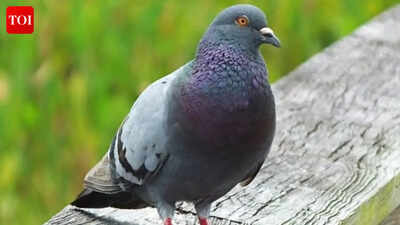
Pigeons might not have the best reputation in the world of flying species, aka birds. They’re called “city birds,” accused of hanging around train stations, eyeing someone’s leftover fries, and generally acting like they own the sidewalk.
They’ve been called clueless for their slightly lackadaisical attitude.But honestly, underneath all that, pigeons are hiding one of the most astonishing skills the animal world has to offer.Think about it: for ages, people have used homing pigeons to send messages over hundreds of kilometers. And it doesn’t matter where you send them, how far they fly away to carry that message, somehow, they make their way right back home.The question has always been: how is that possible? How does their brain work? How do they remember the route to come back?Scientists have guessed everything. Sun navigation, how magnetic fields work on their eyes or inner ears. Researchers have checked just about every possible option. Still, no one really cracked the code. Not until now, it seems.A new study in the journal Science points to a place nobody expected: the liver.
Yes, pigeons might literally be navigating with their guts.
The surprising revelation: A biological compass in pigeon’s liver
Trust us, this isn’t some wild rumor. It’s real research done by a team of scientists at the Max Planck Institute of Animal Behavior and the University of Bonn. They wrote in the journal Science this week that a core part of the secret to homing using magnetic fields may lie in the birds' livers. They wanted to figure out how pigeons and other birds tune into the Earth’s magnetic field.
It’s clear birds use it, like a built-in compass, when the Sun isn’t there.But where does that sense come from in their bodies?Turns out, the surprise was in plain sight. The scientists found certain immune cells called macrophages inside the pigeon’s liver. Normally, these cells are just a clean-up crew: they get rid of old red blood cells and store iron. But in pigeons, they hoard a ton of iron, and as a bonus, these cells turn magnetic.Picture it: a bunch of “iron detectors” stashed right in the liver, almost like the bird’s own GPS chip.
How did the scientists prove it?
Spotting these magnetic cells was one thing. Showing they actually matter for navigation, which is for another story.The researchers took trained homing pigeons and treated some so that these special liver cells were temporarily gone. Then, they released both groups of birds (the “edited” ones and the regular ones) far from home — over 20 kilometers away.Here’s what happened: on sunny days, every bird did fine, and they used the Sun and landmarks. But on cloudy days, the birds missing those liver cells got confused. They lost their way. The normal birds made it home as if nothing had happened.So when pigeons can’t see the Sun, these liver cells step up. It’s like having a backup compass for when the map disappears.The obvious next question: if the liver picks up a magnetic signal, how does that info make it to the pigeon’s head?The researchers looked closer and found these iron-rich macrophages are sitting right next to nerve fibers.
That could be the delivery line, sending messages from the liver to the brain. The whole pathway isn’t fully mapped out yet, but it’s a solid lead for future research.
So, that’s about it, then?
Not quite. Pigeon experts love to argue, and other theories are still out there: maybe pigeons pick up magnetic info with light-sensitive proteins in their eyes, or maybe the inner ear plays a role. Most likely, there are multiple systems working together.
If you’re a bird flying hundreds of kilometers, you want more than just one way home.So, pigeons probably use the Sun, visual landmarks, maybe the stars at night, and now, science says, a liver-based compass too.
What’s the big deal?
Now, this isn’t just about pigeons. If these magnetic “sensors” exist in pigeon livers, maybe other animals, like sea turtles, whales, bats, and migratory birds, have something similar going on. It’s a brand-new angle for exploring how animals travel huge distances.It also shows how much we still don’t know about animal science. People searched pigeons’ brains, eyes, beaks, ears — everywhere. But the secret was hiding in their immune cells, in the liver, the whole time.So the next time a pigeon prances around a busy city square, don’t call it clueless. Rather, remember how that scrappy little bird might be carrying one of nature’s most precise navigation tools, tucked away right next to its digestive system!








 English (US) ·