

 13 minutes ago
3
13 minutes ago
3
ARTICLE AD BOX
What does it actually mean for a university to prepare a student for the world of work in 2026?The answer is no longer straightforward. According to the India Skills Report 20251, prepared in collaboration with CII, Wheebox, and AICTE, nearly 55 percent of Indian graduates are projected to be globally employable, yet a significant majority of that same graduating cohort struggles to secure employment or even internships.
The gap is not simply about skills. It reflects a broader reckoning within higher education about what preparing a student for the workforce actually means today. The expectations placed on those entering the workforce are also shifting. NASSCOM2 has projected that India's technology sector will require over one million engineers with advanced skills in artificial intelligence and other emerging technologies within the next two to three years and employers are responding by looking beyond technical competence.
The conversation in hiring circles has moved toward qualities harder to teach in a classroom: adaptability, judgment, and the ability to communicate under pressure.
Against this backdrop, placement numbers alone have become an insufficient proxy for institutional quality. What matters increasingly is the depth of the ecosystem surrounding students - industry exposure, project-based learning, and pathways beyond conventional employmentA parallel shift is underway in how student entrepreneurship is viewed within academic institutions. For most of the previous decade, a campus incubator was largely a supplementary feature - visible in brochures, rarely central to how an institution was evaluated. That framing is changing, and it is within this context that the placement and entrepreneurship activity at Galgotias University, Greater Noida acquires broader significance. Universities are increasingly being assessed not only on how many students they place, but on how effectively they participate in the broader innovation economy and at Galgotias, students are demonstrating that employment and venture creation are no longer mutually exclusive pursuits, with undergraduate founders actively raising institutional funding while still navigating regular academic life.
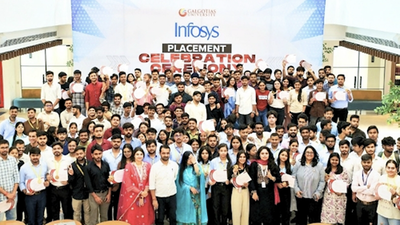
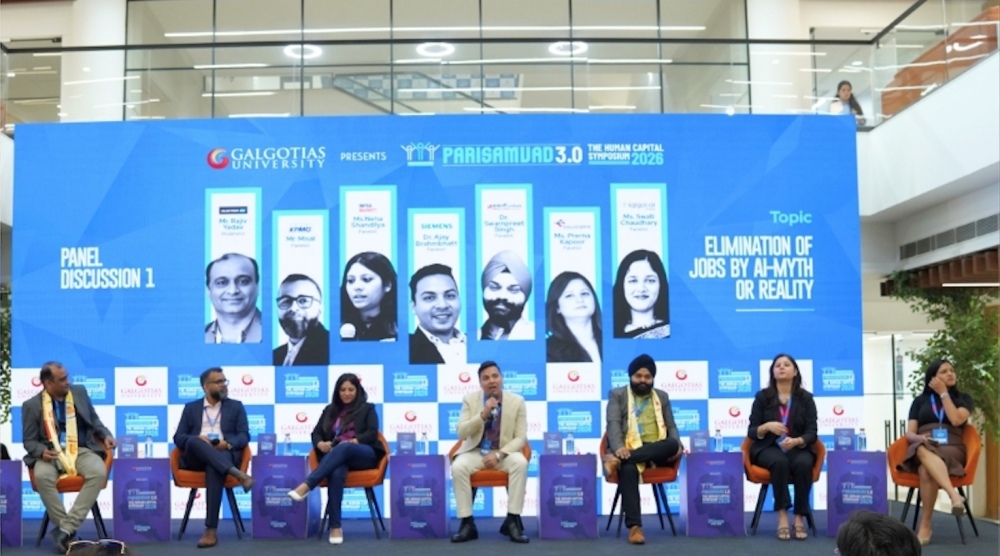
For the graduating batch of 2026, Galgotias University recorded more than 5,100 placement offers across technology, consulting, financial services, manufacturing, and digital enterprises. “ We have seen strong participation from across sectors this year from recruiters including Infosys, Capgemini, Cognizant, Accenture, EY, Larsen & Toubro, and HDFC Bank, reflecting both scale hiring and diversity across sectors. The highest package touched INR 60 lakh per annum, while students also secured high value offers from organisations including Microsoft, Walmart, Cisco, and J.P. Morgan” said Dr. Dhruv Galgotia, CEO, Galgotias University.Alongside placements, the University hosted Parisamvad 3.0, its annual HR symposium that brought over a hundred senior HR leaders, talent heads, and industry professionals to campus for discussions around hiring, workforce transformation, artificial intelligence, and the changing expectations from young professionals entering the workforce.Conversations during the symposium focused on how organisations increasingly value adaptability, problem solving, communication, interdisciplinary thinking, and the ability to continuously learn in environments shaped by rapid technological change.
Artificial intelligence featured prominently in discussions around how tasks, roles, and skill expectations are evolving across industries.
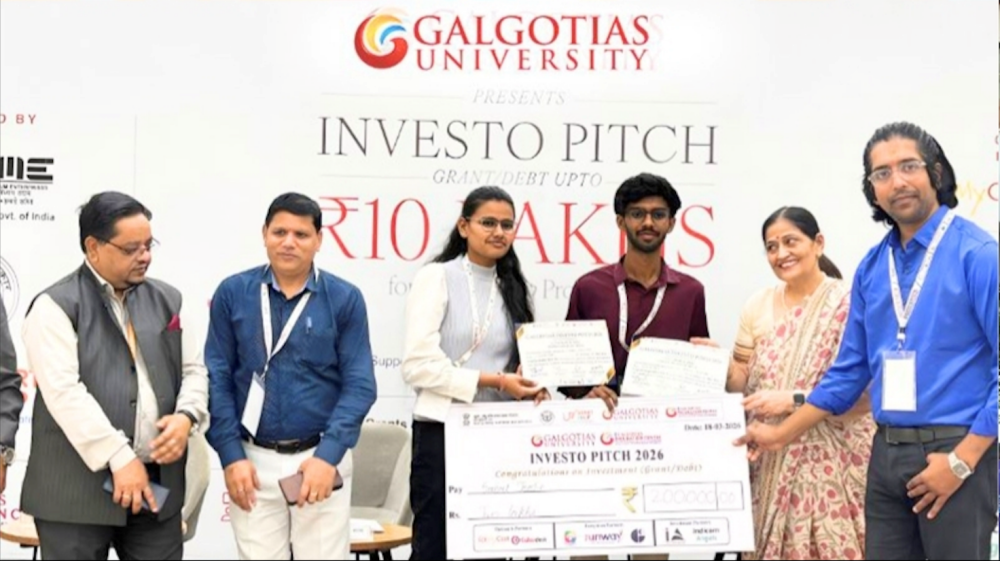
Alongside employability, entrepreneurship is also emerging as a significant pathway for students. The Galgotias Incubation Centre for Research Innovation Startups & Entrepreneurs (GICRISE) has supported 135 startups so far, with several already generating revenue.
This activity is being reinforced through the INR 10 crore Galgotias Innovation Fund aimed at supporting early stage founders."One such example is the success story of an AI-driven startup. Co-founded by an 18-year-old student, the venture raised nearly INR 3 crore in seed funding at a valuation of about INR 8.6 crore. The journey unfolded alongside regular student life, balancing academics, experimentation, investor conversations, product development, and the uncertainty that comes with building something at such an early stage. This also points to how access to startup support, mentors, technology infrastructure, and industry interaction is increasingly enabling students to explore entrepreneurship much earlier than traditionally expected." said Dr. Dhruv Galgotia, CEO, Galgotias University, reflecting on the growing number of students at the university who are choosing to build alongside their degrees, and the kind of institutional scaffolding that makes such early-stage entrepreneurship possible in the first place.
This ecosystem is supported by industry backed labs and Centres of Excellence established with organisations including Infosys, Apple, Salesforce, L&T EduTech, NVIDIA, and Tata Technologies. These facilities expose students to current tools, technologies, and workflows while also creating opportunities for project based learning and experimentation.The relationship between placements, industry engagement, and startup activity is becoming increasingly interconnected.
Interaction with employers informs curriculum development and skill building, while the same industry exposure often shapes entrepreneurial thinking, product ideas, and innovation pathways. The role of the university, in this context, extends beyond delivering academic programmes to creating environments where students can test ideas, interact with industry, explore emerging technologies, and navigate multiple career pathways ranging from employment to venture creation.
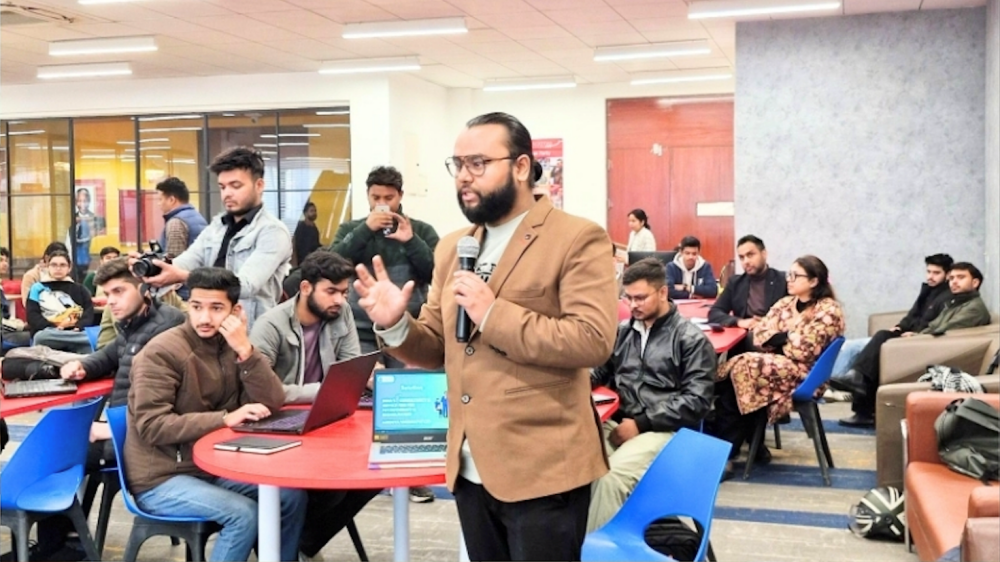
For students, this translates into broader opportunities supported by continuous engagement with professional ecosystems. For employers and investors, it creates access to young talent already familiar with real world systems through internships, projects, innovation challenges, and startup activity.Placement figures, therefore, remain important, but they are increasingly being viewed alongside the strength of the larger ecosystem surrounding students, where hiring, innovation, entrepreneurship, and skill development are closely connected rather than treated as separate outcomes.References -
- Researcher analyses the preparedness of India's engineering education for AI transformation. IndiaAI. https://indiaai.gov.in/article/researcher-analyses-the-preparedness-of-india-s-engineering-education-for-ai-transformation
- Advancing India's AI skills: Interventions and programmes. NASSCOM Community. https://community.nasscom.in/communities/data-science-ai-community/advancing-indias-ai-skills-interventions-and-programmes
Disclaimer: This article has been produced on behalf of Galgotias University by Times Internet’s Spotlight team.









 English (US) ·