

 3 days ago
9
3 days ago
9
ARTICLE AD BOX
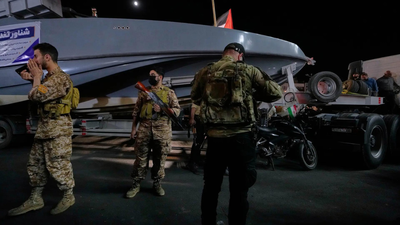
The attack not only exposed the vulnerability of one of Washington's most important regional installations but also left behind an estimated $400 million (£295 million) repair bill (Representative image)
An Iranian strike on a key US naval base in Bahrain has prompted the Pentagon to reconsider the future of its military footprint across the Middle East, according to a report by The Wall Street Journal.
The attack not only exposed the vulnerability of one of Washington's most important regional installations but also left behind an estimated $400 million (£295 million) repair bill.The strike on Naval Support Activity (NSA) Bahrain — home to the US Navy's Fifth Fleet and located less than 150 miles from Iran's southern coast — has become a wake-up call for American military planners. The base has long served as the centre of US naval operations in the Gulf, supporting missions to counter Iranian weapons smuggling, mine-laying and attacks on commercial shipping.According to The Wall Street Journal, Pentagon officials are now weighing significant changes to the US military's regional posture. Among the options under discussion are reducing the American presence in Kuwait and Saudi Arabia, relocating some bases or critical functions farther west and moving command-and-control facilities underground to better protect them from Iranian missiles and drones. The report said some of the damaged buildings in Bahrain may not be rebuilt at all, although officials cautioned that no final decisions have been taken.
Using satellite imagery, social media footage and publicly available US Defence Department construction models, The Wall Street Journal estimated that rebuilding the damaged structures alone would cost roughly $400 million. The figure does not include additional expenses such as debris clearance, strengthening the facilities against future attacks or replacing military equipment.Iran had targeted the base in February and June.The attack came amid renewed tensions between Washington and Tehran. The United States launched strikes on Iranian missile, drone and coastal radar sites after a drone attack on a cargo vessel in the Strait of Hormuz, which President Donald Trump described as a violation of the recently agreed ceasefire."I don't like the fact that they took a shot yesterday, actually four of them," Trump said before ordering the retaliatory strikes.Iran defended its actions, with Ebrahim Azizi, head of the Iranian parliament's national security commission, insisting the country was merely enforcing its authority over the strategic waterway. "This is not a violation of the ceasefire; it is ceasefire management," he wrote on social media.The Bahrain strike, coupled with continued threats to shipping in the Strait of Hormuz, has underscored how exposed US forces remain in the Gulf. For Washington, the attack has transformed long-standing concerns over Iran's missile and drone capabilities into an urgent strategic challenge, with the future of its regional military presence now under fresh review, The Wall Street Journal reported.









 English (US) ·