

 9 minutes ago
2
9 minutes ago
2
ARTICLE AD BOX
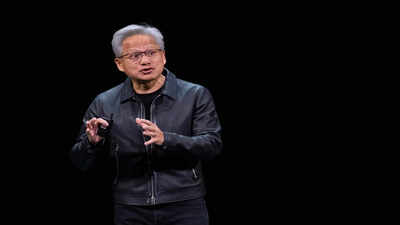
Nvidia CEO Jensen Huang emphasizes operational rigor, learned from washing dishes, as crucial for hyper-growth, debunking the myth that only engineering brilliance and funding suffice. (AP Photo)
Hyper-growth is usually viewed in corporate settings as nothing more than engineering brilliance and closed-door meetings of corporate boards. In an ideal scenario, we assume that all an entrepreneur needs in order to grow into a multibillion-dollar corporation is enough knowledge of their craft, access to venture capital funding, and a laser-sharp focus on strategy.
However, such a fairy tale ignores one brutal truth faced by many startup companies early in their development. Even before a company reaches the stage of being worth several trillion dollars, its management should have learned how to carry out its basic functions. If this does not happen, the company develops a vulnerable structure destined for failure.Reflecting on what it takes to make a tech superpower around the globe, Jensen Huang, the CEO of Nvidia Corporation, debunked this business myth with a personal anecdote that stands out from the usual Silicon Valley tale.
Rather than referring to intricate mathematical equations and sophisticated management concepts, he often credits his meticulous operational rigour to his experience washing dishes in a restaurant kitchen.
In contrast to the relentless search for technology-driven automation in the business environment, the key to success for the artificial intelligence company was achieved through an appreciation of process-by-process learning.
As presented by the Stanford Graduate School of Business, this early-career model differed from other models in how it utilised first principles thinking for decision-making processes instead of using business reasoning. According to the tech executive, "I am the best dishwasher in the place," which showed that he approached even simple and mundane work with the same vigour as he applied to designing a microchip. This attitude to fundamental chores allowed the businessman to redefine the discussion about strategy to focus on operational excellence.Reengineering the power of mundane tasksThe reason for the importance of a dishwashing job to the CEO of a tech company lies in the dynamics associated with operating an expanding technological organisation. Mature systems tend to withstand low levels of efficiency, but an expanding technology company requires precise collaboration in all spheres. For example, new technologies may experience significant obstacles because the underlying programming language, testing, and customer support cannot cope with growing needs.When an executive team detaches itself from these operational basics, a product flaw or service delay is often dismissed as a minor chart fluctuation. This top-down viewpoint acts as an invisible filter, hiding the everyday systemic messes that quietly alienate clients. Ambitious professionals are forced to realise that early organisational truth is almost always found in the unglamorous details long before it ever shows up on a balance sheet.
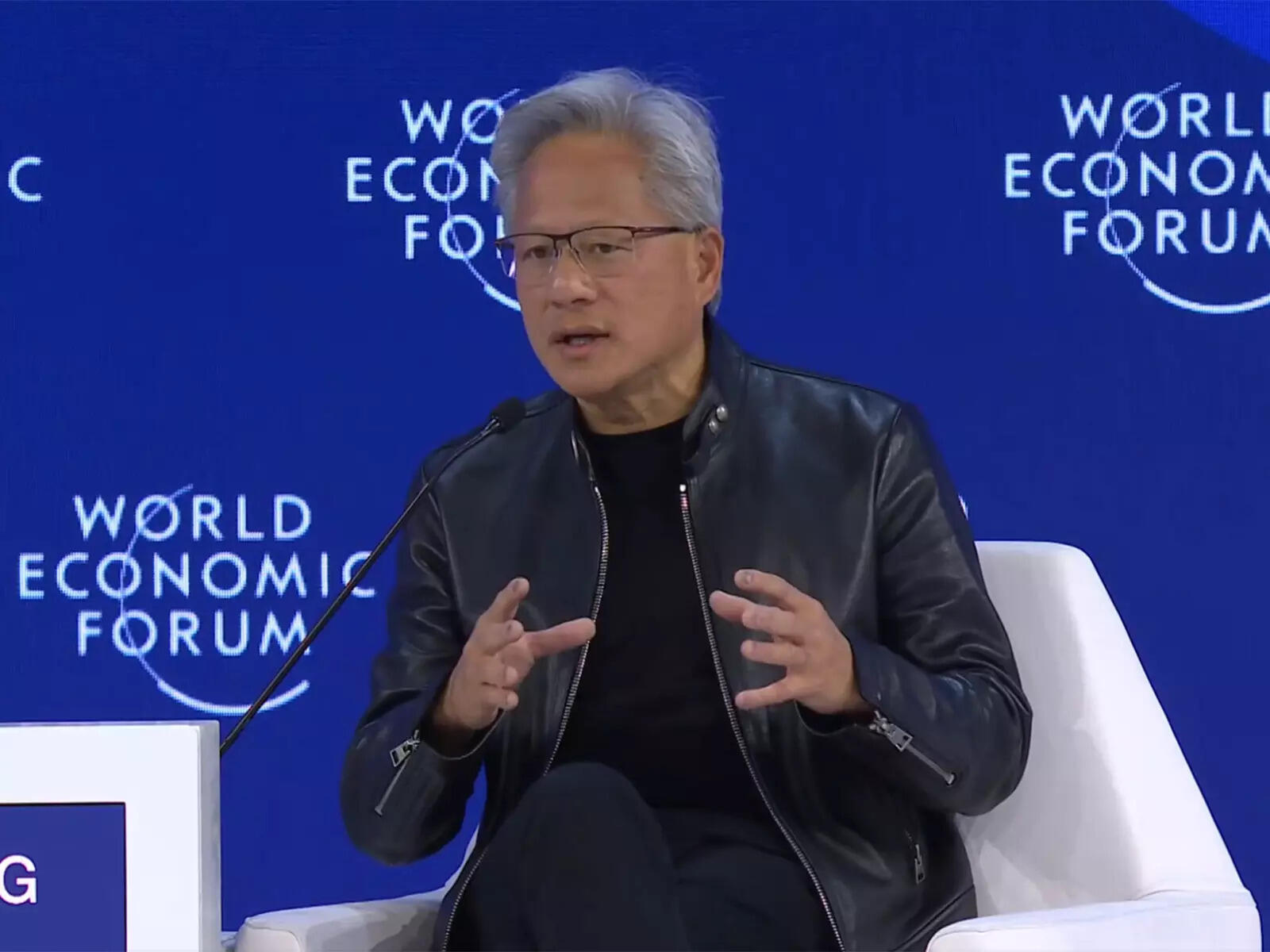
He advocates for first principles thinking and meticulous attention to mundane tasks, arguing that this foundational discipline builds resilient, scalable tech companies capable of sustainable excellence.
This is precisely what the close study approach aims to achieve. According to an official website of the firm, resilience in institutions has been deliberately engineered as a result of deep respect for fundamentals. In such a way, the social meaning of a mundane operation becomes radically different. Activities such as debugging software, mapping processes, or inventory management become powerful leverage points rather than a burden to assign and forget.
They provide organisations with speed, consistency, and the ability to clean things up as much as possible.A new organisational structure for sustainable excellenceIn general, the case illustrates an important aspect of how true authority and quality can be achieved in the competitive modern business environment. Excellence should be produced from the beginning as a consequence of protecting the fundamental process, not created artificially at the finish line with impressive presentations.
If the top management loses this connection, underinvestment in onboarding and incident review follows.This model of discipline-driven leadership ensures that a company retains its core strength even as its valuation climbs to record heights. The operators of this system can scale their business without the crushing necessity of constantly micromanaging sudden, chaotic crises. They are given the freedom to expand their ambitions because they know their foundational architecture is sturdy, reliable, and maintained with continuous care.In conclusion, the life story of the company that manufactures chips provides a perfect blueprint of how an ordinary work ethic can be used to turn a company into a global power player. Great ideas are plentiful in the business world, yet reverence for the silent work that underpins these ideas is exceedingly rare. Turning a dining experience into a foundational principle shows how great cultures cannot be built by merely creating great ideas but by ensuring that no idea, no matter how small, is ignored.







 English (US) ·