

 1 hour ago
4
1 hour ago
4
ARTICLE AD BOX

India is facing a rapidly growing diabetes crisis, with over 100 million adults affected. Research shows Indians are more vulnerable due to genetic predisposition, higher insulin resistance, “thin-fat” body composition, carb-heavy diets, urban stress and sedentary lifestyles. Experts stress early screening, portion control, physical activity and preventive healthcare to curb rising Type 2 diabetes risk.
India is facing a diabetes crisis that affects millions of lives. A study conducted by the ICMR in 2023 show more than 100 million Indians have diabetes, and the number continues to rise rapidly.
Here are some of the reasons why Indians are more likely to get diabetes, the particular risk factors, and what can be done to prevent it.
What the numbers say
India’s diabetes burden is high and rising fast. National research combining data from the Madras Diabetes Research Foundation (MDRF) and the Indian Council of Medical Research (ICMR) found that about 11.4% of Indians have diabetes, while 15% have pre-diabetes.That equals approximately 100 million adults living with diabetes today.
This is a number that is expected to grow in the coming decades.Despite increased awareness, over half of those with diabetes may just not know they have it. Which ultimately leads to many not knowing how to manage it correctly. Now, this makes prevention and early detection vital.
Unique risk patterns in Indians
Several factors combine to make Indians especially prone to type 2 diabetes:
Genetic and metabolic traits
A study published in the NIH suggests South Asians have a higher tendency toward insulin resistance, when cells do not respond well to insulin, and this begins even at lower body weights than in many Western populations.
This predisposition may explain why many Indians develop diabetes despite not appearing overweight by common standards.Dr KVS Hari Kumar, Secretary, Endocrine Society of India, Consultant Endocrinologist, MAGNA Centres, Hyderabad, told TOI Health, "India is witnessing a sharp rise in diabetes diagnoses, making it a growing public health concern rather than an isolated trend. The increase is driven by a complex interplay of genetic predisposition, environmental factors and rapidly changing lifestyles.
Notably, many people of Indian origin carry inherited traits that make them more prone to higher insulin resistance and increased visceral fat compared to other ethnic groups even when their overall body mass index (BMI) appears normal.
"

Diabetes develops when the body’s ability to produce or use insulin goes awry. This can happen even when someone has a low or normal body mass index
‘Thin-fat’ body composition
Even with a normal body mass index (BMI), South Asians have extra fat around the belly, a condition known as central or visceral obesity. It has been established that this trend raises the risk of diabetes.
Lifestyle and urbanisation
Daily life has changed as a result of urban living, with more sedentary work and less physical activity. Also produced, high-carb foods became more prevalent in diets.These elements work together to accelerate changes in metabolism that increase the risk of diabetes.
Diet: Much more than just sugar
Indian meals can include high amounts of white rice, refined flour (maida), sweets, and sugary drinks. A study published in the Indian Journal of Medical Research links such carbohydrate-heavy diets with a higher risk of pre-diabetes and diabetes.Even traditional habits like sweet chai or desserts after meals add up when they are combined with large portion sizes and low protein intake.Older food patterns, rich in millets, pulses, and fibre, tend to support stable blood sugar, while modern diets simply, do not.
Urban stress, inactivity and screen time
Quite long hours that is spent on screens, at workplaces, or on commutes are part of modern lifestyles. Indians, especially young people, are becoming less physically active, which raises the risk of diabetes.Hormones which help in blood sugar regulation are also disturbed by prolonged stress, sleep deprivation, and irregular schedules.To this Dr KVS Hari Kumar added, "This inherent vulnerability is being further amplified by sweeping lifestyle changes across urban India over the past few decades. Traditional, balanced meals are increasingly being replaced by processed foods high in refined carbohydrates and low in nutritional value.
At the same time, work has become more sedentary, screen time has surged, and sleep deprivation fuelled by longer working hours and rising stress has become widespread.
Together, these shifts are fundamentally altering daily habits and metabolic health outcomes. As a result, many Indians who appear thin and healthy externally may already be experiencing underlying metabolic risks, significantly increasing their likelihood of developing Type 2 diabetes at a younger age. "
Age, awareness and control challenges
Diabetes risk increases with age. Government-linked surveys show that many older adults either don’t know they have diabetes or don’t control it well even if diagnosed.Raising awareness, early screening, and routine blood tests like fasting glucose and HbA1c can catch rising blood sugar before complications start.
How Indians can reduce their risk
Reducing diabetes risk doesn’t require extreme diets or expensive programs.Dr Kumar explained, "Addressing this growing burden requires a decisive shift in mindset from primarily treating diabetes after onset to actively preventing it. Building a healthier future will depend on strengthening systems such as regular health screenings, workplace wellness programmes, early lifestyle interventions and culturally relevant public health campaigns.
Crucially, healthcare professionals, policymakers and community organisations must work in close coordination to drive sustained awareness around portion control, physical activity and long-term metabolic health.
"
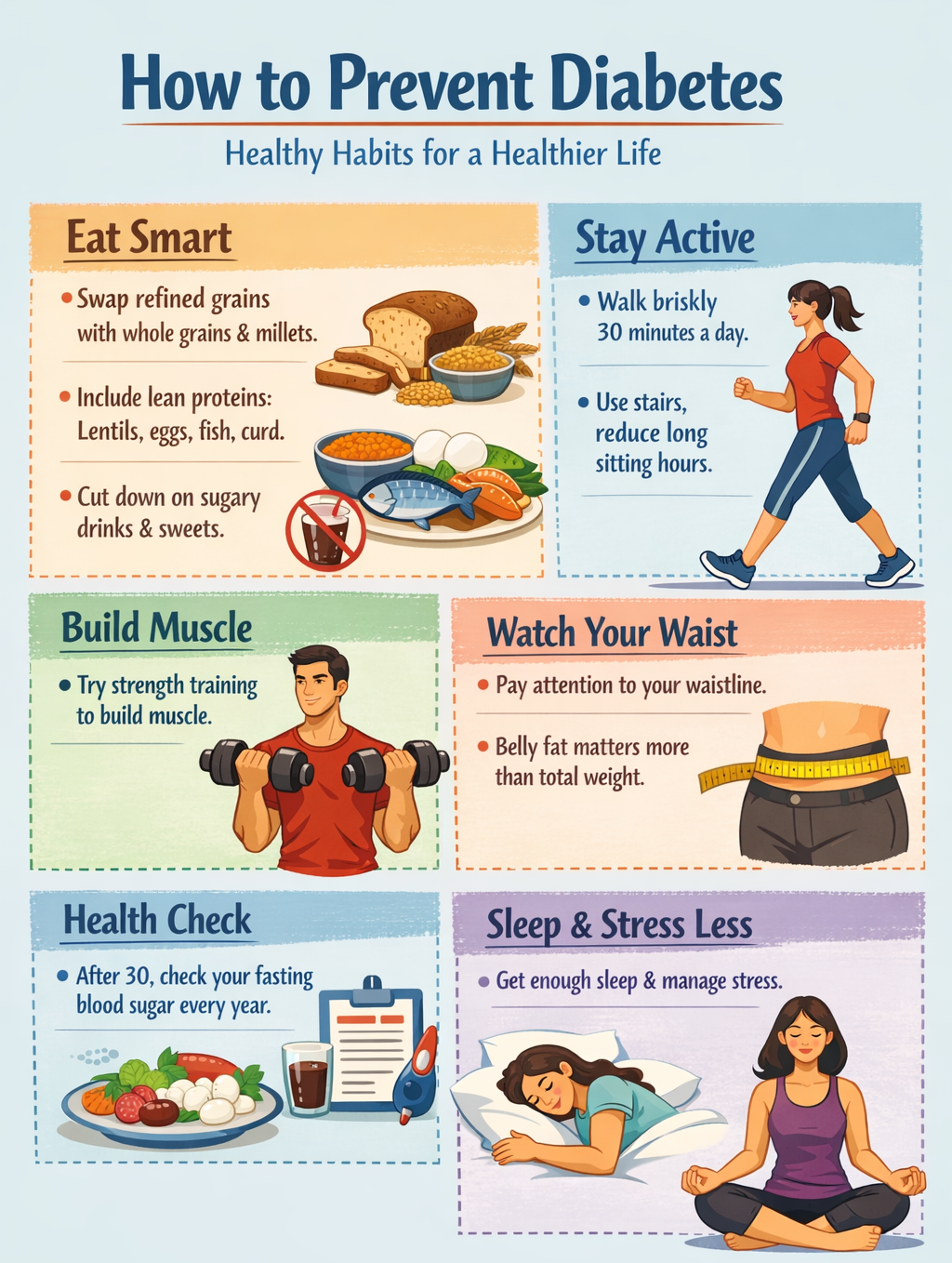
Reducing diabetes risk doesn’t require extreme diets or expensive programs.
These proven strategies help:
- Eat smart
- Swap refined grains with whole grains and millets.
- Include lean proteins like lentils, eggs, fish, curd.
- Cut down on sugar-loaded drinks and sweets.
- Walk briskly 30 minutes a day.
- Use stairs, reduce long sitting hours.
- Try strength training to build muscle.
- Pay attention to your waist, not simply your weight.
- For blood sugar risk, central fat is more important than total weight.
- Frequent examinations: After 30, check your fasting blood sugar every year.
- Sleep and stress reduction
Medical experts consulted This article includes expert inputs shared with TOI Health by: Dr KVS Hari Kumar, Secretary, Endocrine Society of India, Consultant Endocrinologist, MAGNA Centres, HyderabadInputs were used to explain how genetic predisposition, dietary patterns and lifestyle factors contribute to higher diabetes risk among Indians.






 English (US) ·