

 2 days ago
10
2 days ago
10
ARTICLE AD BOX
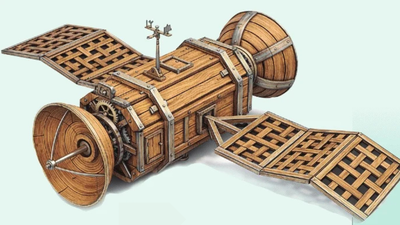
On March 12, a defunct Nasa satellite, weighing nearly 600kg, fell from orbit and burned up over the Pacific. It had run out fuel in 2019. Estimates show at least three such old satellites fall back to Earth every day, releasing fine metal particles into the atmosphere during re-entry.
The environmental impact of these particles has been minimal so far, but what happens when Earth is surrounded by tens of thousands of satellites? A 2021 estimate said in less than a decade, “one in every 15 points of light in the night sky could be a moving satellite”, indicating that several hundred may fall back to Earth each day, releasing harmful materials on burn-up, including aluminium and lithium.Aluminium has long been a concern. Aluminium reacts almost instantly with oxygen to form aluminium oxide or alumina, a substance known to cause ozone depletion.
It’s feared that alumina from all the re-entries could trigger a shift in polar temperatures, by 2040.Wooden satellites, with minimal metal, could fix this problem, scientists say, as we insert more objects into low orbit, a place that still has 60% of the 25,000 satellites we ’ ve launched since the 1960s. Research from University of British Columbia shows a million satellite projects are currently in various phases of development worldwide.
Advantages of wood and why it may work very well for small satellites➤ It wasn’t easy finding the perfect wood for space. Japanese scientists in 2020 tested three types of wood aboard the International Space Station: Magnolia, cherry wood and birch. Magnolia won as scientists found it held well under stress and its cells were uniform in size, making it easier to shape➤ The tests showed wood can work for small communication satellites with fewer moving parts. Wood lets radio waves through, which means parts like antennae can be housed inside, making for compact design.
Wood also provides thermal insulation, which can protect electronics inside from temperature swings.What goes up must come down: Earth’s ‘ring of trash’ poses risksIt’s believed there are more than 100 trillion parts of old satellites in orbit around Earth. Imagine these parts, all metal, burning up on re-entry. Studies found aluminium is now in about 10% of stratosphere particles. which could grow to 50% as launches increase14,000Satellites in orbit. But wait: Space X wants to launch a million satellites for space ‘data centres’.
All will fall once done. 15,000Tonnes of space objects are in orbit. With about 2,000 launches a year till 2031, this mass will increase Japan’S LignoSat 1: Little box that passed first test
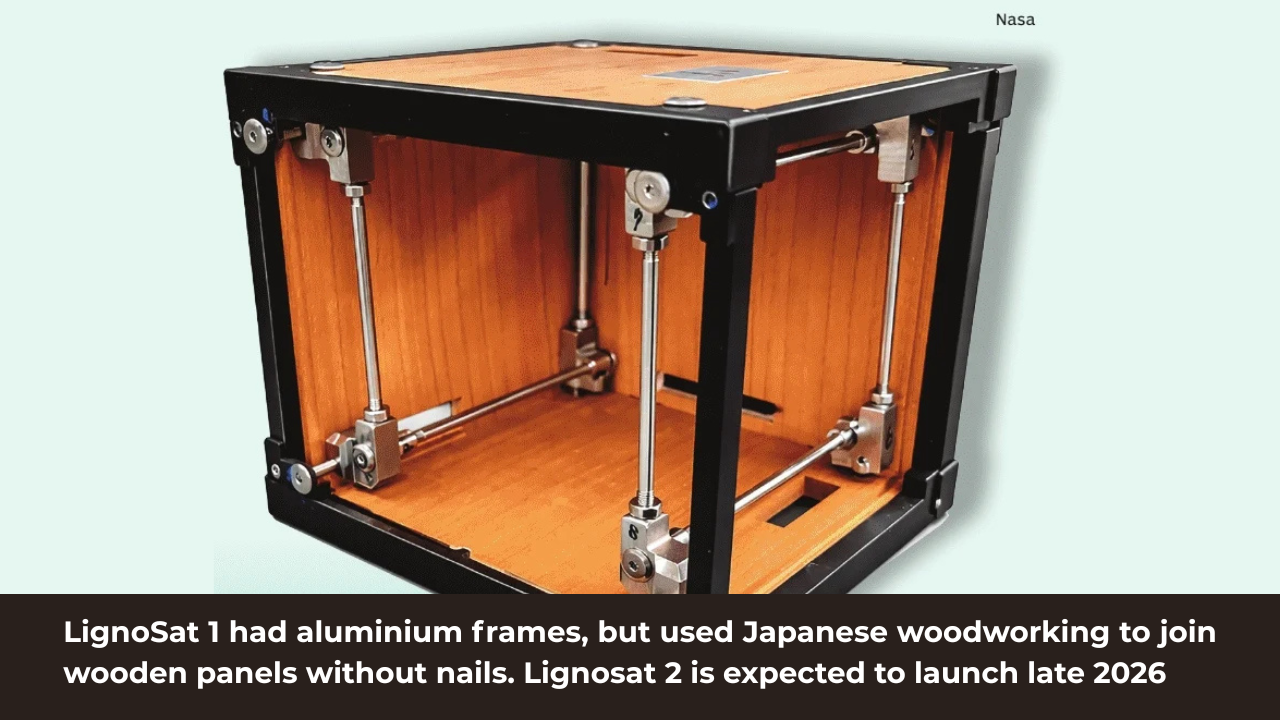
➤LignoSat 1, launched in Nov 2024, was the first ever wood-panelled satellite. It was tiny; 10cm on each side and weighing just 900gm. It was inserted into orbit 400km above Earth, where it stayed for over 100 days. But the satellite suffered a communication loss. It was developed by Kyoto University and the logging firm Sumitomo Forestry.➤ LignoSat 1 didn’t come apart in Space: Despite the loss of communications, Lignosat 1 passed a critical test. Its wood panels stayed intact, surviving violent temperature shifts (121°C to -157°C) as it orbited Earth every 90 mins. Ultimately, this box proved wood could work as outer material for satellites. LignoSat 2 hopes to refine the stechnology.
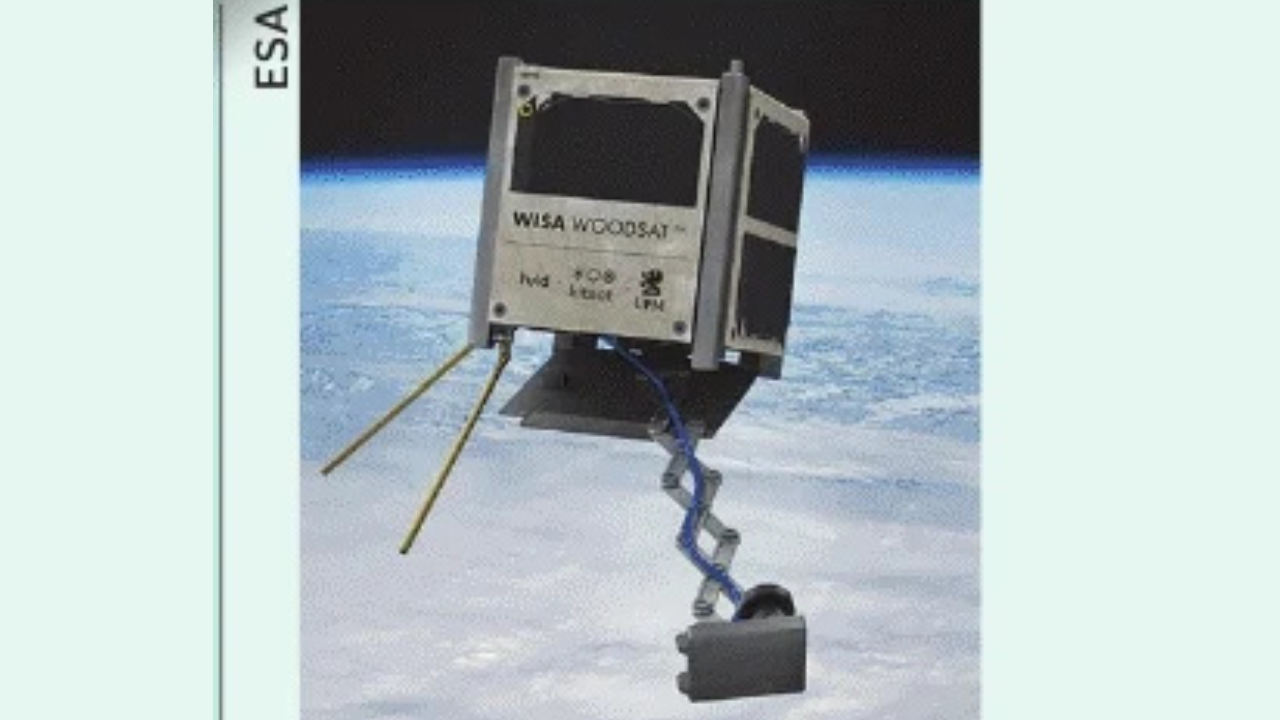
➤ A Finnish company has built a craft called WISA Woodsat, which packs sensors to gather data on how space affects wood. It even has a selfie stick to capture how the wood panels will perform in orbit. It’s awaiting clearance for launch.






 English (US) ·