

 1 hour ago
5
1 hour ago
5
ARTICLE AD BOX
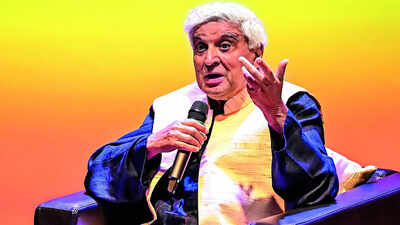
The Urdu Academy in Lucknow was housefull as writers, professors, theatre practitioners, historians, veterans and cultural figures gathered to welcome literary stalwart Javed Akhtar on the occasion commemorating theatre doyen Shankar Dayal Tewari’s 105th birth anniversary.
At the event, the free-wheeling conversation on art, literature, society and cinema naturally opened with Lucknow, as Javed Akhtar spoke about the pride he feels in having spent his early formative years in the city.Lucknow’s influence, he said, has never faded. “From etiquette to morality, everything I am, comes from here, and even today, that influence remains. Main jab Lucknow aata hoon, toh ehsaas hota hai logon ke manners, taur-tareeqa, baat-cheet mein ki aaj bhi kitna Awadh baaki hai.
You see people who left Lucknow 25 years ago, settled elsewhere, still hold pride that they are from this city. They know that if you’re from Lucknow, you have to carry yourself in a certain language and demeanour.
” Drawing a vivid metaphor, he compared his relationship with the city to a fish and water. “It’s like a fish living in water. As long as it’s there, it doesn’t realise the value of water. But when the fish goes out and then comes back, only then does it truly understand what water means.
That’s Lucknow for me,” he said.Lucknow’s distinctive Language, too, became part of the discussion. “It is interesting that people of Lucknow traditionally do not use main; they use hum. People who are not from Lucknow find it a symbol of arrogance. The reason was never pride. Hum speaks of promoting a neutral gender. It is almost vulgar to say, “main jaa rahi hoon or main jaa raha hoon that’s a crude way to talk.”
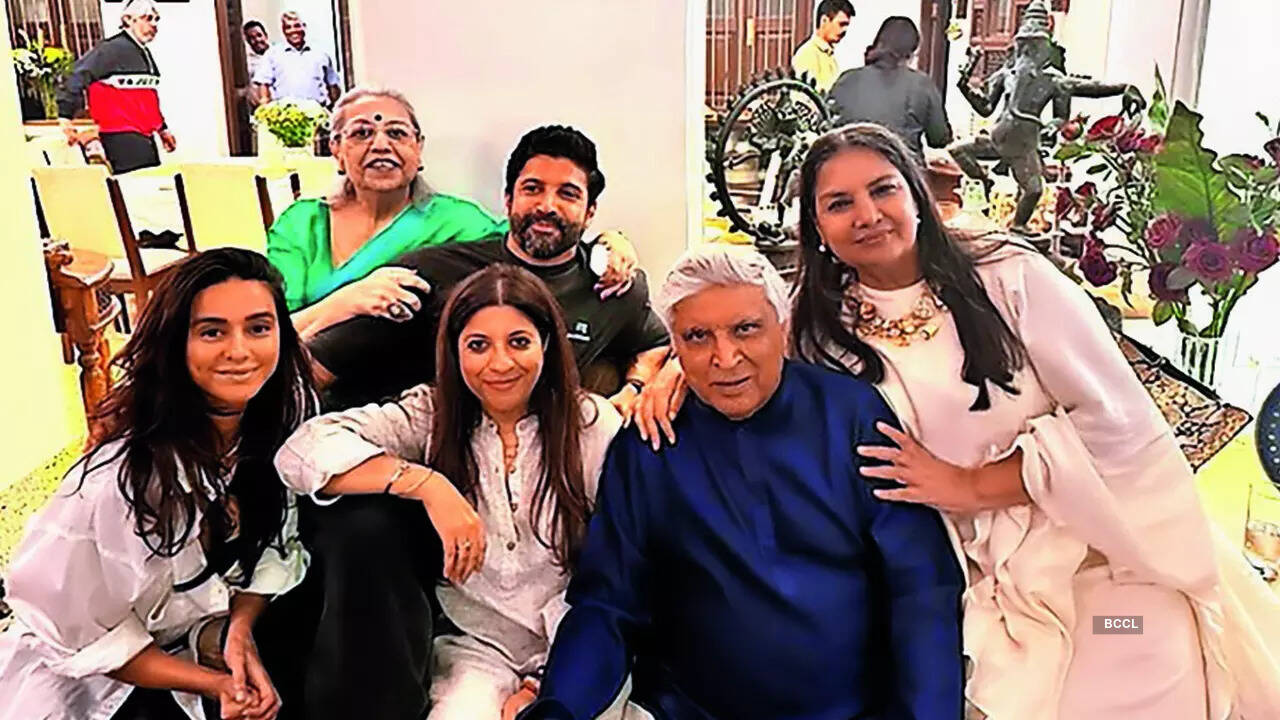
Javed Akhtar with family
An alumnus of Colvin Taluqdar College, Akhtar credited the school with shaping his ambition and taste.
Recalling an anecdote when he got taunted for asking for expensive shoes, “Children today are born and brought up with sensitivity; it was not the case during our childhood,” he said. “Today’s parents talk about childcare and understand sensitivity, abhi toh sheeshe ke bachche hain. Hamare zamaane mein jab chaaha peet diya, jab chaaha kuch keh diya.Ya toh mujhe meri aukaat ke hisaab ka school milta, par mujhe Colvin bhej diya.
I was around eight years old and wanted the expensive shoes my classmates wore. Rona dhona macha kar, mujhe vo joote dila diye gaye the. Later, I was taunted so much for it that it is still etched fresh in my mind, ‘Bhai, inke toh ameer shauq hain. 19 rupaye ka joota pehente hain, jo ki school fees se zyada ke hain. 17 rupaye school fees aur 15 rupaye inki tuition fee hai. So altogether I was an expensive child of the family,’’ he laughs.‘Poets were discussed as important people in my home’Javed, who spent days struggling on the roads of Mumbai before finding his footing, reflected on his journey from Jaadu to Javed Akhtar. Asked whether he inherited literature or struggle from his father, the veteran lyricist-poet Jaanisar Akhtar, he expressed, “A child, while growing up, never receives lectures on upbringing. However, the environment involuntarily affects him.
Through the osmosis process, he somehow absorbs the air of the atmosphere he lives in.
”That atmosphere, he said, was steeped in literature. “The kind of home I grew up in, there used to be detailed discussions of poets and literature on a day-to-day basis. Poets were discussed like important people. Ghar mein kitaabon ki baat hoti thi. Kaafi literary magazines toh free mein aa jaati thi because of Majaaz Lakhnawi, the famous poet and writer. He was my maternal uncle. ”
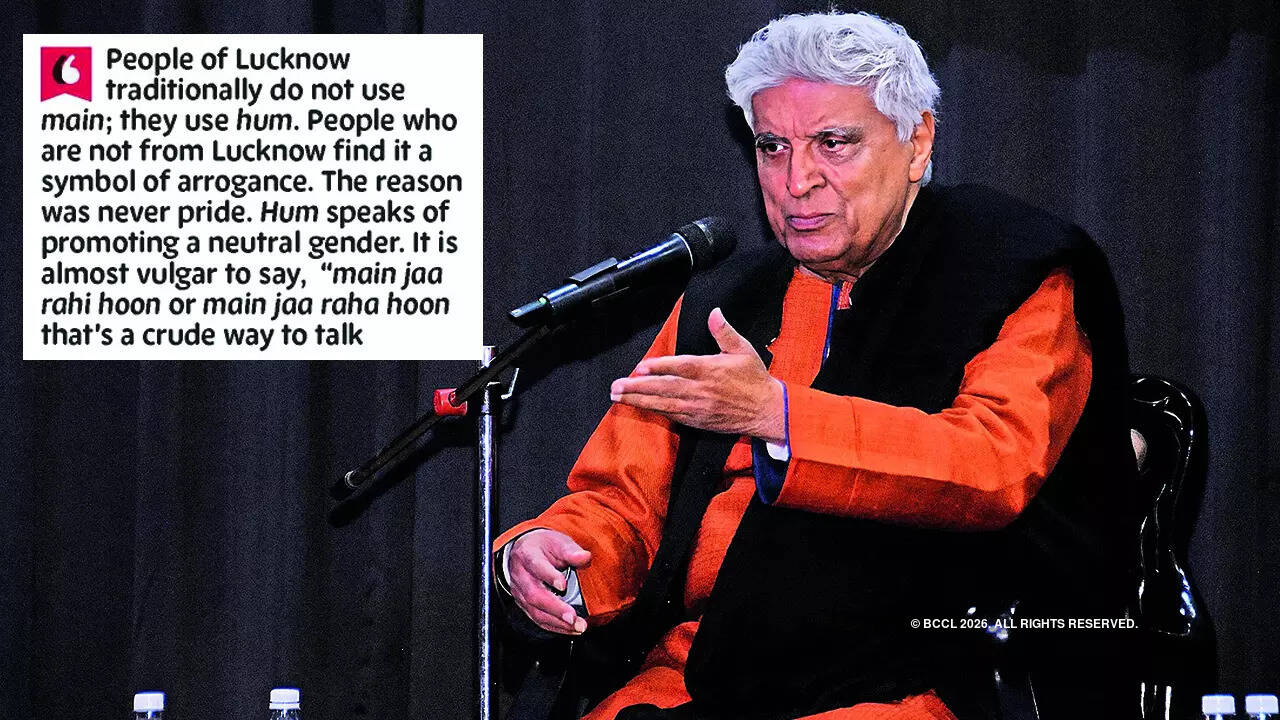
Javed Akhtar (BCCL/ Vishnu Jaiswal)
‘Honey is one of my three best friends today’ Reflecting on his personal life, Javed Akhtar spoke with usual candour about his marriage to ex-wife Honey Irani and his relationship with actress Shabana Azmi. “I have been fortunate in these matters. Honey is an exceptionally good person. It’s okay if our thoughts, value system, thinking and aesthetic had big gaps. However, fundamentally, a person who might share a different personality from you can also be an amazing person.
The fact that I share such a cordial bond with Honey goes to her more than me. Both of us have been very civilised right from the beginning,’’ he said.Their priority, he said, was always the children. “We made sure nothing touched them, that the father isn’t saying one thing and the mother another. Both of us were sensitive that things should not go sour. There is no parting which is not painful, but it’s the job of civilised people to minimise that.
If you ask me who my three best friends are today, Honey would definitely be one of them. In this whole scenario, there was also a great deal of grace, large-heartedness and maturity from Shabana too.
She never resented these matters. In fact, she was always helping and cooperating with Honey, which resulted in no collateral damage to the kids. Now they are very good friends. I think all the parties have behaved extremely maturely and civilised, which is rare.”‘Lucknow shaped my personality’Asked about growing up in the city of Nawabs, the legendary lyricist-screenwriter held forth on his Awadhi roots, expressing, “Once I was having a debate with someone on language, and he said but weren’t you born in Gwalior? Yes, I was, but I stayed there for only a few months. I came to Lucknow as a child and left when I was 12. Psychologists say that by the age of eight, your personality is already shaped. So if there’s anything good or bad in my personality, Lucknow is responsible for it,” said Akhtar.‘We are no longer ready to accept our hurt’ Shifting to contemporary cinema, when asked how present-day storytelling can reflect the anger of today’s youth, Javed Akhtar said that while aggression continues to exist, society has grown increasingly uncomfortable acknowledging emotional vulnerability.“We all have a lot of aggression. However, society has developed a morality where people do not want to accept that they are hurt.”
Drawing a comparison with Hindi cinema of earlier decades, Akhtar pointed out how emotional expression has significantly changed.
“In an average Hindi film of the 1950s and 1960s, you would find at least two sad songs. Today, you hardly see that. We are no longer ready to accept our hurt and our defeat. For us, everything appears hunky-dory. In such a pretentious world, if a middle-class individual grows up, how will he express his anger? He develops a complex about showing sadness,” he said.- Amina Ashraf




 English (US) ·